

L’articolo è stato aggiunto alla lista dei desideri








LIBRO INGLESE
 E-mail
 Facebook
 LinkedIn
 Twitter
 WhatsApp
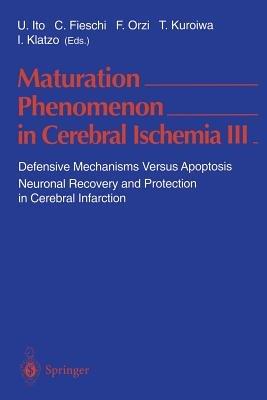
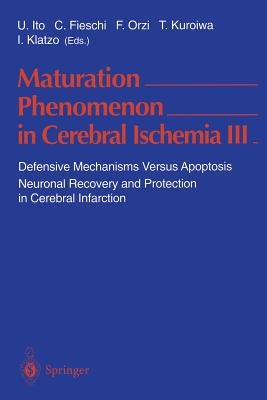
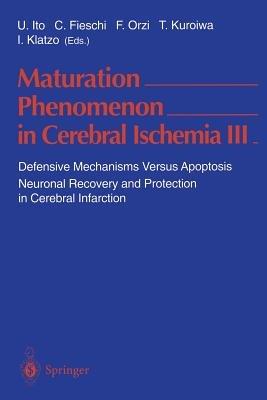
Maturation Phenomenon in Cerebral Ischemia III: Defensive Mechanisms Versus Apoptosis Neuronal Recovery and Protection in Cerebral Infarction
(0)
Cliccando su “Conferma” dichiari che il contenuto da te inserito è conforme alle Condizioni Generali d’Uso del Sito ed alle Linee Guida sui Contenuti Vietati. Puoi rileggere e modificare e successivamente confermare il tuo contenuto. Tra poche ore lo troverai online (in caso contrario verifica la conformità del contenuto alle policy del Sito).
Grazie per la tua recensione!
Tra poche ore la vedrai online (in caso contrario verifica la conformità del testo alle nostre linee guida). Dopo la pubblicazione per te +4 punti 
134,20 €
+1340
punti 
Venditore: IBS
Articolo acquistabile con Carta del Docente

Articolo acquistabile con Carta Cultura Giovani e Carta del Merito

Articolo acquistabile con Carta della Cultura

Paga con Klarna in 3 rate senza interessi per ordini superiori a 39 €

Dati e Statistiche
 Salvato in 0 liste dei desideri
Salvato in 0 liste dei desideri
Maturation Phenomenon in Cerebral Ischemia III: Defensive Mechanisms Versus Apoptosis Neuronal Recovery and Protection in Cerebral Infarction
Disponibilità in 2 settimane
134,20 €
134,20 €
Disponibilità in 2 settimane
Altre offerte vendute e spedite dai nostri venditori
Libri in Inglese
Maturation Phenomenon in Cerebral Ischemia III: Defensive Mechanisms Versus Apoptosis Neuronal Recovery and Protection in Cerebral Infarction
Altri venditori
Prezzo e spese di spedizione
Nuovo
Disponibilità in 2 settimane

Venduto e spedito da
IBS
Spedizione Gratis
134,20 €
Altri venditori
Prezzo e spese di spedizione
Nuovo
Disponibilità in 2 settimane
Venduto e spedito da
IBS
Spedizione Gratis
134,20 €
Altri venditori
Prezzo e spese di spedizione

Tutti i formati ed edizioni
Promo attive (0)
The Maturation Phenomenon, described by Ito et al. in 1975 [3) on the basis of his to logical observations in the hippocampus as well as other portions of the cerebral hemisphere, refers to the hours or days of delay in the development of pathological changes in various parameters of ischemic injury following the restoration of blood flow to the ischemic brain. There is a direct relationship between the intensity of ischemic insult and the speed and rate of maturation of ischemic injury, a lesser intensity being associated with slower and less severe development of the lesions. The delayed neuronal death of CAl pyramidal cells of the hippocampus [8) is a classic example. In the cerebral cortex, with increasing intensity of the ischemic insult, the maturation phenomenon of ischemic injuries intensifies, seamlessly, from less exten sive to more extensive disseminated selective neuronal necrosis (DSNN), and then further to cerebral infarction upon reaching a critical threshold [1,2,4,6,7). We also have found that following ischemic insults just under the threshold level required to induce infarction, only disseminated selective neuronal necrosis (DSNN) progresses, while following ischemic insults at the threshold level, initially only DSNN develops, followed by the evolution of a gradually enlarging infarcted focus [5, 7). The reporting of this phenomenon boosted research in the field, as it became evi dent that ischemic damage is not a sudden event, but a process potentially susceptible to therapeutic intervention.
Leggi di più
Leggi di meno
Curatore:
Anno:
1999
Rilegatura:
Paperback / softback
Pagine:
343 p.
Testo in English
Dimensioni:
235 x 155 mm
EAN:
9783540650232

L'articolo è stato aggiunto al carrello
Informazioni e Contatti sulla Sicurezza dei Prodotti
Le schede prodotto sono aggiornate in conformità al Regolamento UE 988/2023. Laddove ci fossero taluni dati non disponibili per ragioni indipendenti da IBS, vi informiamo che stiamo compiendo ogni ragionevole sforzo per inserirli. Vi invitiamo a controllare periodicamente il sito www.ibs.it per eventuali novità e aggiornamenti.
Per le vendite di prodotti da terze parti, ciascun venditore si assume la piena e diretta responsabilità per la commercializzazione del prodotto e per la sua conformità al Regolamento UE 988/2023, nonché alle normative nazionali ed europee vigenti.
Per informazioni sulla sicurezza dei prodotti, contattare productsafetyibs@feltrinelli.it
L’articolo è stato aggiunto alla lista dei desideri
