

L’articolo è stato aggiunto alla lista dei desideri










EBOOK IN LINGUA STRANIERA
 E-mail
 Facebook
 LinkedIn
 Twitter
 WhatsApp
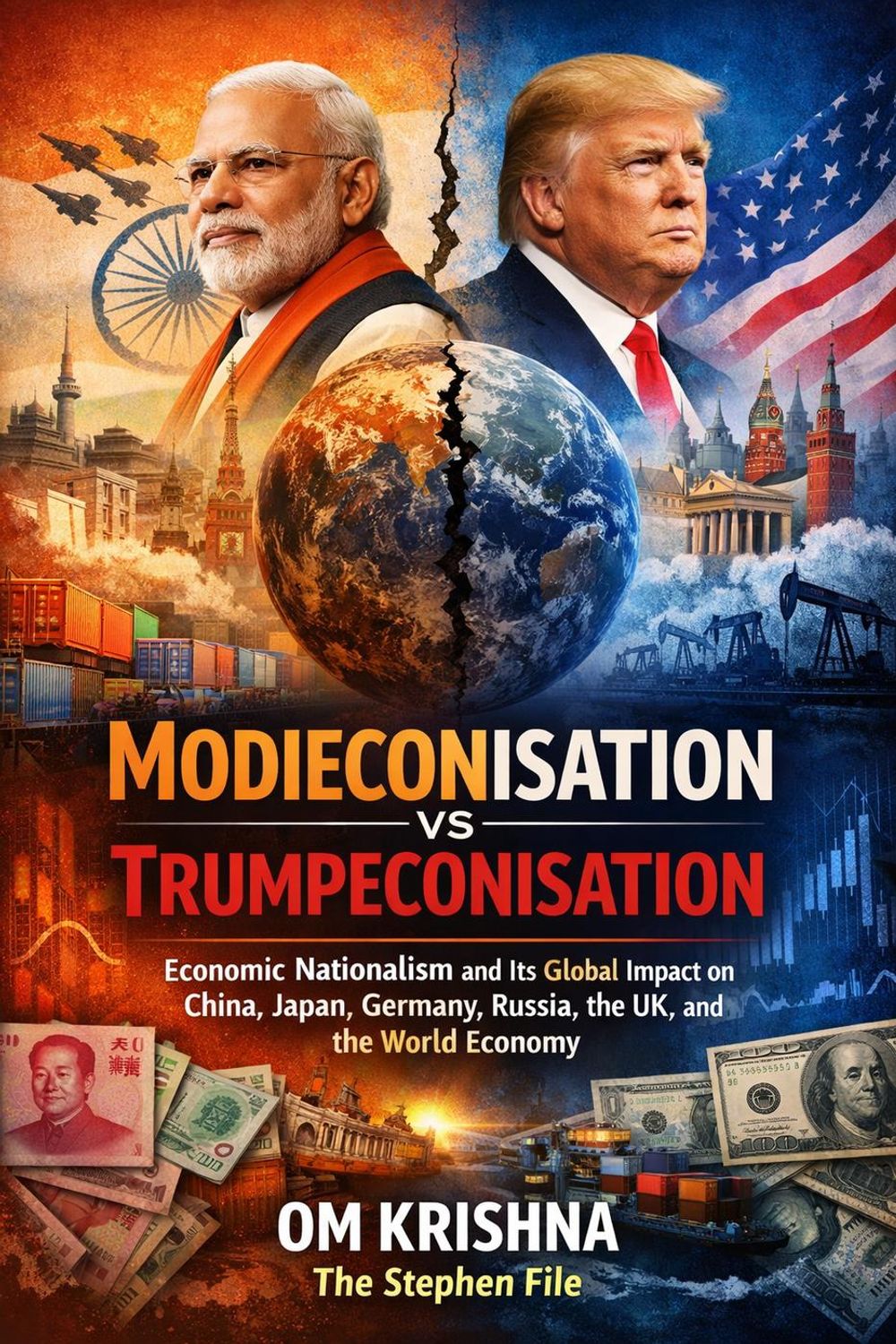
Modieconisation vs Trumpeconisation
(0)
Cliccando su “Conferma” dichiari che il contenuto da te inserito è conforme alle Condizioni Generali d’Uso del Sito ed alle Linee Guida sui Contenuti Vietati. Puoi rileggere e modificare e successivamente confermare il tuo contenuto. Tra poche ore lo troverai online (in caso contrario verifica la conformità del contenuto alle policy del Sito).
Grazie per la tua recensione!
Tra poche ore la vedrai online (in caso contrario verifica la conformità del testo alle nostre linee guida). Dopo la pubblicazione per te +4 punti 
3,49 €
+30
punti 
Venditore: IBS

Acquista online
Scaricabile subito
Articolo acquistabile con Carta del Docente

Articolo acquistabile con Carta Cultura Giovani e Carta del Merito

Articolo acquistabile con Carta della Cultura

Abbonati a Kobo plus per avere accesso illimitato a questo contenuto

Dati e Statistiche
 Salvato in 0 liste dei desideri
Salvato in 0 liste dei desideri
Modieconisation vs Trumpeconisation
Scaricabile subito
3,49 €
3,49 €
Scaricabile subito
Altre offerte vendute e spedite dai nostri venditori

Ebook in lingua straniera
Modieconisation vs Trumpeconisation
Altri venditori
Prezzo e spese di spedizione
EBOOK INGLESE
EPUB2 con DRMFREE
Scaricabile subito

Venduto e spedito da
IBS
Spedizione Gratis
3,49 €
Altri venditori
Prezzo e spese di spedizione
EBOOK INGLESE
EPUB2 con DRMFREE
Scaricabile subito
Venduto e spedito da
IBS
Spedizione Gratis
3,49 €
Altri venditori
Prezzo e spese di spedizione

Tutti i formati ed edizioni

Promo attive (0)
Modieconisation vs Trumpeconisation
In the twenty-first century, economic policy is no longer just about growth, inflation, and employment. It is about power, identity, geopolitics, and the future of the global order. "Modieconisation vs Trumpeconisation: Economic Nationalism and Its Global Impact on China, Japan, Germany, Russia, the UK, and the World Economy" offers a bold and original framework to understand the rise of economic nationalism and its transformative consequences. The book introduces two conceptual constructs—Modieconisation and Trumpeconisation—as analytical lenses to study nationalist economic strategies in India and the United States. These frameworks represent a broader global shift from liberal globalization to strategic nationalism, where nations prioritize domestic industries, technological sovereignty, and geopolitical leverage over multilateral cooperation. This research monograph provides a comparative theoretical framework that integrates political economy, development economics, and international relations. It explores how nationalist policies influence global trade wars, foreign direct investment flows, technology governance, labor markets, migration patterns, and financial systems. The book critically examines how tariffs, sanctions, industrial policy, and digital sovereignty reshape global value chains and challenge existing multilateral institutions such as the WTO, IMF, and World Bank. A major contribution of this book is its country-specific analysis of China, Japan, Germany, Russia, and the United Kingdom. Each chapter examines how economic nationalism affects national growth models, export competitiveness, technological strategies, geopolitical positioning, and domestic inequality. The book also introduces provocative analytical dossiers such as "The Stephen File," "The Musk File," and "The Davos File" to explore the role of future thinkers, tech billionaires, and global elites in shaping the emerging world order. Beyond descriptive analysis, the book offers a critical perspective on the dark side of economic nationalism. It interrogates whether nationalist policies truly benefit ordinary citizens or primarily serve corporate elites, political populism, and military-industrial complexes. It also investigates how economic nationalism may exacerbate global inequality, environmental challenges, and geopolitical fragmentation. The concluding sections of the book present future scenarios for globalization, including fragmentation, re-globalization, and the rise of AI-led geopolitical power structures. The book proposes policy lessons for emerging and developing economies and introduces a visionary "Global Power Shift Map 2050," offering insights into future economic superpowers based on technology, demographics, climate resilience, and resource security. Written for scholars, policymakers, graduate students, and global thinkers, this book bridges theory and practice, offering an interdisciplinary perspective on one of the most defining trends of the modern era. It challenges conventional economic wisdom and invites readers to rethink globalization, nationalism, and the future of the world economy. "Modieconisation vs Trumpeconisation" is not just a book about two leaders or two countries—it is a comprehensive exploration of a new economic paradigm that will shape global politics, markets, and societies for decades to come.
Leggi di più
Leggi di meno
Autore:
Anno edizione:
2026
Editore:
Formato:
Lingua:
Inglese
Compatibilità:
Tutti i dispositivi (eccetto Kindle) Scopri di più
Layout:
Reflowable
EAN:
9798232517687
L'articolo è stato aggiunto al carrello
Formato:
Gli eBook venduti da IBS.it sono in formato ePub e possono essere protetti da Adobe DRM. In caso di download di un file protetto da DRM si otterrà un file in formato .acs, (Adobe Content Server Message), che dovrà essere aperto tramite Adobe Digital Editions e autorizzato tramite un account Adobe, prima di poter essere letto su pc o trasferito su dispositivi compatibili.
Cloud:
Gli eBook venduti da IBS.it sono sincronizzati automaticamente su tutti i client di lettura Kobo successivamente all’acquisto. Grazie al Cloud Kobo i progressi di lettura, le note, le evidenziazioni vengono salvati e sincronizzati automaticamente su tutti i dispositivi e le APP di lettura Kobo utilizzati per la lettura.
Clicca qui per sapere come scaricare gli ebook utilizzando un pc con sistema operativo Windows
L’articolo è stato aggiunto alla lista dei desideri
