

L’articolo è stato aggiunto alla lista dei desideri








LIBRO INGLESE
 E-mail
 Facebook
 LinkedIn
 Twitter
 WhatsApp
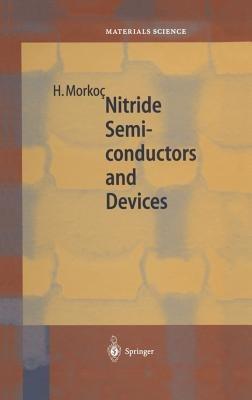
Nitride Semiconductors and Devices
(0)
Cliccando su “Conferma” dichiari che il contenuto da te inserito è conforme alle Condizioni Generali d’Uso del Sito ed alle Linee Guida sui Contenuti Vietati. Puoi rileggere e modificare e successivamente confermare il tuo contenuto. Tra poche ore lo troverai online (in caso contrario verifica la conformità del contenuto alle policy del Sito).
Grazie per la tua recensione!
Tra poche ore la vedrai online (in caso contrario verifica la conformità del testo alle nostre linee guida). Dopo la pubblicazione per te +4 punti 
265,00 €
+2650
punti 
Venditore: IBS
Articolo acquistabile con Carta del Docente

Articolo acquistabile con Carta Cultura Giovani e Carta del Merito

Articolo acquistabile con Carta della Cultura

Paga con Klarna in 3 rate senza interessi per ordini superiori a 39 €

Dati e Statistiche
 Salvato in 0 liste dei desideri
Salvato in 0 liste dei desideri
Nitride Semiconductors and Devices
Disponibilità in 2 settimane
265,00 €
265,00 €
Disponibilità in 2 settimane
Altre offerte vendute e spedite dai nostri venditori
Libri in Inglese
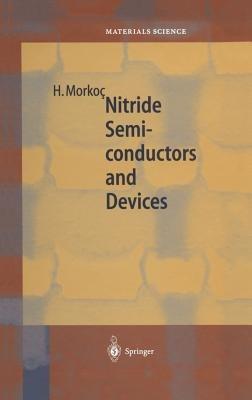
Nitride Semiconductors and Devices
Altri venditori
Prezzo e spese di spedizione

LIBRO INGLESE
Disponibilità in 2 settimane

Venduto e spedito da
IBS
Spedizione Gratis
265,00 €
Altri venditori
Prezzo e spese di spedizione
LIBRO INGLESE
Disponibilità in 2 settimane
Venduto e spedito da
IBS
Spedizione Gratis
265,00 €
Altri venditori
Prezzo e spese di spedizione

Tutti i formati ed edizioni
Promo attive (0)
A View of the Past, and a Look into the Future by a Pioneer By Jacques I. Pankove This forword will be a brief review of important developments in the early and recent history of gallium nitride, and also a perspective on the current and future evolution of this exciting field. Gallium nitride (GaN) was syn thesized more than 50 years ago by Johnson et al. [1] in 1932, and also by Juza and Hahn [2] in 1938, who passed ammonia over hot gallium. This method produced small needles and platelets. The purpose of Juza and Hahn was to investiagte the crystal structure and lattice constant of GaN as part of a systematic study of many compounds. Two decades later, Grim al. [3] in 1959 employed the same technique to produce small cry meiss et stals of GaN for the purpose of measuring their photoluminescence spectra. Another decade later Maruska and Tietjen [4] in 1969 used a chloride trans port vapor technique to make a large-area layer of GaN on sapphire. All of the GaN made at that time was very conducting n-type even when not deli berately doped. The donors were believed to be nitrogen vacancies. Later this model was questioned by Seifert et al. [5] in 1983, and oxygen was pro as the donor. Oxygen with its 6 valence electrons on a N site (N has 5 posed valence electrons) would be a single donor.
Leggi di più
Leggi di meno
Autore:
Collana:
Springer Series in Materials Science
Anno:
1999
Rilegatura:
Hardback
Pagine:
489 p.
Testo in English
Dimensioni:
235 x 155 mm
EAN:
9783540640387

L'articolo è stato aggiunto al carrello
Informazioni e Contatti sulla Sicurezza dei Prodotti
Le schede prodotto sono aggiornate in conformità al Regolamento UE 988/2023. Laddove ci fossero taluni dati non disponibili per ragioni indipendenti da IBS, vi informiamo che stiamo compiendo ogni ragionevole sforzo per inserirli. Vi invitiamo a controllare periodicamente il sito www.ibs.it per eventuali novità e aggiornamenti.
Per le vendite di prodotti da terze parti, ciascun venditore si assume la piena e diretta responsabilità per la commercializzazione del prodotto e per la sua conformità al Regolamento UE 988/2023, nonché alle normative nazionali ed europee vigenti.
Per informazioni sulla sicurezza dei prodotti, contattare productsafetyibs@feltrinelli.it
L’articolo è stato aggiunto alla lista dei desideri
