

L’articolo è stato aggiunto alla lista dei desideri








LIBRO INGLESE
 E-mail
 Facebook
 LinkedIn
 Twitter
 WhatsApp
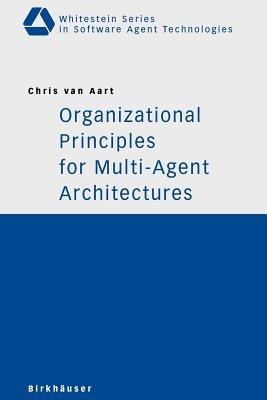
Organizational Principles for Multi-Agent Architectures
(0)
Cliccando su “Conferma” dichiari che il contenuto da te inserito è conforme alle Condizioni Generali d’Uso del Sito ed alle Linee Guida sui Contenuti Vietati. Puoi rileggere e modificare e successivamente confermare il tuo contenuto. Tra poche ore lo troverai online (in caso contrario verifica la conformità del contenuto alle policy del Sito).
Grazie per la tua recensione!
Tra poche ore la vedrai online (in caso contrario verifica la conformità del testo alle nostre linee guida). Dopo la pubblicazione per te +4 punti 

87,40 €
+870
punti 
Venditore: IBS
Articolo acquistabile con Carta del Docente

Articolo acquistabile con Carta Cultura Giovani e Carta del Merito

Articolo acquistabile con Carta della Cultura

Paga con Klarna in 3 rate senza interessi per ordini superiori a 39 €

Dati e Statistiche
 Salvato in 0 liste dei desideri
Salvato in 0 liste dei desideri
Organizational Principles for Multi-Agent Architectures
Disponibilità in 2 settimane
87,40 €
87,40 €
Disponibilità in 2 settimane
Altre offerte vendute e spedite dai nostri venditori
Libri in Inglese
Organizational Principles for Multi-Agent Architectures
Altri venditori
Prezzo e spese di spedizione
LIBRO INGLESE
Disponibilità in 2 settimane

Venduto e spedito da
IBS
Spedizione Gratis
87,40 €
Altri venditori
Prezzo e spese di spedizione
LIBRO INGLESE
Disponibilità in 2 settimane
Venduto e spedito da
IBS
Spedizione Gratis
87,40 €
Altri venditori
Prezzo e spese di spedizione

Tutti i formati ed edizioni
1. 1 Background In this work, we develop a framework for the design of multi-agent systems inspired by (human) organizational principles. Organizations are complex entities formed to ov- come various limitations of individual agencies, such as cognitive, physical, temporal and institutional limitations. There is a parallel between the complexity of organizations and multi-agent systems. Therefore, we explore the use of concepts, methods and techniques from human organizational design as architectural principles for multi-agent systems. Three research lines are presented: organizational modeling and coordination, interop- ability and agent models. Organizational modeling and coordination are concerned with how resources (i. e. agents) can be identi?ed and related to each other. In order to have agents cooperate, several issues of interoperability have to be addressed. Agent models deal with the design of individual intelligent software agents, taking into account typical features of agent intelligence. Every (human) activity raises two challenges: division of labor and coordi- tion [Mintzberg, 1993]. Division of labor is the decomposition of work (or goals) into various distinct tasks. Coordination refers to managing relations between these tasks to carry out the work. The patterns of division of labor, responsibilities (people who do the work), clustering of responsibilities into units and coordination between units can be de?ned by organizational structures [Galbraith, 1973]. The design of an organization should cover how one or more actors are engaged in one or more tasks, where knowledge, capabilities and resources are distributed.
Leggi di più
Leggi di meno
Autore:
Editore:
Collana:
Whitestein Series in Software Agent Technologies and Autonomic Computing
Anno:
2004
Rilegatura:
Paperback / softback
Pagine:
204 p.
Testo in English
Dimensioni:
254 x 178 mm
EAN:
9783764372132

L'articolo è stato aggiunto al carrello
Informazioni e Contatti sulla Sicurezza dei Prodotti
Le schede prodotto sono aggiornate in conformità al Regolamento UE 988/2023. Laddove ci fossero taluni dati non disponibili per ragioni indipendenti da IBS, vi informiamo che stiamo compiendo ogni ragionevole sforzo per inserirli. Vi invitiamo a controllare periodicamente il sito www.ibs.it per eventuali novità e aggiornamenti.
Per le vendite di prodotti da terze parti, ciascun venditore si assume la piena e diretta responsabilità per la commercializzazione del prodotto e per la sua conformità al Regolamento UE 988/2023, nonché alle normative nazionali ed europee vigenti.
Per informazioni sulla sicurezza dei prodotti, contattare productsafetyibs@feltrinelli.it
L’articolo è stato aggiunto alla lista dei desideri
