

L’articolo è stato aggiunto alla lista dei desideri








LIBRO INGLESE
 E-mail
 Facebook
 LinkedIn
 Twitter
 WhatsApp
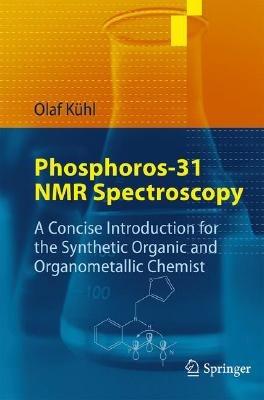
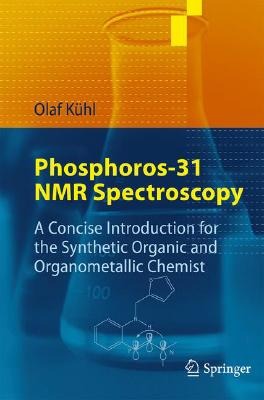
Phosphorus-31 NMR Spectroscopy: A Concise Introduction for the Synthetic Organic and Organometallic Chemist
(0)
Cliccando su “Conferma” dichiari che il contenuto da te inserito è conforme alle Condizioni Generali d’Uso del Sito ed alle Linee Guida sui Contenuti Vietati. Puoi rileggere e modificare e successivamente confermare il tuo contenuto. Tra poche ore lo troverai online (in caso contrario verifica la conformità del contenuto alle policy del Sito).
Grazie per la tua recensione!
Tra poche ore la vedrai online (in caso contrario verifica la conformità del testo alle nostre linee guida). Dopo la pubblicazione per te +4 punti 

88,10 €
+880
punti 
Venditore: IBS
Articolo acquistabile con Carta del Docente

Articolo acquistabile con Carta Cultura Giovani e Carta del Merito

Articolo acquistabile con Carta della Cultura

Paga con Klarna in 3 rate senza interessi per ordini superiori a 39 €

Dati e Statistiche
 Salvato in 0 liste dei desideri
Salvato in 0 liste dei desideri
Phosphorus-31 NMR Spectroscopy: A Concise Introduction for the Synthetic Organic and Organometallic Chemist
Disponibilità in 2 settimane
88,10 €
88,10 €
Disponibilità in 2 settimane
Altre offerte vendute e spedite dai nostri venditori
Libri in Inglese
Phosphorus-31 NMR Spectroscopy: A Concise Introduction for the Synthetic Organic and Organometallic Chemist
Altri venditori
Prezzo e spese di spedizione
LIBRO INGLESE
Disponibilità in 2 settimane

Venduto e spedito da
IBS
Spedizione Gratis
88,10 €
Altri venditori
Prezzo e spese di spedizione
LIBRO INGLESE
Disponibilità in 2 settimane
Venduto e spedito da
IBS
Spedizione Gratis
88,10 €
Altri venditori
Prezzo e spese di spedizione

Tutti i formati ed edizioni
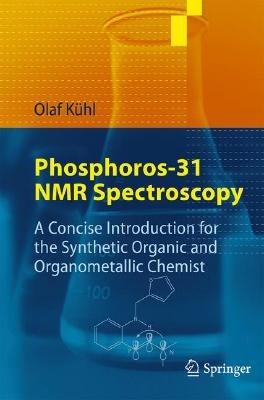
Nuclear Magnetic Resonance is a powerful tool, especially for the identification of 1 13 hitherto unknown organic compounds. H- and C-NMR spectroscopy is known and applied by virtually every synthetically working Organic Chemist. Con- quently, the factors governing the differences in chemical shift values, based on chemical environment, bonding, temperature, solvent, pH, etc. , are well understood, and specialty methods developed for almost every conceivable structural challenge. Proton and carbon NMR spectroscopy is part of most bachelors degree courses, with advanced methods integrated into masters degree and other graduate courses. In view of this universal knowledge about proton and carbon NMR spectr- copy within the chemical community, it is remarkable that heteronuclear NMR is still looked upon as something of a curiosity. Admittedly, most organic compounds contain only nitrogen, oxygen, and sulfur atoms, as well as the obligatory hydrogen and carbon atoms, elements that have an unfavourable isotope distribution when it comes to NMR spectroscopy. Each of these three elements has a dominant isotope: 14 16 32 16 32 N (99. 63% natural abundance), O (99. 76%), and S (95. 02%), with O, S, and 34 14 S (4. 21%) NMR silent. N has a nuclear moment I = 1 and a sizeable quadrupolar moment that makes the NMR signals usually very broad and dif cult to analyse.
Leggi di più
Leggi di meno
Autore:
Anno:
2008
Rilegatura:
Paperback / softback
Pagine:
132 p.
Testo in English
Dimensioni:
235 x 155 mm
EAN:
9783540791171

L'articolo è stato aggiunto al carrello
Informazioni e Contatti sulla Sicurezza dei Prodotti
Le schede prodotto sono aggiornate in conformità al Regolamento UE 988/2023. Laddove ci fossero taluni dati non disponibili per ragioni indipendenti da IBS, vi informiamo che stiamo compiendo ogni ragionevole sforzo per inserirli. Vi invitiamo a controllare periodicamente il sito www.ibs.it per eventuali novità e aggiornamenti.
Per le vendite di prodotti da terze parti, ciascun venditore si assume la piena e diretta responsabilità per la commercializzazione del prodotto e per la sua conformità al Regolamento UE 988/2023, nonché alle normative nazionali ed europee vigenti.
Per informazioni sulla sicurezza dei prodotti, contattare productsafetyibs@feltrinelli.it
L’articolo è stato aggiunto alla lista dei desideri
