

L’articolo è stato aggiunto alla lista dei desideri








LIBRO INGLESE
 E-mail
 Facebook
 LinkedIn
 Twitter
 WhatsApp
Predicting Breeding Values with Applications in Forest Tree Improvement
(0)
Cliccando su “Conferma” dichiari che il contenuto da te inserito è conforme alle Condizioni Generali d’Uso del Sito ed alle Linee Guida sui Contenuti Vietati. Puoi rileggere e modificare e successivamente confermare il tuo contenuto. Tra poche ore lo troverai online (in caso contrario verifica la conformità del contenuto alle policy del Sito).
Grazie per la tua recensione!
Tra poche ore la vedrai online (in caso contrario verifica la conformità del testo alle nostre linee guida). Dopo la pubblicazione per te +4 punti 
274,10 €
+2740
punti 
Venditore: IBS
Articolo acquistabile con Carta del Docente

Articolo acquistabile con Carta Cultura Giovani e Carta del Merito

Articolo acquistabile con Carta della Cultura

Paga con Klarna in 3 rate senza interessi per ordini superiori a 39 €

Dati e Statistiche
 Salvato in 0 liste dei desideri
Salvato in 0 liste dei desideri
Predicting Breeding Values with Applications in Forest Tree Improvement
Disponibilità in 2 settimane
274,10 €
274,10 €
Disponibilità in 2 settimane
Altre offerte vendute e spedite dai nostri venditori
Libri in Inglese
Predicting Breeding Values with Applications in Forest Tree Improvement
Altri venditori
Prezzo e spese di spedizione
LIBRO INGLESE
Disponibilità in 2 settimane

Venduto e spedito da
IBS
Spedizione Gratis
274,10 €
Altri venditori
Prezzo e spese di spedizione
LIBRO INGLESE
Disponibilità in 2 settimane
Venduto e spedito da
IBS
Spedizione Gratis
274,10 €
Altri venditori
Prezzo e spese di spedizione

Tutti i formati ed edizioni
Promo attive (0)
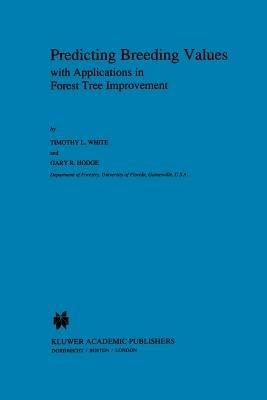
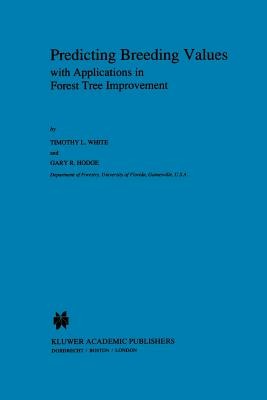
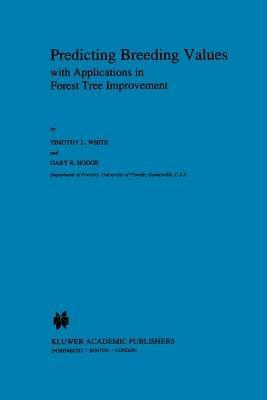
In most breeding programs of plant and animal species, genetic data (such as data from field progeny tests) are used to rank parents and help choose candidates for selection. In general, all selection processes first rank the candidates using some function of the observed data and then choose as the selected portion those candidates with the largest (or smallest) values of that function. To make maximum progress from selection, it is necessary to use a function of the data that results in the candidates being ranked as closely as possible to the true (but always unknown) ranking. Very often the observed data on various candidates are messy and unbalanced and this complicates the process of developing precise and accurate rankings. For example, for any given candidate, there may be data on that candidate and its siblings growing in several field tests of different ages. Also, there may be performance data on siblings, ancestors or other relatives from greenhouse, laboratory or other field tests. In addition, data on different candidates may differ drastically in terms of quality and quantity available and may come from varied relatives. Genetic improvement programs which make most effective use of these varied, messy, unbalanced and ancestral data will maximize progress from all stages of selection. In this regard, there are two analytical techniques, best linear prediction (BLP) and best linear unbiased prediction (BLUP), which are quite well-suited to predicting genetic values from a wide variety of sources, ages, qualities and quantities of data.
Leggi di più
Leggi di meno
Autore:
Editore:
Collana:
Forestry Sciences
Anno:
2010
Rilegatura:
Paperback / softback
Pagine:
367 p.
Testo in English
Dimensioni:
235 x 155 mm
EAN:
9789048140558

L'articolo è stato aggiunto al carrello
Informazioni e Contatti sulla Sicurezza dei Prodotti
Le schede prodotto sono aggiornate in conformità al Regolamento UE 988/2023. Laddove ci fossero taluni dati non disponibili per ragioni indipendenti da IBS, vi informiamo che stiamo compiendo ogni ragionevole sforzo per inserirli. Vi invitiamo a controllare periodicamente il sito www.ibs.it per eventuali novità e aggiornamenti.
Per le vendite di prodotti da terze parti, ciascun venditore si assume la piena e diretta responsabilità per la commercializzazione del prodotto e per la sua conformità al Regolamento UE 988/2023, nonché alle normative nazionali ed europee vigenti.
Per informazioni sulla sicurezza dei prodotti, contattare productsafetyibs@feltrinelli.it
L’articolo è stato aggiunto alla lista dei desideri
