

L’articolo è stato aggiunto alla lista dei desideri









EBOOK IN LINGUA STRANIERA
 E-mail
 Facebook
 LinkedIn
 Twitter
 WhatsApp
REIMAGINING REALITY
(0)
Cliccando su “Conferma” dichiari che il contenuto da te inserito è conforme alle Condizioni Generali d’Uso del Sito ed alle Linee Guida sui Contenuti Vietati. Puoi rileggere e modificare e successivamente confermare il tuo contenuto. Tra poche ore lo troverai online (in caso contrario verifica la conformità del contenuto alle policy del Sito).
Grazie per la tua recensione!
Tra poche ore la vedrai online (in caso contrario verifica la conformità del testo alle nostre linee guida). Dopo la pubblicazione per te +4 punti 
8,99 €
+90
punti 
Venditore: IBS

Acquista online
Scaricabile subito
Articolo acquistabile con Carta del Docente

Articolo acquistabile con Carta Cultura Giovani e Carta del Merito

Articolo acquistabile con Carta della Cultura

Abbonati a Kobo plus per avere accesso illimitato a questo contenuto

Dati e Statistiche
 Salvato in 0 liste dei desideri
Salvato in 0 liste dei desideri
REIMAGINING REALITY
Scaricabile subito
8,99 €
8,99 €
Scaricabile subito
Altre offerte vendute e spedite dai nostri venditori
Ebook in lingua straniera
REIMAGINING REALITY
Altri venditori
Prezzo e spese di spedizione
EBOOK INGLESE
EPUB2 con DRMFREE
Scaricabile subito

Venduto e spedito da
IBS
Spedizione Gratis
8,99 €
Altri venditori
Prezzo e spese di spedizione
EBOOK INGLESE
EPUB2 con DRMFREE
Scaricabile subito
Venduto e spedito da
IBS
Spedizione Gratis
8,99 €
Altri venditori
Prezzo e spese di spedizione

Tutti i formati ed edizioni

Promo attive (0)
REIMAGINING REALITY
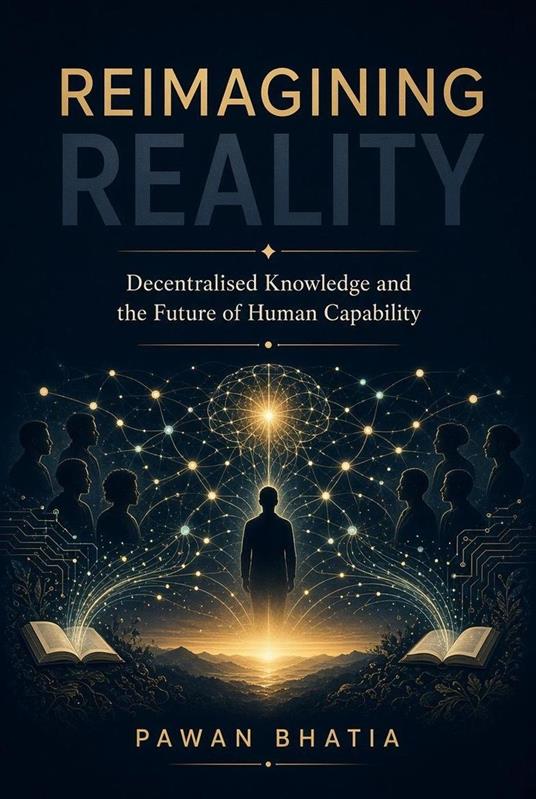
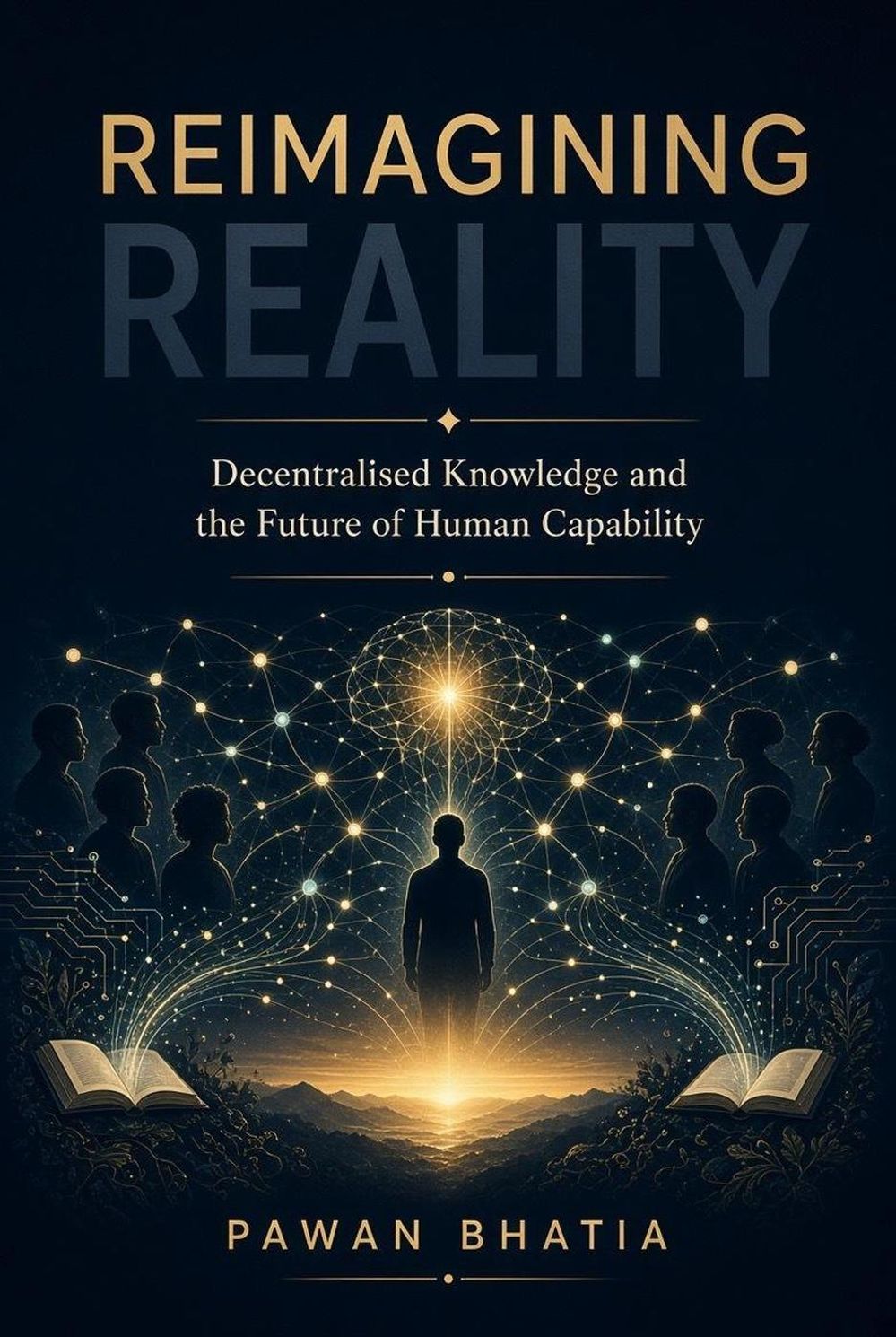
Pawan Bhatia's Reimagining Reality argues that the distribution of knowledge is the distribution of power. Knowledge produces capability, capability produces power, so who can access, contribute to, verify, and benefit from knowledge shapes society. For centuries knowledge was centralised by scarcity: scribes, churches, universities, corporations, states, and platforms acted as gatekeepers. That system achieved much but is now straining under rapid change, inequality, institutional distrust, and outdated design assumptions. The internet, AI, and open collaboration are lowering the costs of copying, explaining, translating, and sharing knowledge, making decentralisation possible. Bhatia examines working examples: Wikipedia reinvents authority through open editing, transparent histories, citations, and distributed moderation. Linux and open source show that distributed volunteers and companies can build world-class infrastructure with licences, peer review, version control, and governance. Citizen science involves ordinary people in research. COVID-19 demonstrated open science's speed: rapid genome sharing, preprints, open data, and collaborative trials like RECOVERY, alongside misinformation, inequality, and retracted papers. From these cases he distils the Knowledge Commons: four pillars—Access, Contribution, Verification, Application—and a five-step cycle—Discover, Learn, Apply, Share, Verify. Verification is hardest, requiring transparency, reputation, peer review, AI-assisted fact-checking, and shared responsibility rather than central censorship. Part IV explores AI's potential to democratise intelligence through personal tutors, translators, researchers, and coaches. AI could close knowledge gaps, but risks concentrating corporate power, spreading misinformation, creating dependence, invading privacy, and widening inequality. Education must become lifelong, personalised, project-based, and equitable, with teachers as facilitators. Part V applies this to innovation, smart communities, and India's opportunity. Open innovation, maker culture, grassroots invention, and digital public infrastructure like Aadhaar, UPI, DigiLocker, DIKSHA, and Bhashini could spread capability, though privacy, exclusion, language, and inequality remain serious challenges. Part VI calls for leadership to shift from expert to orchestrator: connecting people, resources, and knowledge; building learning organisations; and renewing the social contract with rights to access knowledge, lifelong learning, and intelligence, balanced by duties to contribute, verify, share, and solve problems. Part VII proposes cognitive democracy: political democracy gave voice, economic democracy gave opportunity, cognitive democracy gives capability. A 2050 scenario imagines universal AI mentors, borderless learning, collaborative science, community innovation, and continuous reskilling, while warning of capture, dependence, surveillance, and noise. The book ends with a ten-principle manifesto and a letter urging curiosity, judgement, generosity, verification, inclusion, and defence of openness. Its core message: knowledge is humanity's greatest shared resource; societies that learn faster than they change will thrive and practical action.
Leggi di più
Leggi di meno
Autore:
Anno edizione:
2026
Editore:
Formato:
Lingua:
Inglese
Compatibilità:
Tutti i dispositivi (eccetto Kindle) Scopri di più
Layout:
Reflowable
EAN:
9798235322912
L'articolo è stato aggiunto al carrello
Formato:
Gli eBook venduti da IBS.it sono in formato ePub e possono essere protetti da Adobe DRM. In caso di download di un file protetto da DRM si otterrà un file in formato .acs, (Adobe Content Server Message), che dovrà essere aperto tramite Adobe Digital Editions e autorizzato tramite un account Adobe, prima di poter essere letto su pc o trasferito su dispositivi compatibili.
Cloud:
Gli eBook venduti da IBS.it sono sincronizzati automaticamente su tutti i client di lettura Kobo successivamente all’acquisto. Grazie al Cloud Kobo i progressi di lettura, le note, le evidenziazioni vengono salvati e sincronizzati automaticamente su tutti i dispositivi e le APP di lettura Kobo utilizzati per la lettura.
Clicca qui per sapere come scaricare gli ebook utilizzando un pc con sistema operativo Windows
L’articolo è stato aggiunto alla lista dei desideri
