

L’articolo è stato aggiunto alla lista dei desideri








LIBRO INGLESE
 E-mail
 Facebook
 LinkedIn
 Twitter
 WhatsApp
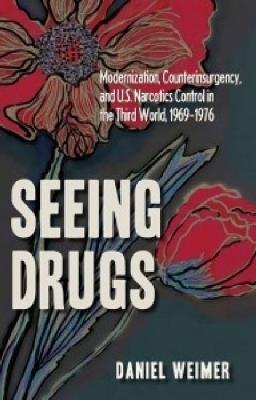
Seeing Drugs: Modernization, Counterinsurgency and U.S. Narcotics Control in the Third World, 1969-1976
(0)
Cliccando su “Conferma” dichiari che il contenuto da te inserito è conforme alle Condizioni Generali d’Uso del Sito ed alle Linee Guida sui Contenuti Vietati. Puoi rileggere e modificare e successivamente confermare il tuo contenuto. Tra poche ore lo troverai online (in caso contrario verifica la conformità del contenuto alle policy del Sito).
Grazie per la tua recensione!
Tra poche ore la vedrai online (in caso contrario verifica la conformità del testo alle nostre linee guida). Dopo la pubblicazione per te +4 punti 
61,75 €

-5%
65,00 €
+620
punti
Venditore: IBS
Articolo acquistabile con Carta del Docente

Articolo acquistabile con Carta Cultura Giovani e Carta del Merito

Articolo acquistabile con Carta della Cultura

Paga con Klarna in 3 rate senza interessi per ordini superiori a 39 €

Dati e Statistiche
 Salvato in 0 liste dei desideri
Salvato in 0 liste dei desideri
Seeing Drugs: Modernization, Counterinsurgency and U.S. Narcotics Control in the Third World, 1969-1976
Disponibile in 5 gg lavorativi
61,75 €
-5%
65,00 €
61,75 €
65,00 €
-5%
Disponibile in 5 gg lavorativi
Altre offerte vendute e spedite dai nostri venditori
Libri in Inglese
Seeing Drugs: Modernization, Counterinsurgency and U.S. Narcotics Control in the Third World, 1969-1976
Altri venditori
Prezzo e spese di spedizione

LIBRO INGLESE
Disponibile in 5 gg lavorativi

Venduto e spedito da
IBS
Spedizione Gratis
-5%
65,00 €
61,75 €
Altri venditori
Prezzo e spese di spedizione
LIBRO INGLESE
Disponibile in 5 gg lavorativi
Venduto e spedito da
IBS
Spedizione Gratis
-5%
65,00 €
61,75 €
Altri venditori
Prezzo e spese di spedizione

Tutti i formati ed edizioni
Promo attive (0)
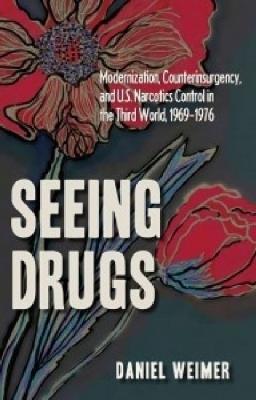
A timely historical analysis of a persistent global problem Since its declaration in the early 1970s, the American drug war has spanned the globe in a quest to stop the flow of illegal drugs into the United States. Explaining the conceptual framework within which policymakers understood illegal opium production and trafficking, Seeing Drugs examines the genesis of the war on drugs during the Nixon and Ford administrations when the United States developed the policies that set the parameters of subsequent American drug control abroad. Faced with rising heroin use in the United States and the fear of drug-addicted Vietnam veterans carrying their affliction home and propelled by the belief that heroin addiction spreads like a contagious disease, U.S. officials identified three Third World nations--Thailand, Burma, and Mexico--as the primary sources of illegal narcotics servicing the American drug market. Author Daniel Weimer demonstrates that drug-control officials in these countries confronted a host of interlocking factors shaping the illicit narcotics trade and that, in response to these challenges, policymakers applied modernization and counterinsurgency theory to devise strategies to assist the Thai, Burmese, and Mexican governments in curbing drug trafficking. The Nixon and Ford administrations sincerely believed their policies could rein in the narcotics trade and diminish addiction within the United States. In the end, however, the drug war only guaranteed continued American intervention in the Third World, where the majority of illegal drug crops grew. Through interdisciplinary and comparative analysis, Seeing Drugs examines the contours of the burgeoning drug war, the cultural significance of drugs and addiction, and their links to the formation of national identity within the United States, Thailand, Burma, and Mexico. By highlighting the prevalence of modernization and counterinsurgency discourse within drug-control policy, Weimer reveals an unexplored and important facet of the history of U.S-Third World interaction. "Essential reading for anyone interested in both the history of U.S. drug policy and the process of modernization during the Cold War." - William O. Walker III, author of Drug Control in the Americas and Opium and Foreign Policy "Seeing Drugs explores the dramatic effects of post-1945 U.S. modernization and counterinsurgency efforts, joined with Cold War imperatives, on the United States' war on drugs. The war on drugs was carried by American dollars, social scientists, officials, and technology into the poppy fields of Mexico, Thailand and Burma. Dan Weimer deftly demonstrates the layered ways in which beliefs about drugs as threat and symbol of antimodernism prompted Americans to forcibly transform drug-growing areas, sometimes with support from indigenous elites. His story, based on impressive research and capacious understanding of theory, reveals both the contradictions in the United States' war on drugs as well as many reasons for its devastating effects. This work joins much of the most exciting new work in U.S. foreign relations, in taking serious interest in the transformative consequences of U.S. foreign policy for other nations. Seeing Drugs joins Al McCoy's classic Politics of Heroin as a 'must read' for understanding the United States' war on drugs." - Anne L. Foster, author of Projections of Power: The United States and Europe in Colonial Southeast Asia, 1919-1941 "Weimer persuasively demonstrates that discourses of modernization and counterinsurgency helped to shape both U.S. counter-narcotics policy abroad and domestic drug policy at home along coercive lines. An important and timely book with much to teach us about the contradictions of the 'war on drugs' in Afghanistan, Colombia, and elsewhere." - Brad Simpson, Princeton University
Leggi di più
Leggi di meno
Testo in English
Dimensioni:
236 x 154 mm
Peso:
655 gr.
EAN:
9781606350591

L'articolo è stato aggiunto al carrello
Informazioni e Contatti sulla Sicurezza dei Prodotti
Le schede prodotto sono aggiornate in conformità al Regolamento UE 988/2023. Laddove ci fossero taluni dati non disponibili per ragioni indipendenti da IBS, vi informiamo che stiamo compiendo ogni ragionevole sforzo per inserirli. Vi invitiamo a controllare periodicamente il sito www.ibs.it per eventuali novità e aggiornamenti.
Per le vendite di prodotti da terze parti, ciascun venditore si assume la piena e diretta responsabilità per la commercializzazione del prodotto e per la sua conformità al Regolamento UE 988/2023, nonché alle normative nazionali ed europee vigenti.
Per informazioni sulla sicurezza dei prodotti, contattare productsafetyibs@feltrinelli.it
L’articolo è stato aggiunto alla lista dei desideri
