

L’articolo è stato aggiunto alla lista dei desideri










EBOOK IN LINGUA STRANIERA
 E-mail
 Facebook
 LinkedIn
 Twitter
 WhatsApp
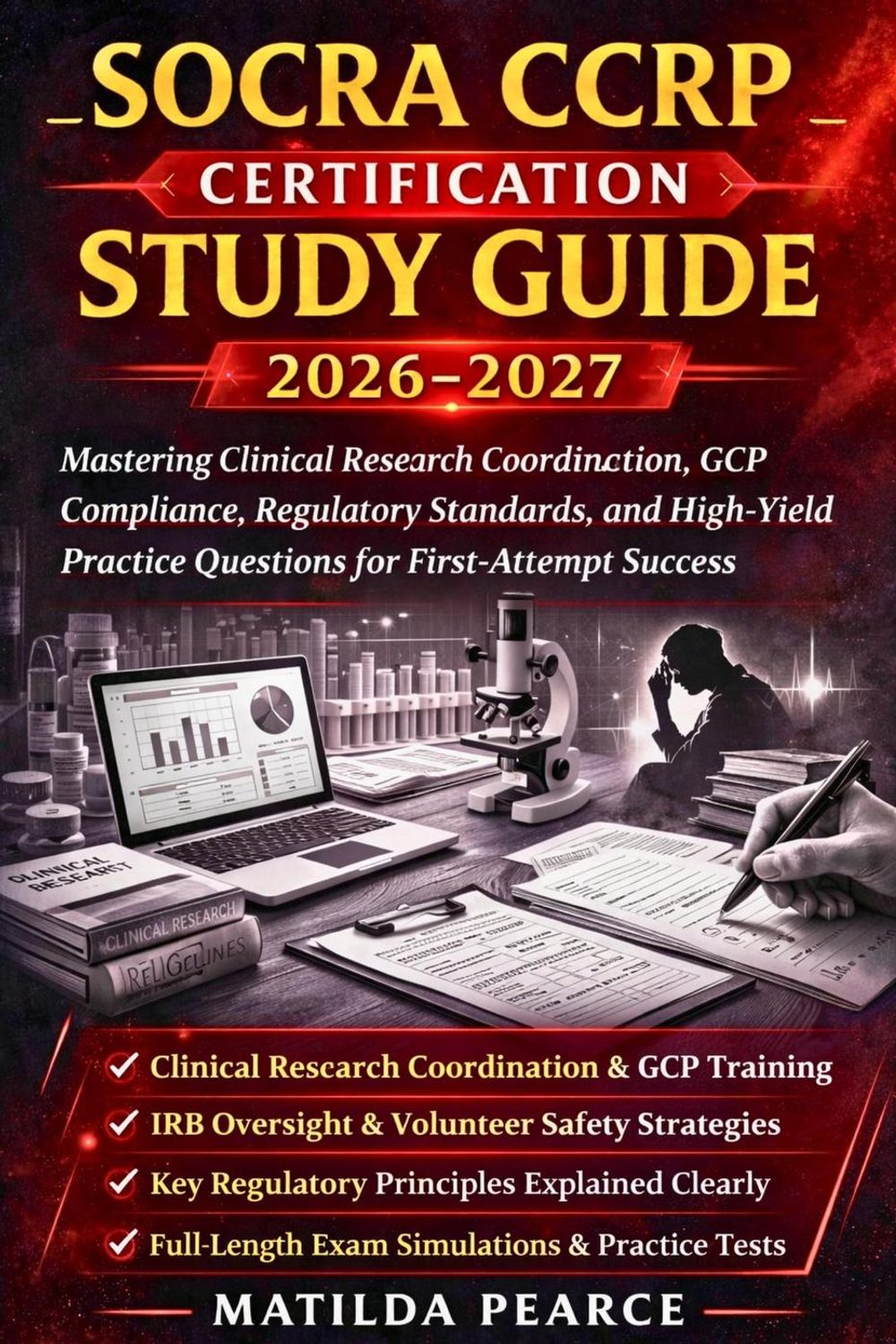
SOCRA CCRP Certification Study Guide 2026–2027
(0)
Cliccando su “Conferma” dichiari che il contenuto da te inserito è conforme alle Condizioni Generali d’Uso del Sito ed alle Linee Guida sui Contenuti Vietati. Puoi rileggere e modificare e successivamente confermare il tuo contenuto. Tra poche ore lo troverai online (in caso contrario verifica la conformità del contenuto alle policy del Sito).
Grazie per la tua recensione!
Tra poche ore la vedrai online (in caso contrario verifica la conformità del testo alle nostre linee guida). Dopo la pubblicazione per te +4 punti 
17,49 €
+170
punti 
Venditore: IBS

Acquista online
Scaricabile subito
Articolo acquistabile con Carta del Docente

Articolo acquistabile con Carta Cultura Giovani e Carta del Merito

Articolo acquistabile con Carta della Cultura

Dati e Statistiche
 Salvato in 0 liste dei desideri
Salvato in 0 liste dei desideri
SOCRA CCRP Certification Study Guide 2026–2027
Scaricabile subito
17,49 €
17,49 €
Scaricabile subito
Altre offerte vendute e spedite dai nostri venditori

Ebook in lingua straniera
SOCRA CCRP Certification Study Guide 2026–2027
Altri venditori
Prezzo e spese di spedizione
Nuovo
Scaricabile subito

Venduto e spedito da
IBS
Spedizione Gratis
17,49 €
Altri venditori
Prezzo e spese di spedizione
Nuovo
Scaricabile subito
Venduto e spedito da
IBS
Spedizione Gratis
17,49 €
Altri venditori
Prezzo e spese di spedizione

Tutti i formati ed edizioni

Promo attive (0)
SOCRA CCRP Certification Study Guide 2026–2027
Clinical research lies at the heart of modern medicine. Every treatment, therapy, and medical device reaches patients only after careful investigation, strict oversight, and the work of professionals trained to protect participants while producing reliable scientific evidence. For those preparing to earn this respected credential, success requires more than scattered notes or surface-level review. It requires a structured guide that explains complex principles clearly while building confidence for exam performance. SOCRA CCRP Certification Study Guide 2026–2027 provides that preparation. Designed for both aspiring and practicing clinical research professionals, this guide presents a clear path toward mastering the knowledge required for work in regulated biomedical investigations. It explores the principles that guide ethical human subject protection, regulatory oversight, study coordination, safety monitoring, and professional responsibility. Readers move through the same core domains that define real clinical research practice. Early chapters build a strong foundation by explaining how biomedical investigations developed, how trial phases contribute to medical advancement, and how research teams collaborate in complex study environments. The discussion then turns to ethical responsibilities, including volunteer protection, informed consent, and the oversight role of independent review boards. Regulatory frameworks and international standards are explained in practical language. Readers gain insight into how global guidance shapes research practices, how federal rules influence trial conduct, and how investigators and sponsors maintain compliance throughout a study lifecycle. Operational topics bring readers inside the daily work of research professionals. The guide explains protocol interpretation, site preparation, participant recruitment, and investigational product management. It also highlights accurate documentation practices, deviation management, and the importance of maintaining transparent records. Safety monitoring and data oversight form another important part of preparation. These sections explain adverse event evaluation, reporting timelines, monitoring approaches, query resolution, and quality systems that protect both participant safety and data reliability. Administrative responsibilities are also covered, including budget planning, contractual agreements, billing compliance, and resource coordination required to support successful study execution. Preparation extends beyond theory. The final portion of the guide focuses on exam readiness through realistic practice. Full-length tests reflect the reasoning style of the certification exam, while scenario-based questions challenge readers to apply knowledge in practical situations. Detailed explanations reinforce understanding and strengthen analytical thinking. Quick-reference charts and regulatory summaries help readers review essential topics efficiently before the exam. A structured review strategy supports effective study planning and helps candidates approach the test with clarity and confidence. By the end of this guide, readers will have developed a stronger understanding of the systems governing ethical biomedical investigation and the responsibilities expected from clinical research professionals. This guide is designed for: • Professionals preparing for CCRP certification • Clinical research coordinators seeking structured review • Investigators and research staff strengthening regulatory knowledge • Students entering biomedical investigation careers • Healthcare professionals transitioning into research roles Clear explanations, practical examples, and focused exam preparation combine to create a resource that supports both understanding and performance for those committed to advancing safe and ethical clinical research.
Leggi di più
Leggi di meno
Autore:
Anno edizione:
2026
Editore:
Formato:
Lingua:
Inglese
Compatibilità:
Tutti i dispositivi (eccetto Kindle) Scopri di più
Layout:
Reflowable
EAN:
9798233682025

L'articolo è stato aggiunto al carrello
Formato:
Gli eBook venduti da IBS.it sono in formato ePub e possono essere protetti da Adobe DRM. In caso di download di un file protetto da DRM si otterrà un file in formato .acs, (Adobe Content Server Message), che dovrà essere aperto tramite Adobe Digital Editions e autorizzato tramite un account Adobe, prima di poter essere letto su pc o trasferito su dispositivi compatibili.
Cloud:
Gli eBook venduti da IBS.it sono sincronizzati automaticamente su tutti i client di lettura Kobo successivamente all’acquisto. Grazie al Cloud Kobo i progressi di lettura, le note, le evidenziazioni vengono salvati e sincronizzati automaticamente su tutti i dispositivi e le APP di lettura Kobo utilizzati per la lettura.
Clicca qui per sapere come scaricare gli ebook utilizzando un pc con sistema operativo Windows
L’articolo è stato aggiunto alla lista dei desideri
