

L’articolo è stato aggiunto alla lista dei desideri








LIBRO INGLESE
 E-mail
 Facebook
 LinkedIn
 Twitter
 WhatsApp
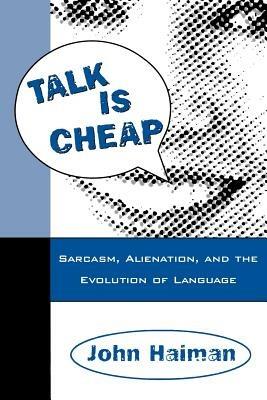
Talk Is Cheap: Sarcasm, Alienation, and the Evolution of Language
(0)
Cliccando su “Conferma” dichiari che il contenuto da te inserito è conforme alle Condizioni Generali d’Uso del Sito ed alle Linee Guida sui Contenuti Vietati. Puoi rileggere e modificare e successivamente confermare il tuo contenuto. Tra poche ore lo troverai online (in caso contrario verifica la conformità del contenuto alle policy del Sito).
Grazie per la tua recensione!
Tra poche ore la vedrai online (in caso contrario verifica la conformità del testo alle nostre linee guida). Dopo la pubblicazione per te +4 punti 
139,70 €
+1400
punti 
Venditore: IBS
Articolo acquistabile con Carta del Docente

Articolo acquistabile con Carta Cultura Giovani e Carta del Merito

Articolo acquistabile con Carta della Cultura

Paga con Klarna in 3 rate senza interessi per ordini superiori a 39 €

Dati e Statistiche
 Salvato in 0 liste dei desideri
Salvato in 0 liste dei desideri
Talk Is Cheap: Sarcasm, Alienation, and the Evolution of Language
Disponibilità in 2 settimane
139,70 €
139,70 €
Disponibilità in 2 settimane
Altre offerte vendute e spedite dai nostri venditori
Libri in Inglese
Talk Is Cheap: Sarcasm, Alienation, and the Evolution of Language
Altri venditori
Prezzo e spese di spedizione
LIBRO INGLESE
Disponibilità in 2 settimane

Venduto e spedito da
IBS
Spedizione Gratis
139,70 €
Altri venditori
Prezzo e spese di spedizione
LIBRO INGLESE
Disponibilità in 2 settimane
Venduto e spedito da
IBS
Spedizione Gratis
139,70 €
Altri venditori
Prezzo e spese di spedizione

Tutti i formati ed edizioni
Promo attive (0)
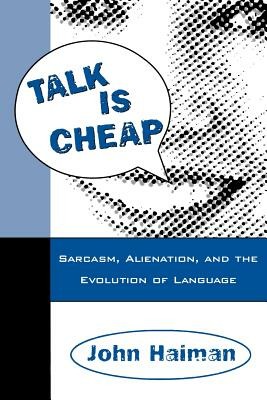
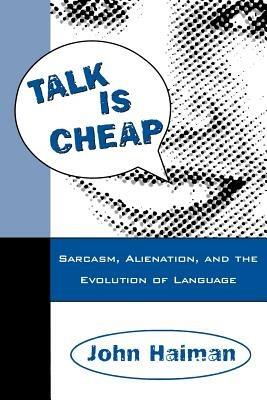
Putting aside questions of truth and falsehood, the old 'talk is cheap' maxim carries as much weight as ever. Indeed, perhaps more. For one need not be an expert in irony or sarcasm to realize that people don't necessarily mean what they say. Phrases such as 'Yeah, right' and 'I could care less' are so much a part of the way we speak - and the way we live - that we are more likely to notice when they are absent (for example, Forrest Gump). From our everyday dialogues and conversations ('Thanks a lot!') to the screenplays of our popular films (Pulp Fiction), what is said is frequently very different from what is meant. Talk is Cheap begins with this telling observation and proceeds to argue that such 'unplain speaking' is fundamentally embedded in the way we now talk. Author John Haiman traces this sea-change in our use of language to the emergence of a postmodern 'divided self' who is hyper-conscious that what he or she is saying has been said before; 'cheap talk' thus allows us to distance ourselves from a social role with which we are uncomfortable. Haiman goes on to examine the full range of these pervasive distancing mechanisms, from clichés and quotation marks to camp and parody. Also, and importantly, Haiman highlights several ways in which language is evolving (and has evolved) from non-linguistic behaviour. In other words, this study shows us how what we are saying is continually separating itself from how we say it. As provocative as it is timely, the book will be fascinating reading for students of linguistics, literature, communication, anthropology, philosophy, and popular culture.
Leggi di più
Leggi di meno
Autore:
Editore:
Anno:
2001
Rilegatura:
Paperback / softback
Pagine:
232 p.
Testo in English
Dimensioni:
155 x 233 mm
Peso:
363 gr.
EAN:
9780195115253

L'articolo è stato aggiunto al carrello
Informazioni e Contatti sulla Sicurezza dei Prodotti
Le schede prodotto sono aggiornate in conformità al Regolamento UE 988/2023. Laddove ci fossero taluni dati non disponibili per ragioni indipendenti da IBS, vi informiamo che stiamo compiendo ogni ragionevole sforzo per inserirli. Vi invitiamo a controllare periodicamente il sito www.ibs.it per eventuali novità e aggiornamenti.
Per le vendite di prodotti da terze parti, ciascun venditore si assume la piena e diretta responsabilità per la commercializzazione del prodotto e per la sua conformità al Regolamento UE 988/2023, nonché alle normative nazionali ed europee vigenti.
Per informazioni sulla sicurezza dei prodotti, contattare productsafetyibs@feltrinelli.it
L’articolo è stato aggiunto alla lista dei desideri
