

L’articolo è stato aggiunto alla lista dei desideri









EBOOK
 E-mail
 Facebook
 LinkedIn
 Twitter
 WhatsApp
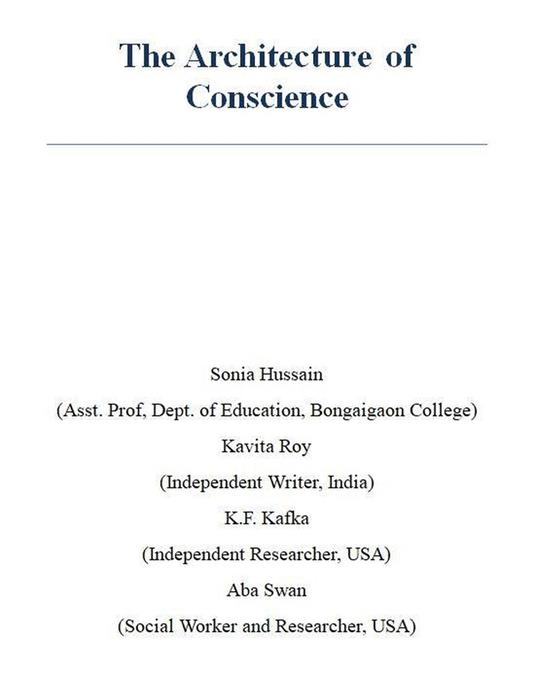
The Architecture of Conscience
(0)
Cliccando su “Conferma” dichiari che il contenuto da te inserito è conforme alle Condizioni Generali d’Uso del Sito ed alle Linee Guida sui Contenuti Vietati. Puoi rileggere e modificare e successivamente confermare il tuo contenuto. Tra poche ore lo troverai online (in caso contrario verifica la conformità del contenuto alle policy del Sito).
Grazie per la tua recensione!
Tra poche ore la vedrai online (in caso contrario verifica la conformità del testo alle nostre linee guida). Dopo la pubblicazione per te +4 punti 
8,99 €
+90
punti 
Venditore: IBS

Acquista online
Scaricabile subito
Articolo acquistabile con Carta del Docente

Articolo acquistabile con Carta Cultura Giovani e Carta del Merito

Articolo acquistabile con Carta della Cultura

Abbonati a Kobo plus per avere accesso illimitato a questo contenuto

Dati e Statistiche
 Salvato in 0 liste dei desideri
Salvato in 0 liste dei desideri
The Architecture of Conscience
Scaricabile subito
8,99 €
8,99 €
Scaricabile subito
Altre offerte vendute e spedite dai nostri venditori

Ebook
The Architecture of Conscience
Altri venditori
Prezzo e spese di spedizione
Nuovo
Scaricabile subito

Venduto e spedito da
IBS
Spedizione Gratis
8,99 €
Altri venditori
Prezzo e spese di spedizione
Nuovo
Scaricabile subito
Venduto e spedito da
IBS
Spedizione Gratis
8,99 €
Altri venditori
Prezzo e spese di spedizione

Tutti i formati ed edizioni

Promo attive (0)
The Architecture of Conscience
When we first began talking about writing this book, we were sitting in a small tea shop near Bongaigaon College, watching the rain fall on the dusty road outside. We had both been thinking about the same question for many months, maybe years: why do our students seem so lost? Not lost in their studies—they are often brilliant, scoring high marks, mastering technology, and winning competitions—but lost in a deeper way. They can solve complex mathematics problems but struggle to know what is the right thing to do when their friend is being bullied. They can write perfect English essays but cannot find words to comfort a grieving classmate. They know the dates of historical battles but not how to resolve a simple conflict without shouting or silence. This is not their fault. It is ours. We have built an education system that teaches everything except how to live a good life. We have focused so much on producing workers for the economy that we have forgotten to produce human beings for society. This book is our attempt to fill that gap. It is not a book of preaching or simple moral stories. It is a practical guide based on real research, real classroom experience, and real understanding of how children's minds grow. We have written it for teachers who are tired of being told to teach values in a forty-minute period but are never shown how. We have written it for parents who want to raise good children in a world that seems to reward only the clever and the selfish. We have written it for policymakers who know that something is broken but need evidence and direction to fix it. And we have written it for students themselves, so they can understand their own moral journey and take charge of it. The book you are holding is the result of five years of work—reading thousands of pages of research, visiting schools across India and other countries, talking to children from five to twenty-five, and testing these ideas in real classrooms. We have tried to make it as simple as possible, but not simpler. Moral education is complex because human beings are complex. We cannot reduce it to posters on walls or morning assembly speeches. It requires understanding how the brain develops, how culture shapes our sense of right and wrong, how technology is changing the way we think about others, and how schools themselves must become places where goodness is lived, not just taught. This book has six chapters because we wanted to cover the complete picture—from why we need moral education in the first place, to how children's conscience develops stage by stage, to what actual teaching methods work in the classroom, to how we respect different cultures while finding common values, to how we deal with mobile phones and social media and artificial intelligence, and finally, how we assess moral growth without turning it into another exam to be passed. Each chapter can be read alone, but together they form a complete system. We have tried to keep the language simple because the ideas themselves are powerful enough. We do not need big words to hide weak thinking. We have also included many examples from Indian schools and villages, because moral education must grow from the soil it is planted in. But we have also looked at what works in other parts of the world—what we can learn from the old traditions of Japan, the community practices of Africa, the modern research in America, and the policy experiments in Europe. We are not saying we have all the answers. In fact, this book raises as many questions as it answers. But we are saying that we must start this conversation seriously, systematically, and now. The future of our children—and therefore our nation—depends not on how much they know, but on what kind of people they become.
Leggi di più
Leggi di meno
Autore:
Editore:
Formato:
Lingua:
Inglese
Cloud:
Compatibilità:
Tutti i dispositivi (eccetto Kindle) Scopri di più
Layout:
Reflowable
EAN:
9798232326647

L'articolo è stato aggiunto al carrello
Formato:
Gli eBook venduti da IBS.it sono in formato ePub e possono essere protetti da Adobe DRM. In caso di download di un file protetto da DRM si otterrà un file in formato .acs, (Adobe Content Server Message), che dovrà essere aperto tramite Adobe Digital Editions e autorizzato tramite un account Adobe, prima di poter essere letto su pc o trasferito su dispositivi compatibili.
Cloud:
Gli eBook venduti da IBS.it sono sincronizzati automaticamente su tutti i client di lettura Kobo successivamente all’acquisto. Grazie al Cloud Kobo i progressi di lettura, le note, le evidenziazioni vengono salvati e sincronizzati automaticamente su tutti i dispositivi e le APP di lettura Kobo utilizzati per la lettura.
Clicca qui per sapere come scaricare gli ebook utilizzando un pc con sistema operativo Windows
L’articolo è stato aggiunto alla lista dei desideri
