

L’articolo è stato aggiunto alla lista dei desideri









EBOOK
 E-mail
 Facebook
 LinkedIn
 Twitter
 WhatsApp
The Way Back to Almost
(0)
Cliccando su “Conferma” dichiari che il contenuto da te inserito è conforme alle Condizioni Generali d’Uso del Sito ed alle Linee Guida sui Contenuti Vietati. Puoi rileggere e modificare e successivamente confermare il tuo contenuto. Tra poche ore lo troverai online (in caso contrario verifica la conformità del contenuto alle policy del Sito).
Grazie per la tua recensione!
Tra poche ore la vedrai online (in caso contrario verifica la conformità del testo alle nostre linee guida). Dopo la pubblicazione per te +4 punti 
Omaggio
Venditore: IBS

Acquista online
Scaricabile subito
Articolo acquistabile con Carta del Docente

Articolo acquistabile con Carta Cultura Giovani e Carta del Merito

Articolo acquistabile con Carta della Cultura

Abbonati a Kobo plus per avere accesso illimitato a questo contenuto

Dati e Statistiche
 Salvato in 0 liste dei desideri
Salvato in 0 liste dei desideri
The Way Back to Almost
Scaricabile subito
Omaggio
Omaggio
Scaricabile subito
Altre offerte vendute e spedite dai nostri venditori
Ebook
The Way Back to Almost
Altri venditori
Prezzo e spese di spedizione
EBOOK
EPUB2 con DRMFREE
Scaricabile subito

Venduto e spedito da
IBS
Spedizione Gratis
0,00 €
Altri venditori
Prezzo e spese di spedizione
EBOOK
EPUB2 con DRMFREE
Scaricabile subito
Venduto e spedito da
IBS
Spedizione Gratis
0,00 €
Altri venditori
Prezzo e spese di spedizione

Tutti i formati ed edizioni
Promo attive (0)
The Way Back to Almost
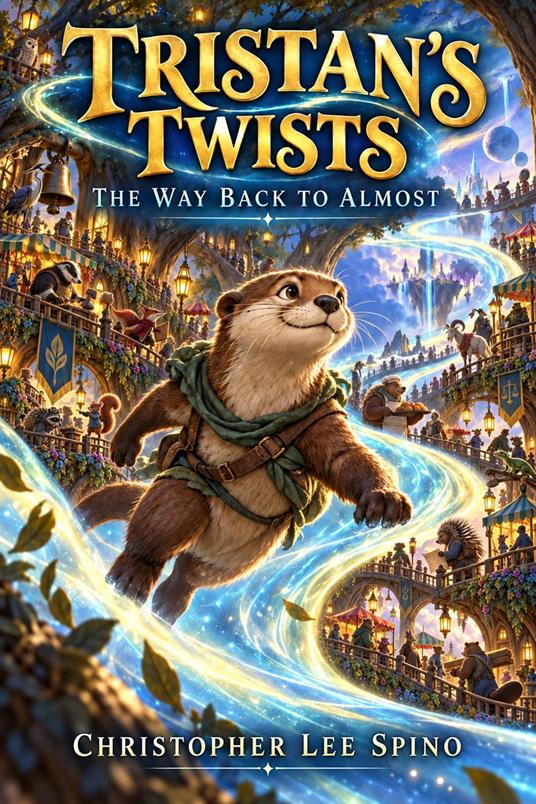
Tuesday stops halfway through a cracker. The bell freezes in the middle of its note. Chalk dust hangs in the air. Everyone in Colorado Springs slows almost to stillness—except Tristan, a young otter with a talent for feeling hidden currents, and Rook, the tiny living stone tucked beneath his left forearm. Rook can cross dimensions. Tristan can follow the strange paths that open around her. Before stepping into the impossible, they make an agreement: there and back; either of them can ask to go home; danger must be named when it is known; and neither may promise the other's help without permission. It sounds sensible. Then Tristan sneezes himself tail-first into a river made of air. Beyond the ordinary city waits a town built through the branches of an enormous tree, where boats sail above rooftops and a silent bell has left the current twisted. Tristan's whiskers can feel what the river is trying to do, while Rook hears complaints from metal, rope, wood, and stone. Together with the people who live there, they must learn the difference between rushing toward an answer and listening long enough to find the real problem. That first crossing is only the beginning. A borrowed floor follows its host through a sideways house because an instruction is obeying exactly the wrong meaning. A buried garden channel carries memories scattered by the wind, while a beautiful green stone tempts Tristan to keep what does not belong to him. Beneath another town's bridge, a repair meant to help has placed the whole crossing under dangerous strain. Every world has different rules, different animal people, and a new version of Tristan's small everyday magic. LORE—the common book of accumulated knowledge used across the Chasm—can explain old marks, mechanisms, languages, and agreements. It cannot make choices for anyone. Tristan still has to ask better questions, compare what he senses with what others know, admit when he moves too quickly, and accept that a good answer may begin with "I don't know yet." Rook helps, translates, jokes, complains magnificently, and keeps her own right to say yes or no. Getting somewhere strange may be easier than returning to the precise place Tristan left. Each journey brings Tristan and Rook home close—but not exactly. A chalk mark lands beside his feet instead of beneath them. A gatepost appears on the wrong side. Attention, direction, desire, and agreement all pull at the route. While Molly works to finish the clubhouse's blue door, Tristan fills a notebook with departure points, landing places, mistakes, questions, and the evidence needed to try again. The Way Back to Almost contains five linked short adventures filled with living magic, odd machinery, animal cities, quiet courage, and Rook's bright, stone-dry humor. Each episode reaches its own satisfying resolution while moving Tristan toward a larger discovery: his gift follows more than a visible path. His body can lean toward a place before he consciously chooses it, and every glittering possibility can tug him away from the destination he named. Tristan wants beautiful discoveries. He wants to be useful. He wants stories worth bringing home. Yet the desire to be impressive can make him push too soon, trust a single clue too completely, or reach toward something that belongs elsewhere. Finding his way back will require more than bravery. He must learn what his attention is touching, where home begins, and how to choose one steady current among a hundred tempting pulls. By the time the blue door closes properly, Tristan and Rook have done more than survive impossible worlds. They have begun building a language for traveling together—one grounded in permission, observation, repair, and trust. Somewhere beyond the ringing bells, another road is already opening.
Leggi di più
Leggi di meno
Autore:
Editore:
Formato:
Lingua:
Inglese
Cloud:
Compatibilità:
Tutti i dispositivi (eccetto Kindle) Scopri di più
Layout:
Reflowable
EAN:
9798237779356
L'articolo è stato aggiunto al carrello
Formato:
Gli eBook venduti da IBS.it sono in formato ePub e possono essere protetti da Adobe DRM. In caso di download di un file protetto da DRM si otterrà un file in formato .acs, (Adobe Content Server Message), che dovrà essere aperto tramite Adobe Digital Editions e autorizzato tramite un account Adobe, prima di poter essere letto su pc o trasferito su dispositivi compatibili.
Cloud:
Gli eBook venduti da IBS.it sono sincronizzati automaticamente su tutti i client di lettura Kobo successivamente all’acquisto. Grazie al Cloud Kobo i progressi di lettura, le note, le evidenziazioni vengono salvati e sincronizzati automaticamente su tutti i dispositivi e le APP di lettura Kobo utilizzati per la lettura.
Clicca qui per sapere come scaricare gli ebook utilizzando un pc con sistema operativo Windows
L’articolo è stato aggiunto alla lista dei desideri
