

L’articolo è stato aggiunto alla lista dei desideri









EBOOK IN LINGUA STRANIERA
 E-mail
 Facebook
 LinkedIn
 Twitter
 WhatsApp
The Third Path: Middle Powers and the Reconstruction of Global Order
(0)
Cliccando su “Conferma” dichiari che il contenuto da te inserito è conforme alle Condizioni Generali d’Uso del Sito ed alle Linee Guida sui Contenuti Vietati. Puoi rileggere e modificare e successivamente confermare il tuo contenuto. Tra poche ore lo troverai online (in caso contrario verifica la conformità del contenuto alle policy del Sito).
Grazie per la tua recensione!
Tra poche ore la vedrai online (in caso contrario verifica la conformità del testo alle nostre linee guida). Dopo la pubblicazione per te +4 punti 
5,99 €
+60
punti 
Venditore: IBS

Acquista online
Scaricabile subito
Articolo acquistabile con Carta del Docente

Articolo acquistabile con Carta Cultura Giovani e Carta del Merito

Articolo acquistabile con Carta della Cultura

Abbonati a Kobo plus per avere accesso illimitato a questo contenuto

Dati e Statistiche
 Salvato in 0 liste dei desideri
Salvato in 0 liste dei desideri
The Third Path: Middle Powers and the Reconstruction of Global Order
Scaricabile subito
5,99 €
5,99 €
Scaricabile subito
Altre offerte vendute e spedite dai nostri venditori
Ebook in lingua straniera
The Third Path: Middle Powers and the Reconstruction of Global Order
Altri venditori
Prezzo e spese di spedizione
EBOOK INGLESE
EPUB2 con DRMFREE
Scaricabile subito

Venduto e spedito da
IBS
Spedizione Gratis
5,99 €
Altri venditori
Prezzo e spese di spedizione
EBOOK INGLESE
EPUB2 con DRMFREE
Scaricabile subito
Venduto e spedito da
IBS
Spedizione Gratis
5,99 €
Altri venditori
Prezzo e spese di spedizione

Tutti i formati ed edizioni
Promo attive (0)
The Third Path: Middle Powers and the Reconstruction of Global Order
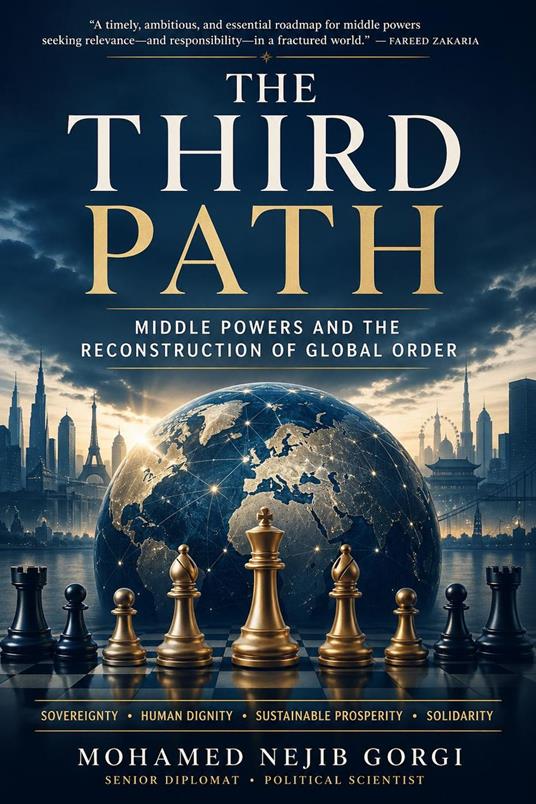
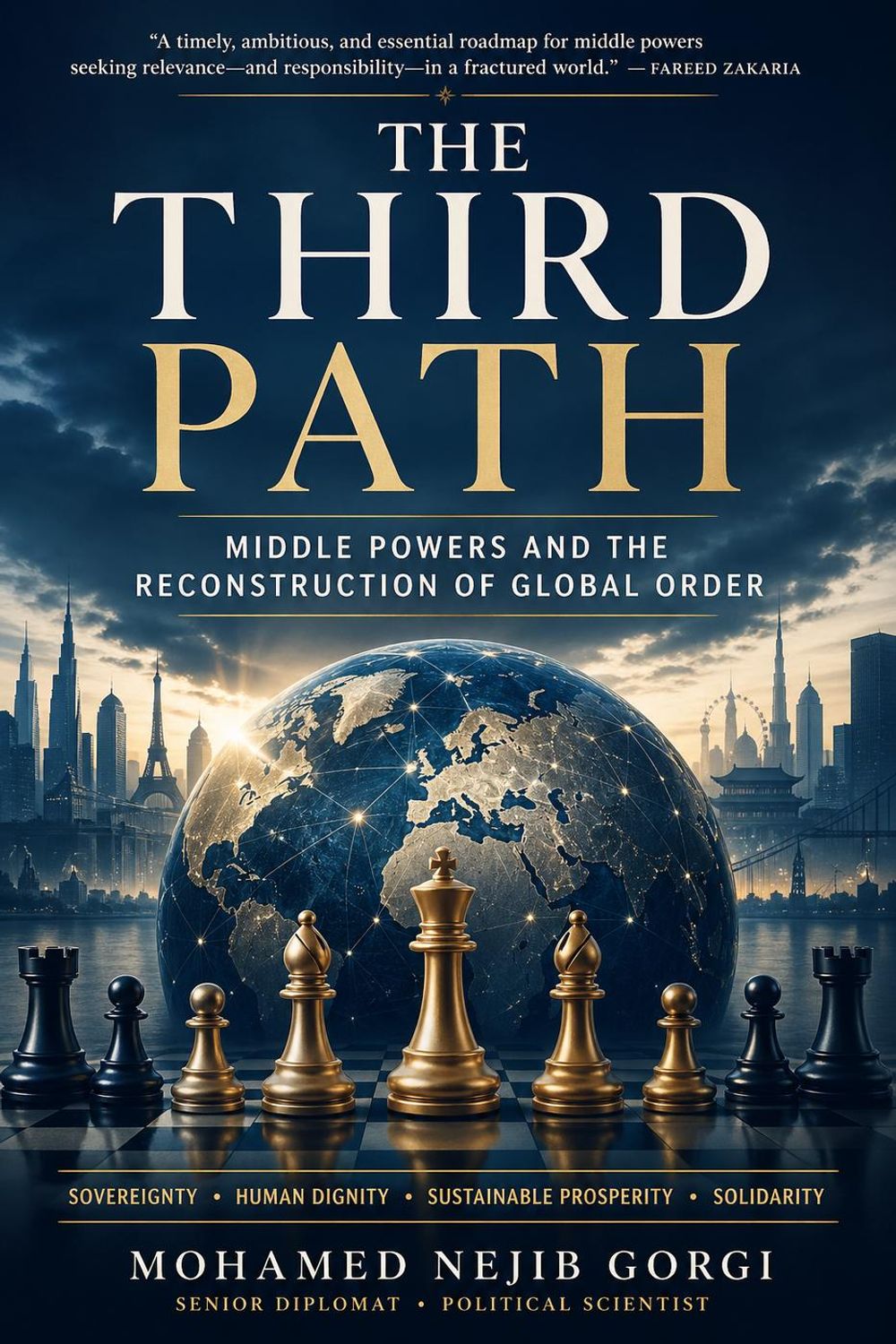
The post–Cold War international order is rupturing. Great-power rivalry, economic weaponization, technological competition, and institutional paralysis have shattered the assumptions that once underpinned global stability. The old system of predictability, rules-based cooperation, and collective security has given way to a more volatile era in which power is fluid, alliances are conditional, and resilience matters more than rhetoric.In The Third Path: Middle Powers and the Reconstruction of Global Order, Mohamed Nejib Gorgi provides both a diagnosis of this transformation and a practical strategic framework for navigating it. Drawing on diplomatic experience and comparative analysis, the book argues that middle powers are no longer mere bystanders in great-power competition—they are central actors in shaping the emerging order.Instead of neutrality or bloc alignment, Gorgi advocates a distinct "third path" grounded in principled realism. This doctrine rests on four pillars: normative clarity, decision discipline, adaptive strategy, and coalition-building among like-minded states. It offers calibrated autonomy within interdependence, rejecting both isolationism and dependency.Central to the book is a hierarchy of principles that clearly distinguishes non-negotiable red lines—such as sovereignty, territorial integrity, and core security interests—from important but secondary objectives like human rights, democratic governance, economic fairness, and sustainable development. This hierarchy enables middle powers to act with strategic coherence in a fragmented world.Gorgi also introduces a practical decision matrix to help policymakers evaluate trade-offs, manage dependencies, assess risks, and decide when to act unilaterally or collectively—bridging theory and effective statecraft.A key argument is that resilience has become the defining currency of international politics. Economic diversification, technological sovereignty, institutional strength, and social cohesion are now vital instruments of geopolitical survival. Through case studies of countries including Canada, Australia, Poland, South Korea, Indonesia, and Turkey, the book shows how middle powers are already practicing hedging, balancing, and coalition-building in response to systemic uncertainty.The third path is not a rejection of global order but an effort to reconstruct it. The book proposes five guiding pillars—sovereignty, territorial integrity, human rights, sustainable development, and solidarity—as the foundation for a more resilient and legitimate international system.Forward-looking and practical, The Third Path outlines short-, medium-, and long-term strategies for middle powers. It introduces usable tools such as a strategic decision matrix, resilience indicators, and a model national doctrine for an era of global fragmentation.Ultimately, the book challenges the assumption that only great powers shape the international system. Gorgi argues that middle powers—collectively representing a major share of global economic output and institutional weight—can significantly influence the future order if they act with coherence, discipline, and strategic patience.This is a book about agency. It shows how states that are neither superpowers nor small powers can navigate rupture without surrendering autonomy or values—and how, through principled realism and coordinated action, they can help build a more stable, balanced, and legitimate global order.In an age of fragmentation and uncertainty, The Third Path offers a clear, pragmatic answer to the question: what comes after the collapse of certainty?
Leggi di più
Leggi di meno
Autore:
Anno edizione:
2026
Editore:
Formato:
Lingua:
Inglese
Compatibilità:
Tutti i dispositivi (eccetto Kindle) Scopri di più
Layout:
Reflowable
EAN:
9798235970656
L'articolo è stato aggiunto al carrello
Formato:
Gli eBook venduti da IBS.it sono in formato ePub e possono essere protetti da Adobe DRM. In caso di download di un file protetto da DRM si otterrà un file in formato .acs, (Adobe Content Server Message), che dovrà essere aperto tramite Adobe Digital Editions e autorizzato tramite un account Adobe, prima di poter essere letto su pc o trasferito su dispositivi compatibili.
Cloud:
Gli eBook venduti da IBS.it sono sincronizzati automaticamente su tutti i client di lettura Kobo successivamente all’acquisto. Grazie al Cloud Kobo i progressi di lettura, le note, le evidenziazioni vengono salvati e sincronizzati automaticamente su tutti i dispositivi e le APP di lettura Kobo utilizzati per la lettura.
Clicca qui per sapere come scaricare gli ebook utilizzando un pc con sistema operativo Windows
L’articolo è stato aggiunto alla lista dei desideri
