

L’articolo è stato aggiunto alla lista dei desideri








LIBRO INGLESE
 E-mail
 Facebook
 LinkedIn
 Twitter
 WhatsApp
Time for Things: Labor, Leisure, and the Rise of Mass Consumption
(0)
Cliccando su “Conferma” dichiari che il contenuto da te inserito è conforme alle Condizioni Generali d’Uso del Sito ed alle Linee Guida sui Contenuti Vietati. Puoi rileggere e modificare e successivamente confermare il tuo contenuto. Tra poche ore lo troverai online (in caso contrario verifica la conformità del contenuto alle policy del Sito).
Grazie per la tua recensione!
Tra poche ore la vedrai online (in caso contrario verifica la conformità del testo alle nostre linee guida). Dopo la pubblicazione per te +4 punti 
53,38 €

-5%
56,19 €
+530
punti
Venditore: IBS
Articolo acquistabile con Carta del Docente

Articolo acquistabile con Carta Cultura Giovani e Carta del Merito

Articolo acquistabile con Carta della Cultura

Paga con Klarna in 3 rate senza interessi per ordini superiori a 39 €

Dati e Statistiche
 Salvato in 0 liste dei desideri
Salvato in 0 liste dei desideri
Time for Things: Labor, Leisure, and the Rise of Mass Consumption
Disponibile in 5 gg lavorativi
53,38 €
-5%
56,19 €
53,38 €
56,19 €
-5%
Disponibile in 5 gg lavorativi
Altre offerte vendute e spedite dai nostri venditori

Libri in Inglese
Time for Things: Labor, Leisure, and the Rise of Mass Consumption
Altri venditori
Prezzo e spese di spedizione
LIBRO INGLESE
Disponibile in 5 gg lavorativi

Venduto e spedito da
IBS
Spedizione Gratis
-5%
56,19 €
53,38 €
Altri venditori
Prezzo e spese di spedizione
LIBRO INGLESE
Disponibile in 5 gg lavorativi
Venduto e spedito da
IBS
Spedizione Gratis
-5%
56,19 €
53,38 €
Altri venditori
Prezzo e spese di spedizione

Tutti i formati ed edizioni
Promo attive (0)
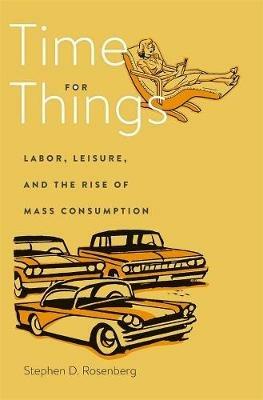
Modern life is full of stuff yet bereft of time. An economic sociologist offers an ingenious explanation for why, over the past seventy-five years, Americans have come to prefer consumption to leisure. Productivity has increased steadily since the mid-twentieth century, yet Americans today work roughly as much as they did then: forty hours per week. We have witnessed, during this same period, relentless growth in consumption. This pattern represents a striking departure from the preceding century, when working hours fell precipitously. It also contradicts standard economic theory, which tells us that increasing consumption yields diminishing marginal utility, and empirical research, which shows that work is a significant source of discontent. So why do we continue to trade our time for more stuff? Time for Things offers a novel explanation for this puzzle. Stephen Rosenberg argues that, during the twentieth century, workers began to construe consumer goods as stores of potential free time to rationalize the exchange of their labor for a wage. For example, when a worker exchanges their labor for an automobile, they acquire a duration of free activity that can be held in reserve, counterbalancing the unfree activity represented by work. This understanding of commodities as repositories of hypothetical utility was made possible, Rosenberg suggests, by the standardization of durable consumer goods, as well as warranties, brands, and product-testing, which assured wage earners that the goods they purchased would be of consistent, measurable quality. This theory clarifies perplexing aspects of behavior under industrial capitalism—the urgency to spend earnings on things, the preference to own rather than rent consumer goods—as well as a variety of historical developments, including the coincident rise of mass consumption and the legitimation of wage labor.
Leggi di più
Leggi di meno
Autore:
Editore:
Anno:
2021
Rilegatura:
Hardback
Pagine:
368 p.
Testo in English
Dimensioni:
235 x 156 mm
EAN:
9780674979512

L'articolo è stato aggiunto al carrello
Informazioni e Contatti sulla Sicurezza dei Prodotti
Le schede prodotto sono aggiornate in conformità al Regolamento UE 988/2023. Laddove ci fossero taluni dati non disponibili per ragioni indipendenti da IBS, vi informiamo che stiamo compiendo ogni ragionevole sforzo per inserirli. Vi invitiamo a controllare periodicamente il sito www.ibs.it per eventuali novità e aggiornamenti.
Per le vendite di prodotti da terze parti, ciascun venditore si assume la piena e diretta responsabilità per la commercializzazione del prodotto e per la sua conformità al Regolamento UE 988/2023, nonché alle normative nazionali ed europee vigenti.
Per informazioni sulla sicurezza dei prodotti, contattare productsafetyibs@feltrinelli.it
L’articolo è stato aggiunto alla lista dei desideri
