

L’articolo è stato aggiunto alla lista dei desideri








LIBRO INGLESE
 E-mail
 Facebook
 LinkedIn
 Twitter
 WhatsApp
Toward Brain-Computer Interaction in Paralysis: A New Approach Based on Visual Evoked Potentials and Depth-of-Field
(0)
Cliccando su “Conferma” dichiari che il contenuto da te inserito è conforme alle Condizioni Generali d’Uso del Sito ed alle Linee Guida sui Contenuti Vietati. Puoi rileggere e modificare e successivamente confermare il tuo contenuto. Tra poche ore lo troverai online (in caso contrario verifica la conformità del contenuto alle policy del Sito).
Grazie per la tua recensione!
Tra poche ore la vedrai online (in caso contrario verifica la conformità del testo alle nostre linee guida). Dopo la pubblicazione per te +4 punti 
68,80 €
+690
punti 
Venditore: IBS
Articolo acquistabile con Carta del Docente

Articolo acquistabile con Carta Cultura Giovani e Carta del Merito

Articolo acquistabile con Carta della Cultura

Paga con Klarna in 3 rate senza interessi per ordini superiori a 39 €

Dati e Statistiche
 Salvato in 0 liste dei desideri
Salvato in 0 liste dei desideri
Toward Brain-Computer Interaction in Paralysis: A New Approach Based on Visual Evoked Potentials and Depth-of-Field
Disponibilità in 2 settimane
68,80 €
68,80 €
Disponibilità in 2 settimane
Altre offerte vendute e spedite dai nostri venditori
Libri in Inglese
Toward Brain-Computer Interaction in Paralysis: A New Approach Based on Visual Evoked Potentials and Depth-of-Field
Altri venditori
Prezzo e spese di spedizione
LIBRO INGLESE
Disponibilità in 2 settimane

Venduto e spedito da
IBS
Spedizione Gratis
68,80 €
Altri venditori
Prezzo e spese di spedizione
LIBRO INGLESE
Disponibilità in 2 settimane
Venduto e spedito da
IBS
Spedizione Gratis
68,80 €
Altri venditori
Prezzo e spese di spedizione

Tutti i formati ed edizioni
Promo attive (0)
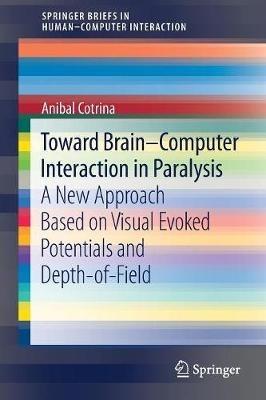
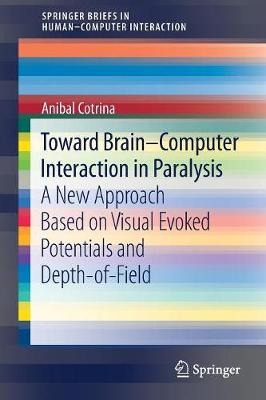
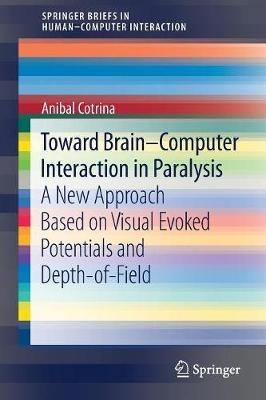
This book presents up-to-date information on Brain-computer Interfaces (BCI). BCIs are systems that record brain signals, extract features and translate them into computer commands. For instance, in BCIs based on the steady-state visual evoked potentials (SSVEP-BCI), brain potentials evoked by visual stimuli are used for controlling computer-based devices. Inspired by the optical phenomenon of depth of field, this book introduces, describes, and evaluates a novel way of setting visual stimuli for SSVEP-BCI. It employs two stimuli that were placed at different distances from the subjects so that if one stimulus is focused on, the other one is non-focused. This assessment allows SSVEP-BCI users to modulate their brain signals by shifting their focus because focused and non-focused stimuli evoke different brain potentials. It allows people to send two brain commands with high accuracy rate by shifting their focus. Hence, computer interaction systems can be proposed for people with paralysis, such as patients with amyotrophic lateral sclerosis since focusing mechanism does not demand head, neck, or eyeball movements. The matter assessed in this book that includes offline and online experiments, is useful for researchers in human-machine interaction who are looking for relevant possibilities of improving the quality of life of people in paralysis situation.
Leggi di più
Leggi di meno
Autore:
Editore:
Collana:
SpringerBriefs in Human-Computer Interaction
Anno:
2017
Rilegatura:
Paperback / softback
Pagine:
96 p.
Testo in English
Dimensioni:
235 x 155 mm
EAN:
9783319522975

L'articolo è stato aggiunto al carrello
Informazioni e Contatti sulla Sicurezza dei Prodotti
Le schede prodotto sono aggiornate in conformità al Regolamento UE 988/2023. Laddove ci fossero taluni dati non disponibili per ragioni indipendenti da IBS, vi informiamo che stiamo compiendo ogni ragionevole sforzo per inserirli. Vi invitiamo a controllare periodicamente il sito www.ibs.it per eventuali novità e aggiornamenti.
Per le vendite di prodotti da terze parti, ciascun venditore si assume la piena e diretta responsabilità per la commercializzazione del prodotto e per la sua conformità al Regolamento UE 988/2023, nonché alle normative nazionali ed europee vigenti.
Per informazioni sulla sicurezza dei prodotti, contattare productsafetyibs@feltrinelli.it
L’articolo è stato aggiunto alla lista dei desideri
