

L’articolo è stato aggiunto alla lista dei desideri








LIBRO INGLESE
 E-mail
 Facebook
 LinkedIn
 Twitter
 WhatsApp
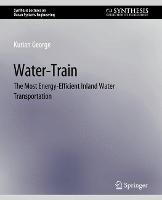
Water-Train: The Most Energy-Efficient Inland Water Transportation
(0)
Cliccando su “Conferma” dichiari che il contenuto da te inserito è conforme alle Condizioni Generali d’Uso del Sito ed alle Linee Guida sui Contenuti Vietati. Puoi rileggere e modificare e successivamente confermare il tuo contenuto. Tra poche ore lo troverai online (in caso contrario verifica la conformità del contenuto alle policy del Sito).
Grazie per la tua recensione!
Tra poche ore la vedrai online (in caso contrario verifica la conformità del testo alle nostre linee guida). Dopo la pubblicazione per te +4 punti 

35,80 €
+360
punti 
Venditore: IBS
Articolo acquistabile con Carta del Docente

Articolo acquistabile con Carta Cultura Giovani e Carta del Merito

Articolo acquistabile con Carta della Cultura

Dati e Statistiche
 Salvato in 0 liste dei desideri
Salvato in 0 liste dei desideri
Water-Train: The Most Energy-Efficient Inland Water Transportation
Disponibilità in 2 settimane
35,80 €
35,80 €
Disponibilità in 2 settimane
Altre offerte vendute e spedite dai nostri venditori
Libri in Inglese
Water-Train: The Most Energy-Efficient Inland Water Transportation
Altri venditori
Prezzo e spese di spedizione
LIBRO INGLESE
Disponibilità in 2 settimane

Venduto e spedito da
IBS
Spedizione Gratis
35,80 €
Altri venditori
Prezzo e spese di spedizione
LIBRO INGLESE
Disponibilità in 2 settimane
Venduto e spedito da
IBS
Spedizione Gratis
35,80 €
Altri venditori
Prezzo e spese di spedizione

Tutti i formati ed edizioni
In a government-aided research project carried out at Cochin University, the inventor of the Water-Train demonstrated that his invention requires only 24 BTU/ton-km of energy whereas barges use 328 BTU in the same Inland water transportation situation. The use of this Water-Train can invariably curtail, to a large extent, the emission of greenhouse gasses thereby decreasing the effect on global warming. Conventional water vehicles use screw propellers which have high reacting energy loss in propulsion whereas the Water-Train relies on the earth for reaction which is an infinite mass causing no reacting energy loss at all. The propelled water takes away a large quantity of kinetic energy (1/2????????2 where its mass is ???? and velocity is ????). Water-Train requires a monorail rigidly fixed to the earth through cross arms and pillars for applying the traction/propulsion force. The reacting body is the earth and so the traction efficiency tends toward 100%. It utilizes low friction of water and also the vehicles are connected serially like a locomotive and hence the wave making and skin resistances are also reduced. The NITIE study conducted earlier in India showed that diesel and electric trains use 166.3 BTU and 105.76 BTU, respectively, for the same purpose.
Leggi di più
Leggi di meno
Autore:
Editore:
Collana:
Synthesis Lectures on Ocean Systems Engineering
Anno:
2020
Rilegatura:
Paperback / softback
Pagine:
57 p.
Testo in English
Dimensioni:
235 x 191 mm
EAN:
9783031013645

L'articolo è stato aggiunto al carrello
Informazioni e Contatti sulla Sicurezza dei Prodotti
Le schede prodotto sono aggiornate in conformità al Regolamento UE 988/2023. Laddove ci fossero taluni dati non disponibili per ragioni indipendenti da IBS, vi informiamo che stiamo compiendo ogni ragionevole sforzo per inserirli. Vi invitiamo a controllare periodicamente il sito www.ibs.it per eventuali novità e aggiornamenti.
Per le vendite di prodotti da terze parti, ciascun venditore si assume la piena e diretta responsabilità per la commercializzazione del prodotto e per la sua conformità al Regolamento UE 988/2023, nonché alle normative nazionali ed europee vigenti.
Per informazioni sulla sicurezza dei prodotti, contattare productsafetyibs@feltrinelli.it
L’articolo è stato aggiunto alla lista dei desideri
