

L’articolo è stato aggiunto alla lista dei desideri








LIBRO INGLESE
 E-mail
 Facebook
 LinkedIn
 Twitter
 WhatsApp
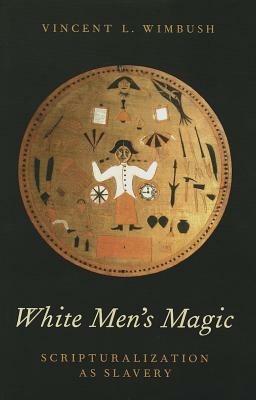
White Men's Magic: Scripturalization as Slavery
(0)
Cliccando su “Conferma” dichiari che il contenuto da te inserito è conforme alle Condizioni Generali d’Uso del Sito ed alle Linee Guida sui Contenuti Vietati. Puoi rileggere e modificare e successivamente confermare il tuo contenuto. Tra poche ore lo troverai online (in caso contrario verifica la conformità del contenuto alle policy del Sito).
Grazie per la tua recensione!
Tra poche ore la vedrai online (in caso contrario verifica la conformità del testo alle nostre linee guida). Dopo la pubblicazione per te +4 punti 
93,10 €
+930
punti 
Venditore: IBS
Articolo acquistabile con Carta del Docente

Articolo acquistabile con Carta Cultura Giovani e Carta del Merito

Articolo acquistabile con Carta della Cultura

Paga con Klarna in 3 rate senza interessi per ordini superiori a 39 €

Dati e Statistiche
 Salvato in 0 liste dei desideri
Salvato in 0 liste dei desideri
White Men's Magic: Scripturalization as Slavery
Disponibilità in 2 settimane
93,10 €
93,10 €
Disponibilità in 2 settimane
Altre offerte vendute e spedite dai nostri venditori
Libri in Inglese
White Men's Magic: Scripturalization as Slavery
Altri venditori
Prezzo e spese di spedizione
LIBRO INGLESE
Disponibilità in 2 settimane

Venduto e spedito da
IBS
Spedizione Gratis
93,10 €
Altri venditori
Prezzo e spese di spedizione
LIBRO INGLESE
Disponibilità in 2 settimane
Venduto e spedito da
IBS
Spedizione Gratis
93,10 €
Altri venditori
Prezzo e spese di spedizione

Tutti i formati ed edizioni
Promo attive (0)
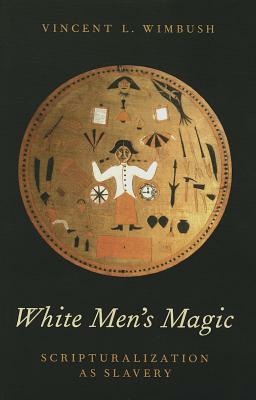
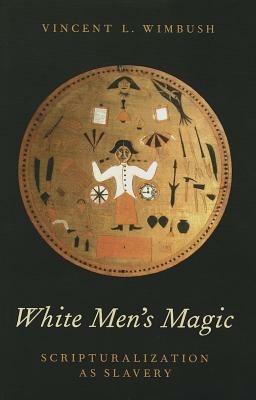
The Interesting Narrative of the Life of Olaudah Equiano, or Gustavus Vassa, the African, first published in England in 1789, was one of the earliest and remains to this day one of the best-known English language slave narratives. Characterizing Olaudah Equiano's eighteenth-century narrative of his life as a type of ''scriptural story'' that connects the Bible with identity formation, Vincent L. Wimbush's White Men's Magic probes not only how the Bible and its reading played a crucial role in the first colonial contacts between black and white persons in the North Atlantic but also the process and meaning of what he terms ''scripturalization.'' By this term, Wimbush means ''a social-psychological-political discursive structure'' or ''semiosphere'' that creates a reality and organizes a society in terms of relations and communications. This scripturalization, achieved by the British to establish a colonial and racialized society in and through the promotion of literacy and the Bible as a ''fetishized center-object,'' was also performed by an abject outsider or stranger like Equiano through his reading of the Bible as well as his own writing with the goal of imagining and promoting a more inclusive society. It is for this reason that Wimbush calls Equiano's narrative a ''scriptural story,'' and he argues that this is why the talking book trope appears repeatedly in writings of eighteenth- and early nineteenth-century black Atlantic writers. He identifies three different types of scripturalization: (1) scripturalization as social-cultural matrix and comparative magic; (2) scripturalization in the service of nationalization and for the purpose of naturalization; and (3) scripturalization in negotiation and for resistance. Because it is based on the particularities of Equiano's narrative, Wimbush's theoretical work is not only grounded but inductive. Wimbush shows that scripturalization is bigger than either the historical or the literary Equiano. Scripturalization was not invented by Equiano, he says, but it is not quite the same after Equiano.
Leggi di più
Leggi di meno
Autore:
Editore:
Anno:
2012
Rilegatura:
Hardback
Pagine:
312 p.
Testo in English
Dimensioni:
236 x 160 mm
Peso:
590 gr.
EAN:
9780199873579

L'articolo è stato aggiunto al carrello
Informazioni e Contatti sulla Sicurezza dei Prodotti
Le schede prodotto sono aggiornate in conformità al Regolamento UE 988/2023. Laddove ci fossero taluni dati non disponibili per ragioni indipendenti da IBS, vi informiamo che stiamo compiendo ogni ragionevole sforzo per inserirli. Vi invitiamo a controllare periodicamente il sito www.ibs.it per eventuali novità e aggiornamenti.
Per le vendite di prodotti da terze parti, ciascun venditore si assume la piena e diretta responsabilità per la commercializzazione del prodotto e per la sua conformità al Regolamento UE 988/2023, nonché alle normative nazionali ed europee vigenti.
Per informazioni sulla sicurezza dei prodotti, contattare productsafetyibs@feltrinelli.it
L’articolo è stato aggiunto alla lista dei desideri
