

L’articolo è stato aggiunto alla lista dei desideri







AUDIOLIBRO IN LINGUA STRANIERA
 E-mail
 Facebook
 LinkedIn
 Twitter
 WhatsApp
The Will to Power
(0)
Cliccando su “Conferma” dichiari che il contenuto da te inserito è conforme alle Condizioni Generali d’Uso del Sito ed alle Linee Guida sui Contenuti Vietati. Puoi rileggere e modificare e successivamente confermare il tuo contenuto. Tra poche ore lo troverai online (in caso contrario verifica la conformità del contenuto alle policy del Sito).
Grazie per la tua recensione!
Tra poche ore la vedrai online (in caso contrario verifica la conformità del testo alle nostre linee guida). Dopo la pubblicazione per te +4 punti 
25,95 €

Venditore: IBS

Acquista online
Disponibile su APP ed eReader Kobo
Articolo acquistabile con Carta del Docente

Articolo acquistabile con Carta Cultura Giovani e Carta del Merito

Articolo acquistabile con Carta della Cultura

Abbonati a Kobo plus per avere accesso illimitato a questo contenuto

Dati e Statistiche
 Salvato in 0 liste dei desideri
Salvato in 0 liste dei desideri
The Will to Power
Disponibile su APP ed eReader Kobo
25,95 €
25,95 €
Disponibile su APP ed eReader Kobo
Altre offerte vendute e spedite dai nostri venditori

Audiolibri in lingua straniera
The Will to Power
Altri venditori
Prezzo e spese di spedizione
AUDIOLIBRO IN LINGUA STRANIERA
Disponibile su APP ed eReader Kobo

Venduto e spedito da
IBS
Spedizione Gratis
25,95 €
Altri venditori
Prezzo e spese di spedizione
AUDIOLIBRO IN LINGUA STRANIERA
Disponibile su APP ed eReader Kobo
Venduto e spedito da
IBS
Spedizione Gratis
25,95 €
Altri venditori
Prezzo e spese di spedizione

Tutti i formati ed edizioni

Promo attive (0)
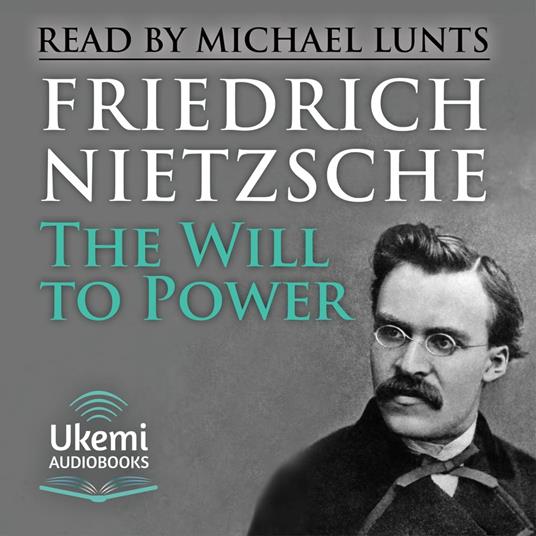
Nietzsche never recovered from his mental breakdown in 1889 and therefore was unable to further any plans he had for the ‘magnum opus’ he had once intended, bringing together in a coherent whole his mature philosophy. It was left to his close friend Heinrich Köselitz and his sister Elizabeth Förster-Nietzsche to go through the remaining notebooks and unpublished writings, choosing sections of particular interest to produce The Will to Power, giving it the subtitle An Attempted Transvaluation of All Values. It was published in 1901, was expanded in subsequent years and was translated into English in its expanded form in 1910 by Anthony M Ludovici, who had done so much to bring Nietzsche’s work to the English-speaking public. Ludovici explains that for Nietzsche, the Will to Power was the fundamental principle of all life, a view that could be found in many of his earlier texts, including Thus Spoke Zarathustra: ‘Where there is life, there is also will: not, however, Will to Life, but - so teach I thee - Will to Power!’ (In this, Nietzsche was concerned to overtake Schopenhauer’s concept of the ‘Will to Live’.) This posthumous compilation is arranged in four books (divided into 1,067 sections): European Nihilism A Criticism of the Highest Values That Have Prevailed Hitherto The Principles of a New Valuation Discipline and Breeding Among the themes given prominence by this compilation - and it is, it must be remembered, basically an anthology - are nihilism, metaphysics and the future of Europe. Nietzsche identified Christianity (and its claim to be ‘higher and better’) and its ‘meek/weak’ attitude as one cause of the nihilism that so concerned him. Another side of the coin was the ineluctable basic human nature of ’the will to power’. Deny that, and nihilism results. But passive nihilism (following the breakdown of social conventions, including conventional religion) can be counteracted by active nihilism and the role of the ‘ubermensch’, the self-reliant. In aphorism after aphorism he argued for the creation of new values based on acceptance that there is nothing beyond ourselves. It remains his conviction that it is the men who are the masters of themselves - a dominating elite - who must lead. But a deeply human initiative, not the creation of a master race! Aphorism 22 posits, ‘Nihilism. It may be two things: A. Nihilism as a sign of enhanced spiritual strength: active Nihilism. B. Nihilism as a sign of the collapse and decline of spiritual strength: passive Nihilism.’ Nietzsche’s powerful, uncompromising language continues right to the closing moments, where he concludes, ‘And even you yourselves are this will to power - and nothing besides!’ Translation by Anthony M Ludovici.
Leggi di più
Leggi di meno
Autore:
Durata in (hh:mm:ss):
23:23:08
Anno edizione:
2019
Lingua:
Inglese
EAN:
9781004133710
L'articolo è stato aggiunto al carrello
Formato:
Gli Audiolibri venduti dal nostro sito sono in formato MP3 e protetti da un DRM proprietario Kobo.
Compatibilità:
Gli Audiolibri venduti dal nostro sito possono essere ascoltati sul tuo smartphone o tablet tramite la APP gratuita Kobo Books scaricabile da iOS o Android. Gli Audiolibri non possono essere scaricati in locale o trasferiti su un client di ascolto diverso da quello fornito tramite Kobo. Non è possibile ascoltare gli audiolibri con la Kobo APP Desktop. Puoi ascoltare gli Audiolibri tramite determinati eReader Kobo, utilizzando cuffie o casse con Bluetooth. Visita la pagina degli eReader per avere maggiori dettagli.
Cloud:
Gli Audiolibri venduti singolarmente dal nostro sito sono immediatamente sincronizzati sul tuo account personale in automatico. Successivamente all'acquisto, sono subito disponibili all'ascolto tramite i client di lettura Kobo compatibili.
Clicca qui servissero ulteriori informazioni
L’articolo è stato aggiunto alla lista dei desideri
