

L’articolo è stato aggiunto alla lista dei desideri








LIBRO INGLESE
 E-mail
 Facebook
 LinkedIn
 Twitter
 WhatsApp
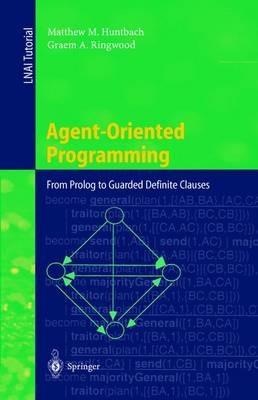
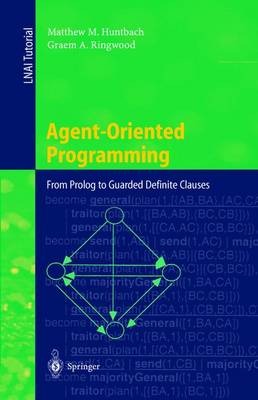
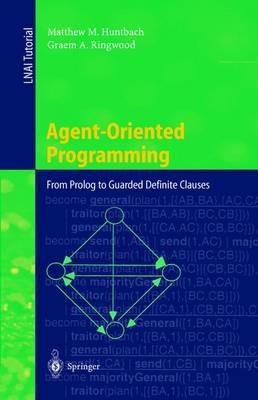
Agent-Oriented Programming: From Prolog to Guarded Definite Clauses
(0)
Cliccando su “Conferma” dichiari che il contenuto da te inserito è conforme alle Condizioni Generali d’Uso del Sito ed alle Linee Guida sui Contenuti Vietati. Puoi rileggere e modificare e successivamente confermare il tuo contenuto. Tra poche ore lo troverai online (in caso contrario verifica la conformità del contenuto alle policy del Sito).
Grazie per la tua recensione!
Tra poche ore la vedrai online (in caso contrario verifica la conformità del testo alle nostre linee guida). Dopo la pubblicazione per te +4 punti 
67,80 €
+680
punti 
Venditore: IBS
Articolo acquistabile con Carta del Docente

Articolo acquistabile con Carta Cultura Giovani e Carta del Merito

Articolo acquistabile con Carta della Cultura

Paga con Klarna in 3 rate senza interessi per ordini superiori a 39 €

Dati e Statistiche
 Salvato in 0 liste dei desideri
Salvato in 0 liste dei desideri
Agent-Oriented Programming: From Prolog to Guarded Definite Clauses
Disponibilità in 2 settimane
67,80 €
67,80 €
Disponibilità in 2 settimane
Altre offerte vendute e spedite dai nostri venditori
Libri in Inglese
Agent-Oriented Programming: From Prolog to Guarded Definite Clauses
Altri venditori
Prezzo e spese di spedizione
LIBRO INGLESE
Disponibilità in 2 settimane

Venduto e spedito da
IBS
Spedizione Gratis
67,80 €
Altri venditori
Prezzo e spese di spedizione
LIBRO INGLESE
Disponibilità in 2 settimane
Venduto e spedito da
IBS
Spedizione Gratis
67,80 €
Altri venditori
Prezzo e spese di spedizione

Tutti i formati ed edizioni
Promo attive (0)
A book that furnishes no quotations is, me judice, no book – it is a plaything. TL Peacock: Crochet Castle The paradigm presented in this book is proposed as an agent programming language. The book charts the evolution of the language from Prolog to intelligent agents. To a large extent, intelligent agents rose to prominence in the mid-1990s because of the World Wide Web and an ill-structured network of multimedia information. Age- oriented programming was a natural progression from object-oriented programming which C++ and more recently Java popularized. Another strand of influence came from a revival of interest in robotics [Brooks, 1991a; 1991b]. The quintessence of an agent is an intelligent, willing slave. Speculation in the area of artificial slaves is far more ancient than twentieth century science fiction. One documented example is found in Aristotle’s Politics written in the fourth century BC. Aristotle classifies the slave as “an animate article of property”. He suggests that slaves or subordinates might not be necessary if “each instrument could do its own work at command or by anticipation like the statues of Daedalus and the tripods of Hephaestus”. Reference to the legendary robots devised by these mythological technocrats, the former an artificer who made wings for Icarus and the latter a blacksmith god, testify that the concept of robot, if not the name, was ancient even in Aristotle’s time.
Leggi di più
Leggi di meno
Collana:
Lecture Notes in Computer Science
Anno:
1999
Rilegatura:
Paperback / softback
Pagine:
394 p.
Testo in English
Dimensioni:
233 x 155 mm
EAN:
9783540666837

L'articolo è stato aggiunto al carrello
Informazioni e Contatti sulla Sicurezza dei Prodotti
Le schede prodotto sono aggiornate in conformità al Regolamento UE 988/2023. Laddove ci fossero taluni dati non disponibili per ragioni indipendenti da IBS, vi informiamo che stiamo compiendo ogni ragionevole sforzo per inserirli. Vi invitiamo a controllare periodicamente il sito www.ibs.it per eventuali novità e aggiornamenti.
Per le vendite di prodotti da terze parti, ciascun venditore si assume la piena e diretta responsabilità per la commercializzazione del prodotto e per la sua conformità al Regolamento UE 988/2023, nonché alle normative nazionali ed europee vigenti.
Per informazioni sulla sicurezza dei prodotti, contattare productsafetyibs@feltrinelli.it
L’articolo è stato aggiunto alla lista dei desideri
