

L’articolo è stato aggiunto alla lista dei desideri









LIBRO INGLESE
 E-mail
 Facebook
 LinkedIn
 Twitter
 WhatsApp
Alignment Change in Iranian Languages: A Construction Grammar Approach
(0)
Cliccando su “Conferma” dichiari che il contenuto da te inserito è conforme alle Condizioni Generali d’Uso del Sito ed alle Linee Guida sui Contenuti Vietati. Puoi rileggere e modificare e successivamente confermare il tuo contenuto. Tra poche ore lo troverai online (in caso contrario verifica la conformità del contenuto alle policy del Sito).
Grazie per la tua recensione!
Tra poche ore la vedrai online (in caso contrario verifica la conformità del testo alle nostre linee guida). Dopo la pubblicazione per te +4 punti 
323,61 €

-5%
340,64 €
+3240
punti

Venditore: IBS
Articolo acquistabile con Carta del Docente

Articolo acquistabile con Carta Cultura Giovani e Carta del Merito

Paga con Klarna in 3 rate senza interessi per ordini superiori a 39 €

Dati e Statistiche
 Salvato in 0 liste dei desideri
Salvato in 0 liste dei desideri
Alignment Change in Iranian Languages: A Construction Grammar Approach
Attualmente non disponibile
323,61 €
-5%
340,64 €
323,61 €
340,64 €
-5%
Attualmente non disponibile
Altre offerte vendute e spedite dai nostri venditori
Libri in Inglese
Alignment Change in Iranian Languages: A Construction Grammar Approach
Altri venditori
Prezzo e spese di spedizione
Nuovo
 attualmente non disponibile
 Venduto e spedito da
IBS
Venduto e spedito da
IBS
attualmente non disponibile
Spedizione Gratis
-5%
340,64 €
323,61 €
Altri venditori
Prezzo e spese di spedizione
Nuovo
attualmente non disponibile
Venduto e spedito da
IBS
attualmente non disponibile
Spedizione Gratis
-5%
340,64 €
323,61 €
Altri venditori
Prezzo e spese di spedizione

Tutti i formati ed edizioni
Promo attive (1)
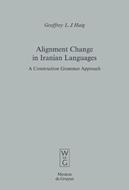
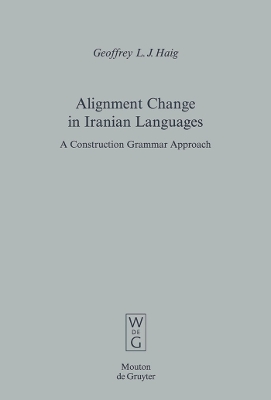
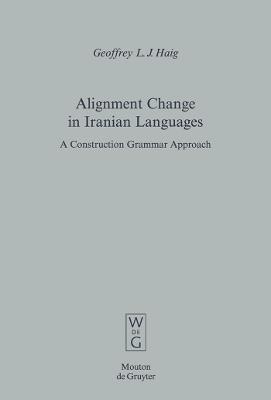
The Iranian languages, due to their exceptional time-depth of attestation, constitute one of the very few instances where a shift from accusative alignment to split-ergativity is actually documented. Yet remarkably, within historical syntax, the Iranian case has received only very superficial coverage. This book provides the first in-depth treatment of alignment change in Iranian, from Old Persian (5 C. BC) to the present. The first part of the book examines the claim that ergativity in Middle Iranian emerged from an Old Iranian agented passive construction. This view is rejected in favour of a theory which links the emergence of ergativity to External Possession. Thus the primary mechanisms involved is not reanalysis, but the extension of a pre-existing construction. The notion of Non-Canonical Subjecthood plays a pivotal role, which in the present account is linked to the semantics of what is termed Indirect Participation. In the second part of the book, a comparative look at contemporary West Iranian is undertaken. It can be shown that throughout the subsequent developments in the morphosyntax, distinct components such as agreement, nominal case marking, or the grammar of cliticisation, in fact developed remarkably independently of one another. It was this de-coupling of sub-systems of the morphosyntax that led to the notorious multiplicity of alignment types in Iranian, a fact that also characterises past-tense alignments in the sister branch of Indo-European, Indo-Aryan. Along with data from more than 20 Iranian languages, presented in a manner that renders them accessible to the non-specialist, there is extensive discussion of more general topics such as the adequacy of functional accounts of changes in case systems, discourse pressure and the role of animacy, the notion of drift, and the question of alignment in early Indo-European.
Leggi di più
Leggi di meno
Autore:
Editore:
Collana:
Empirical Approaches to Language Typology [EALT]
Anno:
2008
Rilegatura:
Hardback
Pagine:
374 p.
Testo in English
Peso:
665 gr.
EAN:
9783110195866

L'articolo è stato aggiunto al carrello
Informazioni e Contatti sulla Sicurezza dei Prodotti
Le schede prodotto sono aggiornate in conformità al Regolamento UE 988/2023. Laddove ci fossero taluni dati non disponibili per ragioni indipendenti da IBS, vi informiamo che stiamo compiendo ogni ragionevole sforzo per inserirli. Vi invitiamo a controllare periodicamente il sito www.ibs.it per eventuali novità e aggiornamenti.
Per le vendite di prodotti da terze parti, ciascun venditore si assume la piena e diretta responsabilità per la commercializzazione del prodotto e per la sua conformità al Regolamento UE 988/2023, nonché alle normative nazionali ed europee vigenti.
Per informazioni sulla sicurezza dei prodotti, contattare productsafetyibs@feltrinelli.it
L’articolo è stato aggiunto alla lista dei desideri
