

L’articolo è stato aggiunto alla lista dei desideri









LIBRO INGLESE
 E-mail
 Facebook
 LinkedIn
 Twitter
 WhatsApp
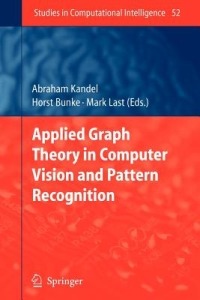
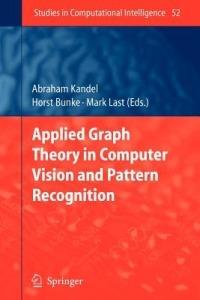
Applied Graph Theory in Computer Vision and Pattern Recognition
(0)
Cliccando su “Conferma” dichiari che il contenuto da te inserito è conforme alle Condizioni Generali d’Uso del Sito ed alle Linee Guida sui Contenuti Vietati. Puoi rileggere e modificare e successivamente confermare il tuo contenuto. Tra poche ore lo troverai online (in caso contrario verifica la conformità del contenuto alle policy del Sito).
Grazie per la tua recensione!
Tra poche ore la vedrai online (in caso contrario verifica la conformità del testo alle nostre linee guida). Dopo la pubblicazione per te +4 punti 
224,80 €
+2250
punti 
Venditore: IBS
Articolo acquistabile con Carta del Docente

Articolo acquistabile con Carta Cultura Giovani e Carta del Merito

Articolo acquistabile con Carta della Cultura

Paga con Klarna in 3 rate senza interessi per ordini superiori a 39 €

Dati e Statistiche
 Salvato in 0 liste dei desideri
Salvato in 0 liste dei desideri
Applied Graph Theory in Computer Vision and Pattern Recognition
Attualmente non disponibile
224,80 €
224,80 €
Attualmente non disponibile
Altre offerte vendute e spedite dai nostri venditori
Libri in Inglese
Applied Graph Theory in Computer Vision and Pattern Recognition
Altri venditori
Prezzo e spese di spedizione
LIBRO INGLESE
Attualmente non disponibile

Venduto e spedito da
IBS
Spedizione Gratis
224,80 €
Altri venditori
Prezzo e spese di spedizione
LIBRO INGLESE
Attualmente non disponibile
Venduto e spedito da
IBS
Spedizione Gratis
224,80 €
Altri venditori
Prezzo e spese di spedizione

Tutti i formati ed edizioni
Promo attive (0)
Graph theory has strong historical roots in mathematics, especially in topology. Its birth is usually associated with the “four-color problem” posed by Francis Guthrie 1 in 1852, but its real origin probably goes back to the Seven Bridges of Konigsber ¨ g 2 problem proved by Leonhard Euler in 1736. A computational solution to these two completely different problems could be found after each problem was abstracted to the level of a graph model while ignoring such irrelevant details as country shapes or cross-river distances. In general, a graph is a nonempty set of points (vertices) and the most basic information preserved by any graph structure refers to adjacency relationships (edges) between some pairs of points. In the simplest graphs, edges do not have to hold any attributes, except their endpoints, but in more sophisticated graph structures, edges can be associated with a direction or assigned a label. Graph vertices can be labeled as well. A graph can be represented graphically as a drawing (vertex=dot,edge=arc),but,aslongaseverypairofadjacentpointsstaysconnected by the same edge, the graph vertices can be moved around on a drawing without changing the underlying graph structure. The expressive power of the graph models placing a special emphasis on c- nectivity between objects has made them the models of choice in chemistry, physics, biology, and other ?elds.
Leggi di più
Leggi di meno
Curatore:
Collana:
Studies in Computational Intelligence
Anno:
2010
Rilegatura:
Paperback / softback
Pagine:
266 p.
Testo in English
Dimensioni:
235 x 155 mm
EAN:
9783642087646

L'articolo è stato aggiunto al carrello
Informazioni e Contatti sulla Sicurezza dei Prodotti
Le schede prodotto sono aggiornate in conformità al Regolamento UE 988/2023. Laddove ci fossero taluni dati non disponibili per ragioni indipendenti da IBS, vi informiamo che stiamo compiendo ogni ragionevole sforzo per inserirli. Vi invitiamo a controllare periodicamente il sito www.ibs.it per eventuali novità e aggiornamenti.
Per le vendite di prodotti da terze parti, ciascun venditore si assume la piena e diretta responsabilità per la commercializzazione del prodotto e per la sua conformità al Regolamento UE 988/2023, nonché alle normative nazionali ed europee vigenti.
Per informazioni sulla sicurezza dei prodotti, contattare productsafetyibs@feltrinelli.it
L’articolo è stato aggiunto alla lista dei desideri
