

L’articolo è stato aggiunto alla lista dei desideri









EBOOK IN LINGUA STRANIERA
 E-mail
 Facebook
 LinkedIn
 Twitter
 WhatsApp
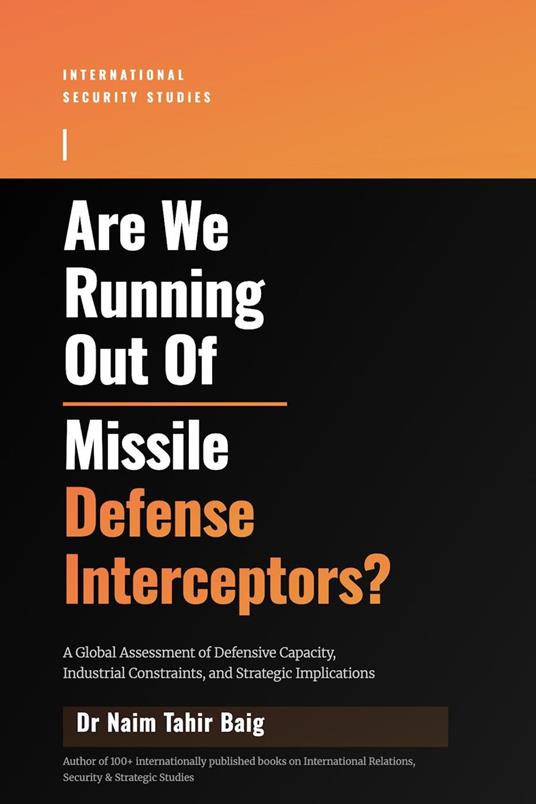
Are We Running Out Of Missile Defense Interceptors?
(0)
Cliccando su “Conferma” dichiari che il contenuto da te inserito è conforme alle Condizioni Generali d’Uso del Sito ed alle Linee Guida sui Contenuti Vietati. Puoi rileggere e modificare e successivamente confermare il tuo contenuto. Tra poche ore lo troverai online (in caso contrario verifica la conformità del contenuto alle policy del Sito).
Grazie per la tua recensione!
Tra poche ore la vedrai online (in caso contrario verifica la conformità del testo alle nostre linee guida). Dopo la pubblicazione per te +4 punti 
8,99 €
+90
punti 
Venditore: IBS

Acquista online
Scaricabile subito
Articolo acquistabile con Carta del Docente

Articolo acquistabile con Carta Cultura Giovani e Carta del Merito

Abbonati a Kobo plus per avere accesso illimitato a questo contenuto

Dati e Statistiche
 Salvato in 0 liste dei desideri
Salvato in 0 liste dei desideri
Are We Running Out Of Missile Defense Interceptors?
Scaricabile subito
8,99 €
8,99 €
Scaricabile subito
Altre offerte vendute e spedite dai nostri venditori
Ebook in lingua straniera
Are We Running Out Of Missile Defense Interceptors?
Altri venditori
Prezzo e spese di spedizione
Nuovo
 scaricabile subito
 Venduto e spedito da
IBS
Venduto e spedito da
IBS
scaricabile subito
Spedizione Gratis
8,99 €
Altri venditori
Prezzo e spese di spedizione
Nuovo
scaricabile subito
Venduto e spedito da
IBS
scaricabile subito
Spedizione Gratis
8,99 €
Altri venditori
Prezzo e spese di spedizione

Tutti i formati ed edizioni
Promo attive (0)
Are We Running Out Of Missile Defense Interceptors?
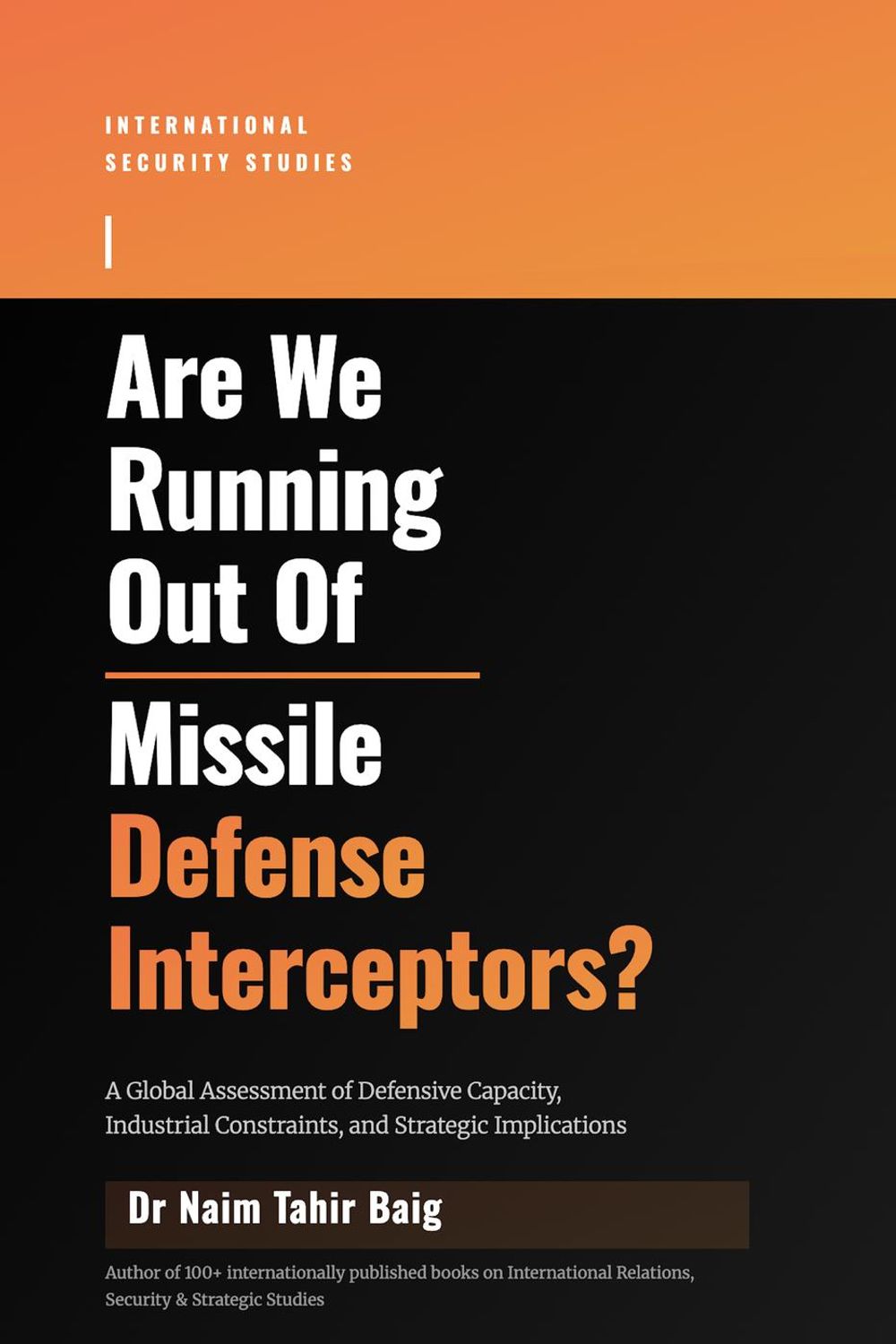
BOOK DESCRIPTION ARE WE RUNNING OUT OF MISSILE DEFENSE INTERCEPTORS? A Global Assessment of Defensive Capacity, Industrial Constraints, and Strategic Implications In June 2025, as Iranian ballistic missiles rained down on Israel during a twelve-day war, the United States expended approximately 25 percent of its global THAAD interceptor inventory—more than 100 of these $12.7 million missiles—in a desperate effort to shield its ally from devastating strikes. Simultaneously, Ukraine continued consuming Western air defense interceptors at alarming rates against Russian missile barrages, while the U.S. Navy burned through Standard Missiles defending commercial shipping in the Red Sea from Houthi attacks. These concurrent crises laid bare a fundamental asymmetry at the heart of modern defense: offensive missiles cost millions to produce, but defensive interceptors cost tens of millions—and production capacity for interceptors lags catastrophically behind the proliferation of threats. Drawing on open-source intelligence, government reports, think tank assessments, and real-world combat data from Ukraine, Israel, and the Middle East, Dr. Naim Tahir Baig meticulously documents how the global inventory of missile defense interceptors is increasingly misaligned with the accelerating trajectory of offensive missile threats. From North Korea's expanding arsenal of over 1,000 ballistic missiles designed to overwhelm regional defenses, to Iran's 3,000+ missile stockpile distributed among proxies across the Middle East, to China's rapid development of hypersonic weapons and Russia's massive expenditure of air defense systems in Ukraine—the evidence is unambiguous: the world is running out of interceptors faster than industry can produce them. This research work systematically examines the interceptor inventories of major powers and regional actors—the United States' 400+ SM-3 missiles and 1,100+ Patriot interceptors; Russia's 68 silo-based ABM interceptors around Moscow; China's opaque but expanding HQ-9 and HQ-19 systems; Israel's combat-tested Iron Dome, David's Sling, and Arrow architecture; NATO Europe's critically depleted Patriot stocks after transfers to Ukraine; and the growing missile defense networks of Japan, South Korea, India, and Gulf states. The book's power lies in its integration of technical analysis with strategic scenarios. War-gaming simulations demonstrate that in a Taiwan Strait conflict, China's 1,500+ short-range ballistic missiles could exhaust U.S. and allied interceptor magazines within days. A Korean Peninsula scenario reveals that North Korea's arsenal could overwhelm even the most sophisticated layered defenses. The October 2023 Israel-Hamas conflict and subsequent multi-front threats exposed how even the world's most robust missile defense network faces sustainability questions under prolonged bombardment. The Russia-Ukraine war has provided unprecedented real-world data on interceptor consumption rates—estimated at 1,500+ SAM intercepts in the first 18 months alone—revealing how quickly inventories vanish in high-intensity conflict. Essential reading for anyone seeking to understand the evolving calculus of deterrence, the fragility of layered missile defense, and the industrial-strategic challenges that will define security competition in the 21st century. "In the game of missile defense, we are learning a painful lesson: you cannot surge trust, you cannot surge industrial capacity, and you cannot surge the physics of interception. The interceptor deficit is not a temporary supply chain problem—it is a structural vulnerability that demands fundamental rethinking of how we conceive defense in an age of proliferation." — Dr. Naim Tahir Baig
Leggi di più
Leggi di meno
Autore:
Anno edizione:
2025
Editore:
Formato:
Lingua:
Inglese
Compatibilità:
Tutti i dispositivi (eccetto Kindle) Scopri di più
Layout:
Reflowable
EAN:
9798231597635
L'articolo è stato aggiunto al carrello
Formato:
Gli eBook venduti da IBS.it sono in formato ePub e possono essere protetti da Adobe DRM. In caso di download di un file protetto da DRM si otterrà un file in formato .acs, (Adobe Content Server Message), che dovrà essere aperto tramite Adobe Digital Editions e autorizzato tramite un account Adobe, prima di poter essere letto su pc o trasferito su dispositivi compatibili.
Cloud:
Gli eBook venduti da IBS.it sono sincronizzati automaticamente su tutti i client di lettura Kobo successivamente all’acquisto. Grazie al Cloud Kobo i progressi di lettura, le note, le evidenziazioni vengono salvati e sincronizzati automaticamente su tutti i dispositivi e le APP di lettura Kobo utilizzati per la lettura.
Clicca qui per sapere come scaricare gli ebook utilizzando un pc con sistema operativo Windows
L’articolo è stato aggiunto alla lista dei desideri
