

L’articolo è stato aggiunto alla lista dei desideri










LIBRO INGLESE
 E-mail
 Facebook
 LinkedIn
 Twitter
 WhatsApp
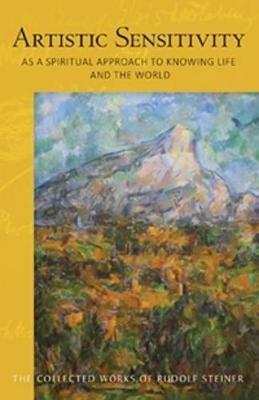
ARTISTIC SENSITIVITY AS A SPIRITUAL APPROACH TO KNOWING LIFE AND THE WORLD
(0)
Cliccando su “Conferma” dichiari che il contenuto da te inserito è conforme alle Condizioni Generali d’Uso del Sito ed alle Linee Guida sui Contenuti Vietati. Puoi rileggere e modificare e successivamente confermare il tuo contenuto. Tra poche ore lo troverai online (in caso contrario verifica la conformità del contenuto alle policy del Sito).
Grazie per la tua recensione!
Tra poche ore la vedrai online (in caso contrario verifica la conformità del testo alle nostre linee guida). Dopo la pubblicazione per te +4 punti 
26,72 €

-5%
28,13 €
+270
punti

Venditore: IBS
Articolo acquistabile con Carta del Docente

Articolo acquistabile con Carta Cultura Giovani e Carta del Merito

Dati e Statistiche
 Salvato in 0 liste dei desideri
Salvato in 0 liste dei desideri
ARTISTIC SENSITIVITY AS A SPIRITUAL APPROACH TO KNOWING LIFE AND THE WORLD
Disponibilità in 5 giorni lavorativi
26,72 €
-5%
28,13 €
26,72 €
28,13 €
-5%
Disp. in 5 gg lavorativi
Altre offerte vendute e spedite dai nostri venditori

Libri in Inglese
ARTISTIC SENSITIVITY AS A SPIRITUAL APPROACH TO KNOWING LIFE AND THE WORLD
Altri venditori
Prezzo e spese di spedizione

Nuovo
 disponibilità in 5 giorni lavorativi
 Venduto e spedito da
IBS
Venduto e spedito da
IBS
disponibilità in 5 giorni lavorativi
Spedizione Gratis
-5%
28,13 €
26,72 €
Altri venditori
Prezzo e spese di spedizione
Nuovo
disponibilità in 5 giorni lavorativi
Venduto e spedito da
IBS
disponibilità in 5 giorni lavorativi
Spedizione Gratis
-5%
28,13 €
26,72 €
Altri venditori
Prezzo e spese di spedizione

Tutti i formati ed edizioni
Promo attive (1)
Today's orthodox notions of science--which is to say, of knowing--are exceedingly narrow; they posit, implicitly or otherwise, that the only knowledge possible, if any, is that of the physical world. But the skeleton key to unlocking the door, behind which lies the root of the problems and difficulties of our age, and thus their solution, is to be able to fully answer this question: What is it to know something? This question lies at the foundation of spiritual science. Rudolf Steiner had first to solve it for himself, pointing the way for others to do the same (in, for example, his Philosophy of Freedom), long before he could give such lectures as these. Rudolf Steiner's work and words, still largely undiscovered as compared to their value for humanity, continue to point the way toward a different path--a way of knowing that encompasses the fullness, the breadth and depth of life and the worlds we inhabit. This knowing--which is to say, science--does not ignore or even contradict the narrower physical sciences of technologists and other specialists, but offers an expansive understanding of reality that also includes a deeper engagement with those aspects of our experience that we are told are beyond the ken of science. But is truth not accessible through art? Are poetry and literature, indeed the beauty and wisdom of each human language, not portals through which we can glimpse truths, every bit as real (though of a different order) than those we might grasp through a microscope? These thirteen lectures were given in Dornach, Switzerland, from January to May 1915, between the fifth and ninth month of World War I. Given the interrupted, fragmented nature of this sequence, one might assume that the lectures could not possibly present a tight, coherent whole. This is not the case. Rudolf Steiner lays down the framework for the series in a concise but detailed manner in the first two lectures, and then goes on to demonstrate in lecture after lecture how, on this basis, many aspects of life reveal the hidden presence and activities of the realities--and the approach--he has established in the framework. In fact, it is humbling to witness Rudolf Steiner's powers of attention and presence of mind: to see how, after a significant interval, in the same tone of voice and with seamless continuity, he can pick up and further develop and interweave his announced intention: namely, to provide "a detailed look at things we have been considering for years."
Leggi di più
Leggi di meno
Autore:
Traduttore:
Editore:
Anno:
2018
Rilegatura:
Paperback / softback
Pagine:
332 p.
Testo in English
Dimensioni:
230 x 150 mm
EAN:
9781621481775

L'articolo è stato aggiunto al carrello
Informazioni e Contatti sulla Sicurezza dei Prodotti
Le schede prodotto sono aggiornate in conformità al Regolamento UE 988/2023. Laddove ci fossero taluni dati non disponibili per ragioni indipendenti da IBS, vi informiamo che stiamo compiendo ogni ragionevole sforzo per inserirli. Vi invitiamo a controllare periodicamente il sito www.ibs.it per eventuali novità e aggiornamenti.
Per le vendite di prodotti da terze parti, ciascun venditore si assume la piena e diretta responsabilità per la commercializzazione del prodotto e per la sua conformità al Regolamento UE 988/2023, nonché alle normative nazionali ed europee vigenti.
Per informazioni sulla sicurezza dei prodotti, contattare productsafetyibs@feltrinelli.it
L’articolo è stato aggiunto alla lista dei desideri
