

L’articolo è stato aggiunto alla lista dei desideri








LIBRO INGLESE
 E-mail
 Facebook
 LinkedIn
 Twitter
 WhatsApp
The Bayonet
(0)
Cliccando su “Conferma” dichiari che il contenuto da te inserito è conforme alle Condizioni Generali d’Uso del Sito ed alle Linee Guida sui Contenuti Vietati. Puoi rileggere e modificare e successivamente confermare il tuo contenuto. Tra poche ore lo troverai online (in caso contrario verifica la conformità del contenuto alle policy del Sito).
Grazie per la tua recensione!
Tra poche ore la vedrai online (in caso contrario verifica la conformità del testo alle nostre linee guida). Dopo la pubblicazione per te +4 punti 
16,62 €

-5%
17,49 €
+170
punti
Venditore: IBS
Articolo acquistabile con Carta del Docente

Articolo acquistabile con Carta Cultura Giovani e Carta del Merito

Articolo acquistabile con Carta della Cultura

Dati e Statistiche
 Salvato in 0 liste dei desideri
Salvato in 0 liste dei desideri
The Bayonet
Disponibile in 5 gg lavorativi
16,62 €
-5%
17,49 €
16,62 €
17,49 €
-5%
Disponibile in 5 gg lavorativi
Altre offerte vendute e spedite dai nostri venditori
Libri in Inglese
The Bayonet
Altri venditori
Prezzo e spese di spedizione

LIBRO INGLESE
Disponibile in 5 gg lavorativi

Venduto e spedito da
IBS
Spedizione Gratis
-5%
17,49 €
16,62 €
Altri venditori
Prezzo e spese di spedizione
LIBRO INGLESE
Disponibile in 5 gg lavorativi
Venduto e spedito da
IBS
Spedizione Gratis
-5%
17,49 €
16,62 €
Altri venditori
Prezzo e spese di spedizione

Tutti i formati ed edizioni
Promo attive (0)
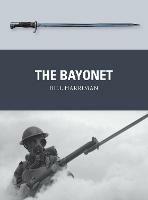
Although muskets delivered devastating projectiles at comparatively long ranges, their slow rate of fire left the soldier very vulnerable while reloading, and early muskets were useless for close-quarter fighting. Consequently, European infantry regiments of the 17th century were composed of both musketeers and pikemen, who protected the musketeers while loading but also formed the shock component for close-quarter combat. The development of the flintlock musket produced a much less cumbersome and faster-firing firearm. When a short knife was stuck into its muzzle, every soldier could be armed with a missile weapon as well as one that could be used for close combat. The only disadvantage was that the musket could not be loaded or fired while the plug bayonet was in place. The socket bayonet solved this problem and the musket/bayonet combination became the universal infantry weapon from c.1700 to c.1870. The advent of shorter rifled firearms saw the attachment of short swords to rifle barrels. Their longer blades still gave the infantryman the ‘reach’ that contemporaries believed he needed to fend off cavalry attacks. The perfection of the small-bore magazine rifle in the 1890s saw the bayonet lose its tactical importance, becoming smaller and more knife-like, a trend that continued in the world wars. When assault rifles predominated from the 1950s onwards, the bayonet became a weapon of last resort. Its potential usefulness continued to be recognized, but its blade was often combined with an item with some additional function, most notably a wire-cutter. Ultimately, for all its fearsome reputation as a visceral, close-quarter fighting weapon, the bayonet's greatest impact was actually as a psychological weapon. Featuring full-colour artwork as well as archive and close-up photographs, this is the absorbing story of the complementary weapon to every soldier’s firearm from the army of Louis XIV to modern-day forces in all global theatres of conflict.
Leggi di più
Leggi di meno
Autore:
Illustratore:
Editore:
Collana:
Weapon
Anno:
2021
Rilegatura:
Paperback / softback
Pagine:
80 p.
Testo in English
Dimensioni:
246 x 180 mm
Peso:
260 gr.
EAN:
9781472845368

L'articolo è stato aggiunto al carrello
Informazioni e Contatti sulla Sicurezza dei Prodotti
Le schede prodotto sono aggiornate in conformità al Regolamento UE 988/2023. Laddove ci fossero taluni dati non disponibili per ragioni indipendenti da IBS, vi informiamo che stiamo compiendo ogni ragionevole sforzo per inserirli. Vi invitiamo a controllare periodicamente il sito www.ibs.it per eventuali novità e aggiornamenti.
Per le vendite di prodotti da terze parti, ciascun venditore si assume la piena e diretta responsabilità per la commercializzazione del prodotto e per la sua conformità al Regolamento UE 988/2023, nonché alle normative nazionali ed europee vigenti.
Per informazioni sulla sicurezza dei prodotti, contattare productsafetyibs@feltrinelli.it
L’articolo è stato aggiunto alla lista dei desideri
