

L’articolo è stato aggiunto alla lista dei desideri








LIBRO INGLESE
 E-mail
 Facebook
 LinkedIn
 Twitter
 WhatsApp
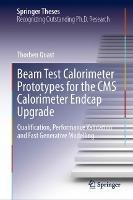
Beam Test Calorimeter Prototypes for the CMS Calorimeter Endcap Upgrade: Qualification, Performance Validation and Fast Generative Modelling
(0)
Cliccando su “Conferma” dichiari che il contenuto da te inserito è conforme alle Condizioni Generali d’Uso del Sito ed alle Linee Guida sui Contenuti Vietati. Puoi rileggere e modificare e successivamente confermare il tuo contenuto. Tra poche ore lo troverai online (in caso contrario verifica la conformità del contenuto alle policy del Sito).
Grazie per la tua recensione!
Tra poche ore la vedrai online (in caso contrario verifica la conformità del testo alle nostre linee guida). Dopo la pubblicazione per te +4 punti 

218,10 €
+2180
punti 
Venditore: IBS
Articolo acquistabile con Carta del Docente

Articolo acquistabile con Carta Cultura Giovani e Carta del Merito

Articolo acquistabile con Carta della Cultura

Paga con Klarna in 3 rate senza interessi per ordini superiori a 39 €

Dati e Statistiche
 Salvato in 0 liste dei desideri
Salvato in 0 liste dei desideri
Beam Test Calorimeter Prototypes for the CMS Calorimeter Endcap Upgrade: Qualification, Performance Validation and Fast Generative Modelling
Disponibilità in 2 settimane
218,10 €
218,10 €
Disponibilità in 2 settimane
Altre offerte vendute e spedite dai nostri venditori
Libri in Inglese
Beam Test Calorimeter Prototypes for the CMS Calorimeter Endcap Upgrade: Qualification, Performance Validation and Fast Generative Modelling
Altri venditori
Prezzo e spese di spedizione
Nuovo
Disponibilità in 2 settimane

Venduto e spedito da
IBS
Spedizione Gratis
218,10 €
Altri venditori
Prezzo e spese di spedizione
Nuovo
Disponibilità in 2 settimane
Venduto e spedito da
IBS
Spedizione Gratis
218,10 €
Altri venditori
Prezzo e spese di spedizione

Tutti i formati ed edizioni
Promo attive (1)
?In order to cope with the increased radiation level and the challenging pile-up conditions at High Luminosity-LHC, the CMS collaboration will replace its current calorimeter endcaps with the High Granularity Calorimeter (HGCAL) in the mid 2020s. This dissertation addresses two important topics related to the preparation of the HGCAL upgrade: experimental validation of its silicon- based design and fast simulation of its data. Beam tests at the DESY (Hamburg) and the CERN SPS beam test facilities in 2018 have been the basis for the design validation. The associated experimental infrastructure, the algorithms deployed in the reconstruction of the recorded data, as well as the respective analyses are reported in this thesis: First, core components of the silicon-based prototype modules are characterised and it is demonstrated that the assembled modules are functional. In particular, their efficiency to detect minimum ionising particles (MIPs) traversing the silicon sensorsis found to be more than 98% for most of the modules. No indication of charge sharing between the silicon pads is observed. Subsequently, the energy response is calibrated in situ using the beam test data. Equalisation of the different responses among the readout channels is achieved with MIPs hereby deploying the HGCAL prototype as a MIP-tracking device. The relative variation of the inferred calibration constants amounts to 3% for channels on the same readout chip. The calibration of the time-of-arrival information is performed with an external time reference detector. With it, timing resolutions of single cells including the full prototype readout chain around 60ps in the asymptotic high energy limit are obtained. The calorimetric performance of the HGCAL prototype is validated with particle showers induced by incident positrons and charged pions. For electromagnetic showers, the constant term in the relative energy resolution is measured to be (0.52± 0.08) %, whereas the stochastic term amounts to (22.2 ± 0.3)% vGeV. This result is in good agreement with the calorimeter simulation with GEANT4. The prototype’s positioning resolution of the shower axis, after subtracting the contribution from the delay wire chambers in the beam line used as reference, is found to be below 0.4 mm at 300 GeV. At the same energy, the angular resolution in the reconstruction of the electromagnetic shower axis in this prototype is measured to be less than 5mrad. The analysis of the hadronic showers in this thesis makes use state-of-the- art machine-learning methods that exploit the calorimeter’s granularity. It is indicated that the energy resolution may be improved using software compensation and also that the separation of electromagnetic and charged pion-induced showers in the calorimeter may benefit from such methods. The measurements of the hadronic showers are adequately reproduced by GEANT4 simulation. Altogether, the obtained results from the analysis of the beam test data inthis thesis are in agreement with the full functionality of the silicon-based HGCAL design. The final part of this thesis provides a proof of principle that generative modelling based on deep neural networks in conjunction with the Wasserstein distance is a suitable approach for the fast simulation of HGCAL data: Instead of sequential simulation, a deep neural network-based generative model generates all calorimeter energy depositions simultaneously. This genera t or network is optimised throu gh an adversarial training process using a critic network guided by the Wasserstein distance. The developed framework in this thesis is applied to both GEANT4- simulated electromagnetic showers and to positron data from the beam tests. Ultimately, this fast simulation approach is up to four orders of magnitude faster than sequential simulation with GEANT4. It is able to produce realistic calorimeter energy depositions from electromagnetic showers, incorporating their fluctuations andcorrelations when converted into typical calorimeter observables.
Leggi di più
Leggi di meno
Autore:
Editore:
Collana:
Springer Theses
Anno:
2022
Rilegatura:
Hardback
Pagine:
277 p.
Testo in English
Dimensioni:
235 x 155 mm
EAN:
9783030902018

L'articolo è stato aggiunto al carrello
Informazioni e Contatti sulla Sicurezza dei Prodotti
Le schede prodotto sono aggiornate in conformità al Regolamento UE 988/2023. Laddove ci fossero taluni dati non disponibili per ragioni indipendenti da IBS, vi informiamo che stiamo compiendo ogni ragionevole sforzo per inserirli. Vi invitiamo a controllare periodicamente il sito www.ibs.it per eventuali novità e aggiornamenti.
Per le vendite di prodotti da terze parti, ciascun venditore si assume la piena e diretta responsabilità per la commercializzazione del prodotto e per la sua conformità al Regolamento UE 988/2023, nonché alle normative nazionali ed europee vigenti.
Per informazioni sulla sicurezza dei prodotti, contattare productsafetyibs@feltrinelli.it
L’articolo è stato aggiunto alla lista dei desideri
