

L’articolo è stato aggiunto alla lista dei desideri


EBOOK IN LINGUA STRANIERA
 E-mail
 Facebook
 LinkedIn
 Twitter
 WhatsApp
Business Models and Processes
(0)
Cliccando su “Conferma” dichiari che il contenuto da te inserito è conforme alle Condizioni Generali d’Uso del Sito ed alle Linee Guida sui Contenuti Vietati. Puoi rileggere e modificare e successivamente confermare il tuo contenuto. Tra poche ore lo troverai online (in caso contrario verifica la conformità del contenuto alle policy del Sito).
Grazie per la tua recensione!
Tra poche ore la vedrai online (in caso contrario verifica la conformità del testo alle nostre linee guida). Dopo la pubblicazione per te +4 punti 
8,49 €

Venditore: IBS

Acquista online
Scaricabile subito
Articolo acquistabile con Carta del Docente

Articolo acquistabile con Carta Cultura Giovani e Carta del Merito

Articolo acquistabile con Carta della Cultura

Abbonati a Kobo plus per avere accesso illimitato a questo contenuto

Dati e Statistiche
 Salvato in 0 liste dei desideri
Business Models and Processes
Scaricabile subito
8,49 €
8,49 €
Scaricabile subito
Altre offerte vendute e spedite dai nostri venditori

Ebook in lingua straniera
Business Models and Processes
Altri venditori
Prezzo e spese di spedizione
EBOOK INGLESE
EPUB2 con DRMFREE
Scaricabile subito

Venduto e spedito da
IBS
Spedizione Gratis
8,49 €
Altri venditori
Prezzo e spese di spedizione
EBOOK INGLESE
EPUB2 con DRMFREE
Scaricabile subito
Venduto e spedito da
IBS
Spedizione Gratis
8,49 €
Altri venditori
Prezzo e spese di spedizione

Tutti i formati ed edizioni

Promo attive (0)
Business Models and Processes
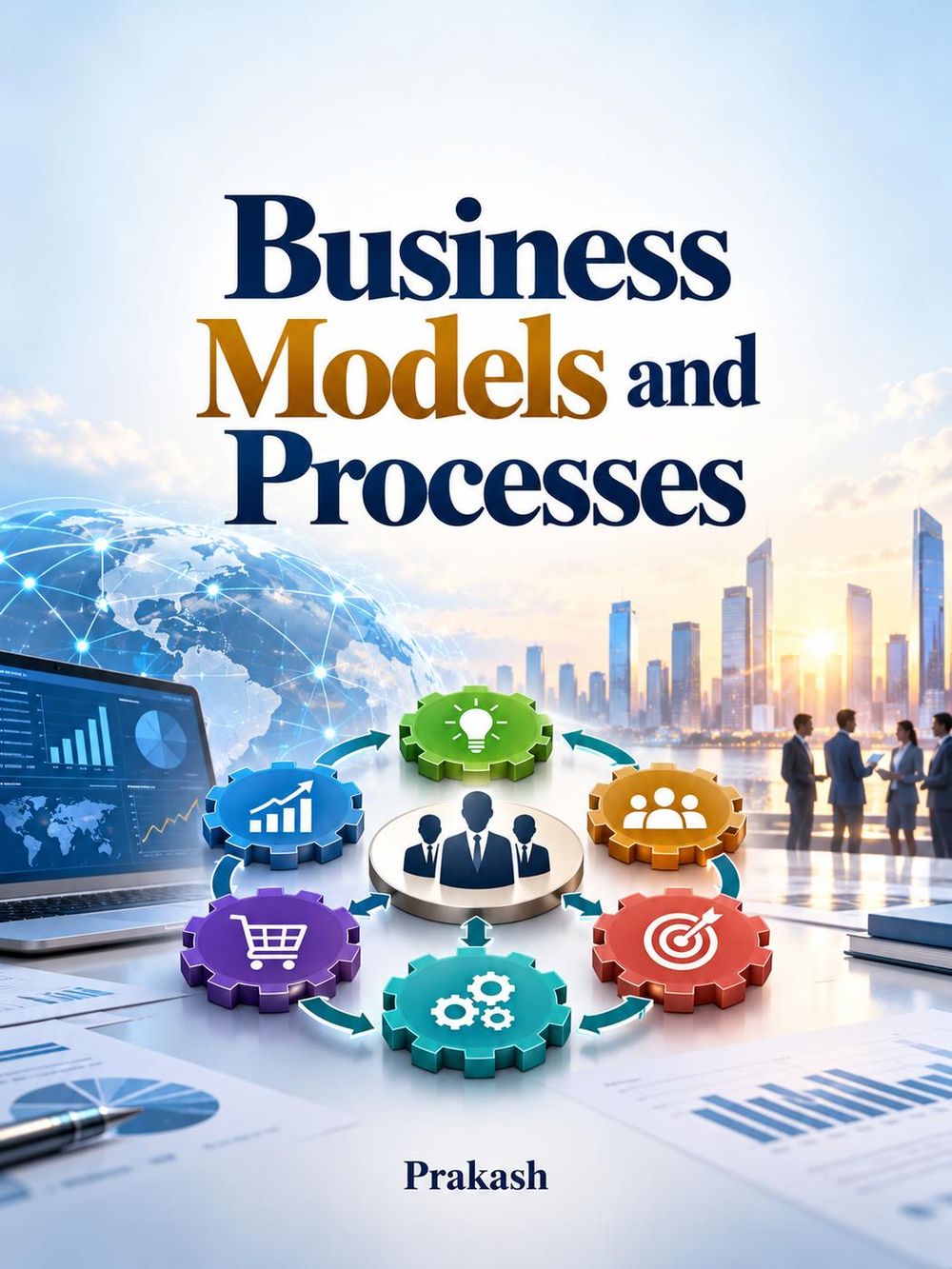
Every organization, whether a street-food stall in Bangkok, a cooperative bank in Nairobi, a software start-up in Berlin, or a manufacturer with plants on four continents, must answer two questions. The first is strategic: how do we create value for someone, and how do we earn enough from it to keep going? The second is operational: what work must happen, in what order and by whom, to deliver that value reliably every single day? The first question is the domain of the business model. The second is the domain of business processes. This book is about both, and above all about the connection between them. These two subjects are usually taught apart. Courses on strategy and entrepreneurship discuss business models, value propositions, and revenue streams, but rarely ask how a promise to customers becomes a sequence of tasks that real people perform. Courses on operations and information systems teach process mapping, Lean, Six Sigma, and enterprise software, but rarely ask whether the processes being improved serve a business model that still makes sense. The result is a familiar gap in practice: elegant strategies that fail in execution, and highly efficient processes that deliver the wrong thing. This book closes that gap. It treats the business model as the design of how an organization creates, delivers, and captures value, and it treats business processes as the machinery that makes the design real. Throughout, the reader is invited to move back and forth between the two levels: from a customer promise to the processes that keep it, and from a process problem to the business model choices that caused it. Who This Book Is For The book is written for three audiences. Undergraduate and postgraduate students in business, management, information systems, and engineering will find a structured introduction to both fields, with learning objectives, key terms, review questions, and cases in every chapter. Managers and professionals who design products, run operations, lead transformation programs, or implement enterprise systems will find practical frameworks they can apply directly. Entrepreneurs will find tools to test and refine a business idea before committing scarce resources, and to build operations that can scale. No prior knowledge of strategy or operations management is assumed. Where technical concepts appear, such as process notation, unit economics, or statistical process control, they are introduced from first principles. A Global Perspective Business is global, and so are the examples in this book. Cases and illustrations are drawn from Africa, Asia, Europe, the Americas, the Middle East, and Oceania, from multinational corporations, family businesses, state-owned enterprises, social enterprises, and start-ups. Mobile-money platforms in East Africa, lean manufacturing in Japan, fast fashion in Spain, cooperative retail in Switzerland, ride-hailing in Southeast Asia, and microfinance in South Asia all appear alongside familiar Silicon Valley companies. The aim is not to celebrate any single model of capitalism, but to show that the underlying logic of value creation and process design applies everywhere, while the best answers depend heavily on local customers, institutions, infrastructure, and culture. How the Book Is Organized The book has sixteen chapters in five parts. • Part I, Foundations (Chapters 1–3) • Part II, Designing Business Models (Chapters 4–7) • Part III, Managing Business Processes (Chapters 8–11) • Part IV, Integration, Technology and Transformation (Chapters 12–14) • Part V, Governance and Sustainability (Chapters 15–16)
Leggi di più
Leggi di meno
Compatibilità:
Tutti i dispositivi (eccetto Kindle) Scopri di più
Layout:
Reflowable
EAN:
9798237443073
L'articolo è stato aggiunto al carrello
Formato:
Gli eBook venduti da IBS.it sono in formato ePub e possono essere protetti da Adobe DRM. In caso di download di un file protetto da DRM si otterrà un file in formato .acs, (Adobe Content Server Message), che dovrà essere aperto tramite Adobe Digital Editions e autorizzato tramite un account Adobe, prima di poter essere letto su pc o trasferito su dispositivi compatibili.
Cloud:
Gli eBook venduti da IBS.it sono sincronizzati automaticamente su tutti i client di lettura Kobo successivamente all’acquisto. Grazie al Cloud Kobo i progressi di lettura, le note, le evidenziazioni vengono salvati e sincronizzati automaticamente su tutti i dispositivi e le APP di lettura Kobo utilizzati per la lettura.
Clicca qui per sapere come scaricare gli ebook utilizzando un pc con sistema operativo Windows
L’articolo è stato aggiunto alla lista dei desideri
