

L’articolo è stato aggiunto alla lista dei desideri










LIBRO INGLESE
 E-mail
 Facebook
 LinkedIn
 Twitter
 WhatsApp
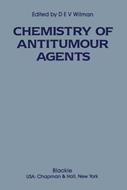
The Chemistry of Antitumour Agents
(0)
Cliccando su “Conferma” dichiari che il contenuto da te inserito è conforme alle Condizioni Generali d’Uso del Sito ed alle Linee Guida sui Contenuti Vietati. Puoi rileggere e modificare e successivamente confermare il tuo contenuto. Tra poche ore lo troverai online (in caso contrario verifica la conformità del contenuto alle policy del Sito).
Grazie per la tua recensione!
Tra poche ore la vedrai online (in caso contrario verifica la conformità del testo alle nostre linee guida). Dopo la pubblicazione per te +4 punti 
67,10 €
+670
punti 

Venditore: IBS
Articolo acquistabile con Carta del Docente

Articolo acquistabile con Carta Cultura Giovani e Carta del Merito

Paga con Klarna in 3 rate senza interessi per ordini superiori a 39 €

Dati e Statistiche
 Salvato in 0 liste dei desideri
Salvato in 0 liste dei desideri
The Chemistry of Antitumour Agents
Disponibilità in 2 settimane
67,10 €
67,10 €
Disponibilità in 2 settimane
Altre offerte vendute e spedite dai nostri venditori
Libri in Inglese
The Chemistry of Antitumour Agents
Altri venditori
Prezzo e spese di spedizione

Nuovo
 disponibilità in 2 settimane
 Venduto e spedito da
IBS
Venduto e spedito da
IBS
disponibilità in 2 settimane
Spedizione Gratis
67,10 €
Altri venditori
Prezzo e spese di spedizione
Nuovo
disponibilità in 2 settimane
Venduto e spedito da
IBS
disponibilità in 2 settimane
Spedizione Gratis
67,10 €
Altri venditori
Prezzo e spese di spedizione

Tutti i formati ed edizioni

Promo attive (1)
Walter C. J. ROSS Emeritus Professor, University of London To paraphrase a statement made by Howard E. Skipper many years ago, 'We cancer chemotherapists have often exploited and overworked our chemist colleagues and they have been conveniently forgotten at award giving times'. This book is an attempt to rectify this and highlight the contribution of the chemist in modifying the structure of various types of agent to enhance their effectiveness as inhibitors of the growth of neoplastic tissues. Cancer chemotherapy is a relatively new discipline, coming later than the introduction of sulphonamides and antibiotics. Modern anti-cancer therapy started with the report of the use of a war gas methyl-di-(2-chloroethyl)amine (HN2) in 1946 for the treatment of Hodgkin's disease. The recognition that this compound acted as a bifunctional alkylating agent under physiological conditions led to the synthesis of a wide range of drugs with similar properties. Amongst these were chlorambucil, melphalan, busulphan, and cyclophos phamide which still find use today. Somewhat later, a range of antibiotics was found to be effective, for example aminopterin (1948) and 6-mercaptopurine (1958) to treat acute leukaemias and 5-fluorouracil and 6-azauracil (1957-8) which were used against a variety of cancers. Since these early days the net has been cast ever wider and, as well as ingenious modifications of the compounds mentioned above, anticancer drugs now include growing classes of compounds ranging from purely synthetic agents to natural products. Many of these are discussed in the present book.
Leggi di più
Leggi di meno
Testo in English
Dimensioni:
229 x 152 mm
EAN:
9789401066655
L'articolo è stato aggiunto al carrello
Informazioni e Contatti sulla Sicurezza dei Prodotti
Le schede prodotto sono aggiornate in conformità al Regolamento UE 988/2023. Laddove ci fossero taluni dati non disponibili per ragioni indipendenti da IBS, vi informiamo che stiamo compiendo ogni ragionevole sforzo per inserirli. Vi invitiamo a controllare periodicamente il sito www.ibs.it per eventuali novità e aggiornamenti.
Per le vendite di prodotti da terze parti, ciascun venditore si assume la piena e diretta responsabilità per la commercializzazione del prodotto e per la sua conformità al Regolamento UE 988/2023, nonché alle normative nazionali ed europee vigenti.
Per informazioni sulla sicurezza dei prodotti, contattare productsafetyibs@feltrinelli.it
L’articolo è stato aggiunto alla lista dei desideri
