

L’articolo è stato aggiunto alla lista dei desideri








EBOOK IN LINGUA STRANIERA
 E-mail
 Facebook
 LinkedIn
 Twitter
 WhatsApp
Chlorophyll Biosynthesis and Technological Applications
(0)
Cliccando su “Conferma” dichiari che il contenuto da te inserito è conforme alle Condizioni Generali d’Uso del Sito ed alle Linee Guida sui Contenuti Vietati. Puoi rileggere e modificare e successivamente confermare il tuo contenuto. Tra poche ore lo troverai online (in caso contrario verifica la conformità del contenuto alle policy del Sito).
Grazie per la tua recensione!
Tra poche ore la vedrai online (in caso contrario verifica la conformità del testo alle nostre linee guida). Dopo la pubblicazione per te +4 punti 
131,03 €
+1310
punti 
Venditore: IBS

Acquista online
Scaricabile subito
Articolo acquistabile con Carta del Docente

Articolo acquistabile con Carta Cultura Giovani e Carta del Merito

Dati e Statistiche
 Salvato in 0 liste dei desideri
Salvato in 0 liste dei desideri
Chlorophyll Biosynthesis and Technological Applications
Scaricabile subito
131,03 €
131,03 €
Scaricabile subito
Altre offerte vendute e spedite dai nostri venditori
Ebook in lingua straniera
Chlorophyll Biosynthesis and Technological Applications
Altri venditori
Prezzo e spese di spedizione
Nuovo
 scaricabile subito
 Venduto e spedito da
IBS
Venduto e spedito da
IBS
scaricabile subito
Spedizione Gratis
131,03 €
Altri venditori
Prezzo e spese di spedizione
Nuovo
scaricabile subito
Venduto e spedito da
IBS
scaricabile subito
Spedizione Gratis
131,03 €
Altri venditori
Prezzo e spese di spedizione

Tutti i formati ed edizioni
Promo attive (0)
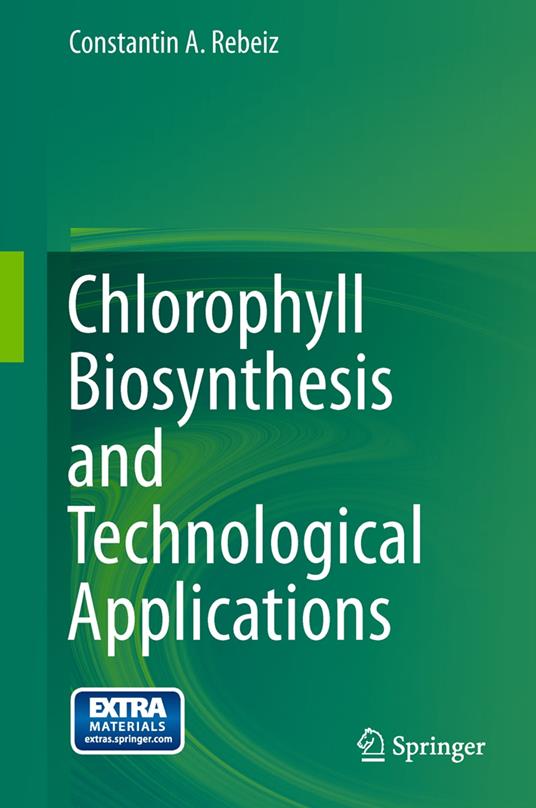
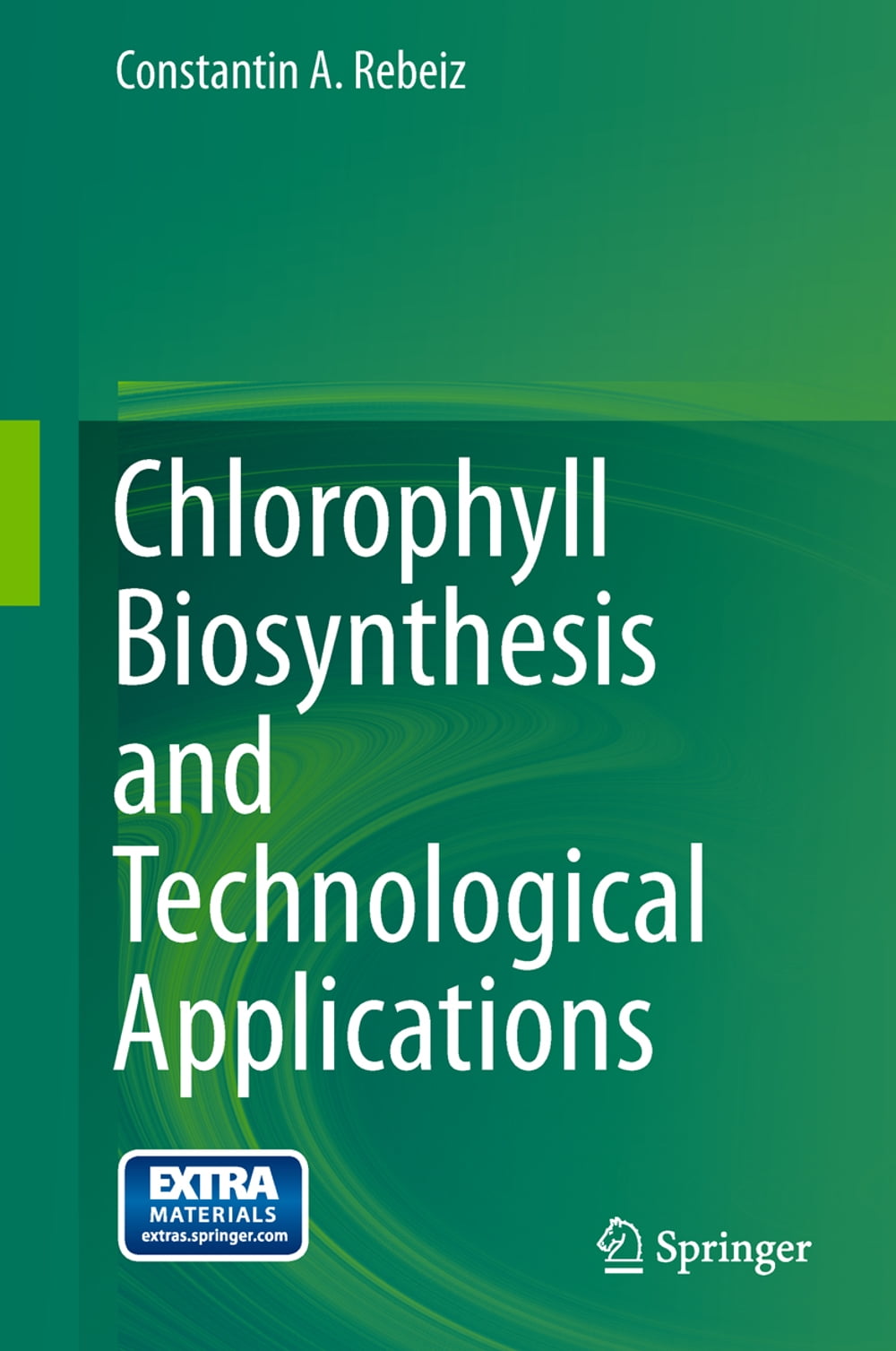
Heme and chlorophyll (Chl) are porphyrins. Porphyrins (also referred to as tetrapyrroles) are essential for life in the biosphere. Chlorophyll catalyzes the conversion of solar energy to chemical energy via the process of photosynthesis. Organic life in the biosphere is made possible by consumption of the chemical energy generated by photosynthesis. Hemes are the prosthetic groups of cytochromes which are involved in electron transport during oxidative phosphorylation and photosynthetic phosphorylation which generate ATP and NADPH. The latter are essential for many cellular functions. Chlorophyll on the other hands catalyzes the process of photosynthesis. Indeed, life in the biosphere depends on the process of photosynthesis which converts light energy, carbon dioxide and water into the chemical energy, required for the formation of food and fiber. Photosynthetic efficiency is controlled by extrinsic factors such as the availability of water, CO2, inorganic nutrients, ambient temperature and the metabolic and developmental state of the plant, as well as by intrinsic factors (Lien and San Pietro, 1975). The most important intrinsic factor is the efficiency of the photosynthetic electron transport system (PETS). Conventional agriculture is one of the few human activities that have not undergone a revolution to join other activities such as overcoming gravity by flying, and landing on the moon, crossing underwater the polar cap, and communicating wirelessly over long distances via electromagnetic waves. We now feel that enough biochemical and molecular biological knowledge has accumulated to render this dream amenable to experimentation. We believe that the time has come to bioengineer chloroplasts capable of synthesizing a short chain carbohydrate such as glycerol at rates that approach the upper theoretical limits of photosynthesis [Rebeiz, C. A. (2010) Investigations of possible relationships between the chlorophyll biosynthetic pathway and the assembly of chlorophyll-protein complexes and photosynthetic efficiency. In: Rebeiz, C. A. Benning, C., Bohnert, H.J., Daniell, H., Hoober J. K., Lichtenthaler, H. K., Portis , A. R., and Tripathy, B. C. eds. The chloroplast: Basics and Applications. Springer. The Netherlands, p 1-24]. In order to achieve this goal a thorough knowledge of the Chl biosynthetic pathway is needed along with knowledge in other domains (Rebeiz 2010). In this context, this monograph is devoted to an in depth discussion of our present knowledge of the Chl biosynthetic pathway. The complexity and biochemical heterogeneity of the Chl biosynthetic pathway and the relationship of this complexity to the structural and biosynthetic complexity of photosynthetic membranes will be emphasized. We will also emphasize in historical perspective, key stages in our understanding of the Chl biosynthetic heterogeneity. The reader should keep in mind that a complex biosynthetic process is only fully understood when it becomes possible to reconstitute in vitro every step of the process. We are not yet at this stage of understanding of thylakoid membrane biogenesis. Considerable progress has been achieved however, in the understanding of numerous facets of the Chl biosynthetic pathway, namely (a) detection and identification of various major and minor metabolic intermediates (b) precursor-product relationships between various intermediates, (c) structure and regulation of many enzymes of the pathway, and (d) the relationship of the Chl biosynthetic heterogeneity to the structural and functional heterogeneity of thylakoid membranes. In addition topics related to the development of Analytical techniques, Cell-free systems, Herbicides, Insecticides, and Cancericides are also discussed.
Leggi di più
Leggi di meno
Autore:
Anno edizione:
2016
Editore:
Formato:
Lingua:
Inglese
Compatibilità:
Tutti i dispositivi (eccetto Kindle) Scopri di più
Layout:
Reflowable
EAN:
9789400771345
L'articolo è stato aggiunto al carrello
Formato:
Gli eBook venduti da IBS.it sono in formato ePub e possono essere protetti da Adobe DRM. In caso di download di un file protetto da DRM si otterrà un file in formato .acs, (Adobe Content Server Message), che dovrà essere aperto tramite Adobe Digital Editions e autorizzato tramite un account Adobe, prima di poter essere letto su pc o trasferito su dispositivi compatibili.
Cloud:
Gli eBook venduti da IBS.it sono sincronizzati automaticamente su tutti i client di lettura Kobo successivamente all’acquisto. Grazie al Cloud Kobo i progressi di lettura, le note, le evidenziazioni vengono salvati e sincronizzati automaticamente su tutti i dispositivi e le APP di lettura Kobo utilizzati per la lettura.
Clicca qui per sapere come scaricare gli ebook utilizzando un pc con sistema operativo Windows
L’articolo è stato aggiunto alla lista dei desideri
