

L’articolo è stato aggiunto alla lista dei desideri









LIBRO INGLESE
 E-mail
 Facebook
 LinkedIn
 Twitter
 WhatsApp
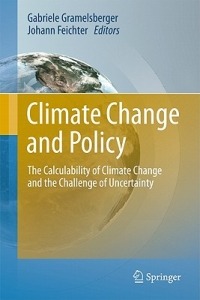
Climate Change and Policy: The Calculability of Climate Change and the Challenge of Uncertainty
(0)
Cliccando su “Conferma” dichiari che il contenuto da te inserito è conforme alle Condizioni Generali d’Uso del Sito ed alle Linee Guida sui Contenuti Vietati. Puoi rileggere e modificare e successivamente confermare il tuo contenuto. Tra poche ore lo troverai online (in caso contrario verifica la conformità del contenuto alle policy del Sito).
Grazie per la tua recensione!
Tra poche ore la vedrai online (in caso contrario verifica la conformità del testo alle nostre linee guida). Dopo la pubblicazione per te +4 punti 
131,10 €
+1310
punti 
Venditore: IBS
Articolo acquistabile con Carta del Docente

Articolo acquistabile con Carta Cultura Giovani e Carta del Merito

Articolo acquistabile con Carta della Cultura

Paga con Klarna in 3 rate senza interessi per ordini superiori a 39 €

Dati e Statistiche
 Salvato in 0 liste dei desideri
Salvato in 0 liste dei desideri
Climate Change and Policy: The Calculability of Climate Change and the Challenge of Uncertainty
Disponibilità in 2 settimane
131,10 €
131,10 €
Disponibilità in 2 settimane
Altre offerte vendute e spedite dai nostri venditori

Libri in Inglese
Climate Change and Policy: The Calculability of Climate Change and the Challenge of Uncertainty
Altri venditori
Prezzo e spese di spedizione
LIBRO INGLESE
Disponibilità in 2 settimane

Venduto e spedito da
IBS
Spedizione Gratis
131,10 €
Altri venditori
Prezzo e spese di spedizione
LIBRO INGLESE
Disponibilità in 2 settimane
Venduto e spedito da
IBS
Spedizione Gratis
131,10 €
Altri venditori
Prezzo e spese di spedizione

Tutti i formati ed edizioni

Promo attive (0)
The debate on how mankind should respond to climate change is diverse, as the appropriate strategy depends on global as well as local circumstances. As scientists are denied the possibility of conducting experiments with the real climate, only climate models can give insights into man-induced climate change, by experimenting with digital climates under varying conditions and by extrapolating past and future states into the future. But the ‘nature’ of models is a purely representational one. A model is good if it is believed to represent the relevant processes of a natural system well. However, a model and its results, in particular in the case of climate models which interconnect countless hypotheses, is only to some extent testable, although an advanced infrastructure of evaluation strategies has been developed involving strategies of model intercomparison, ensemble prognoses, uncertainty metrics on the system and component levels. The complexity of climate models goes hand in hand with uncertainties, but uncertainty is in conflict with socio-political expectations. However, certain predictions belong to the realm of desires and ideals rather than to applied science. Today’s attempt to define and classify uncertainty in terms of likelihood and confidence reflect this awareness of uncertainty as an integral part of human knowledge, in particular on knowledge about possible future developments. The contributions in this book give a first hand insight into scientific strategies in dealing with uncertainty by using simulation models and into social, political and economical requirements in future projections on climate change. Do these strategies and requirements meet each other or fail? The debate on how mankind should respond to climate change is diverse, as the appropriate strategy depends on global as well as local circumstances. As scientists are denied the possibility of conducting experiments with the real climate, only climate models can give insights into man-induced climate change, by experimenting with digital climates under varying conditions and by extrapolating past and future states into the future. But the 'nature' of models is a purely representational one. A model is good if it is believed to represent the relevant processes of a natural system well. However, a model and its results, in particular in the case of climate models which interconnect countless hypotheses, is only to some extent testable, although an advanced infrastructure of evaluation strategies has been developed involving strategies of model intercomparison, ensemble prognoses, uncertainty metrics on the system and component levels. The complexity of climate models goes hand in hand with uncertainties, but uncertainty is in conflict with socio-political expectations. However, certain predictions belong to the realm of desires and ideals rather than to applied science. Today's attempt to define and classify uncertainty in terms of likelihood and confidence reflect this awareness of uncertainty as an integral part of human knowledge, in particular on knowledge about possible future developments. The contributions in this book give a first hand insight into scientific strategies in dealing with uncertainty by using simulation models and into social, political and economical requirements in future projections on climate change. Do these strategies and requirements meet each other or fail? Gabriele Gramelsberger is Principal Investigator of the Collaborative Research Project is Principal Investigator of the Collaborative Research Project
Leggi di più
Leggi di meno
Curatore:
Anno:
2011
Rilegatura:
Hardback
Pagine:
241 p.
Testo in English
Dimensioni:
235 x 155 mm
EAN:
9783642176999

L'articolo è stato aggiunto al carrello
Informazioni e Contatti sulla Sicurezza dei Prodotti
Le schede prodotto sono aggiornate in conformità al Regolamento UE 988/2023. Laddove ci fossero taluni dati non disponibili per ragioni indipendenti da IBS, vi informiamo che stiamo compiendo ogni ragionevole sforzo per inserirli. Vi invitiamo a controllare periodicamente il sito www.ibs.it per eventuali novità e aggiornamenti.
Per le vendite di prodotti da terze parti, ciascun venditore si assume la piena e diretta responsabilità per la commercializzazione del prodotto e per la sua conformità al Regolamento UE 988/2023, nonché alle normative nazionali ed europee vigenti.
Per informazioni sulla sicurezza dei prodotti, contattare productsafetyibs@feltrinelli.it
L’articolo è stato aggiunto alla lista dei desideri
