

L’articolo è stato aggiunto alla lista dei desideri









EBOOK IN LINGUA STRANIERA
 E-mail
 Facebook
 LinkedIn
 Twitter
 WhatsApp
Clinical Intelligence in Diagnostic Delay and Missed Diagnosis
(0)
Cliccando su “Conferma” dichiari che il contenuto da te inserito è conforme alle Condizioni Generali d’Uso del Sito ed alle Linee Guida sui Contenuti Vietati. Puoi rileggere e modificare e successivamente confermare il tuo contenuto. Tra poche ore lo troverai online (in caso contrario verifica la conformità del contenuto alle policy del Sito).
Grazie per la tua recensione!
Tra poche ore la vedrai online (in caso contrario verifica la conformità del testo alle nostre linee guida). Dopo la pubblicazione per te +4 punti 
30,49 €
+300
punti 
Venditore: IBS

Acquista online
Scaricabile subito
Articolo acquistabile con Carta del Docente

Articolo acquistabile con Carta Cultura Giovani e Carta del Merito

Articolo acquistabile con Carta della Cultura

Abbonati a Kobo plus per avere accesso illimitato a questo contenuto

Dati e Statistiche
 Salvato in 0 liste dei desideri
Salvato in 0 liste dei desideri
Clinical Intelligence in Diagnostic Delay and Missed Diagnosis
Scaricabile subito
30,49 €
30,49 €
Scaricabile subito
Altre offerte vendute e spedite dai nostri venditori
Ebook in lingua straniera
Clinical Intelligence in Diagnostic Delay and Missed Diagnosis
Altri venditori
Prezzo e spese di spedizione
EBOOK INGLESE
EPUB2 con DRMFREE
Scaricabile subito

Venduto e spedito da
IBS
Spedizione Gratis
30,49 €
Altri venditori
Prezzo e spese di spedizione
EBOOK INGLESE
EPUB2 con DRMFREE
Scaricabile subito
Venduto e spedito da
IBS
Spedizione Gratis
30,49 €
Altri venditori
Prezzo e spese di spedizione

Tutti i formati ed edizioni
Promo attive (0)
Clinical Intelligence in Diagnostic Delay and Missed Diagnosis
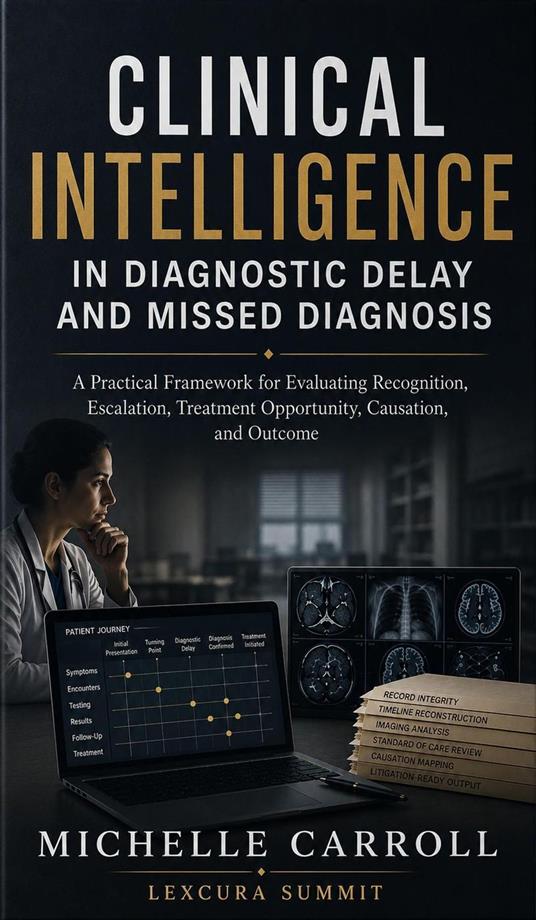
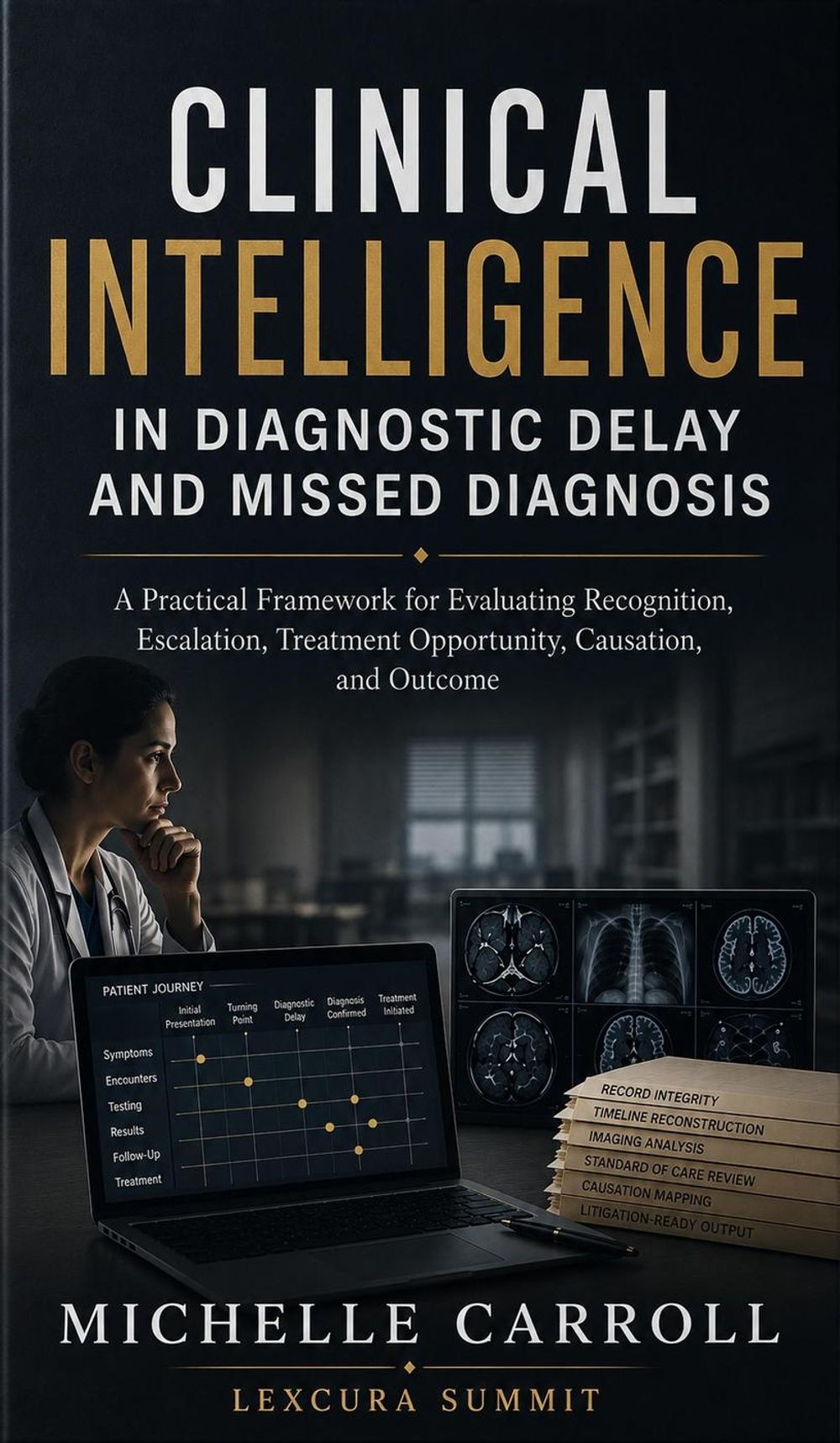
A diagnostic-delay case rarely arrives as a clean story. It arrives as a medical record: thousands of pages of triage notes, imaging reports, lab results, and consultations, generated by dozens of providers who never see the full picture. Somewhere in that volume is the patient's actual journey, and reviewing it document by document makes that journey almost impossible to see. Clinical Intelligence in Diagnostic Delay and Missed Diagnosis gives attorneys, clinicians, and medical experts a structured way to put that journey back together, and to determine, with real rigor, whether a delay in diagnosis changed the outcome, or whether it did not. At the center of the book is the Lexcura Clinical Intelligence Model, a six-part methodology built by author Michelle Carroll over more than forty years of healthcare experience: Record Integrity flags gaps and missing results before any conclusion is drawn; Baseline Profiling establishes the patient's true condition beforehand; Imaging Analysis examines findings and communication failures around the point where a diagnosis is so often missed; Timeline Reconstruction converts a fragmented record into one chronology and reveals where the pathway should have changed direction; Standard of Care Review evaluates decisions against what was actually known at the time, resisting hindsight; and Causation Mapping connects any departure from that standard to the patient's actual outcome. Carroll is deliberate about what the model does not assume. It does not treat a poor outcome as proof of negligence, and it does not treat an identified departure from the standard of care as automatic proof of causation. The methodology is built to reach any conclusion the evidence supports: that a case is strong, that it is weaker than first believed, that further specialist input is required, or that the outcome probably would not have changed. The book is organized in three parts across thirty-six chapters. Part One builds the analytical foundation, including how diagnostic failure differs from a poor outcome, how to reconstruct a defensible diagnostic timeline, how referrals and reassessment break down, and how to map a causal chain from delay to outcome. Part Two applies the framework to the ten clinical presentations where diagnostic delay carries the highest stakes: cancer, stroke, cardiac disease, sepsis, pulmonary embolism, internal bleeding, spinal cord compression, obstetric emergencies, pediatric cases, and abdominal emergencies. Part Three moves from analysis to practice, covering how to evaluate a case without hindsight bias, the questions attorneys and clinicians should each be asking, and how to build and present a complete diagnostic-delay analysis. Thirteen appendices turn the methodology into working documents, including case screening questionnaires, a timeline reconstruction worksheet, an imaging analysis worksheet, a causal mapping worksheet, and a full report structure, ready to adapt for active casework. This book is written for attorneys, treating clinicians and physician experts, legal nurse consultants, claims professionals, and risk managers: anyone who has to determine whether a diagnostic failure occurred, whether it mattered, and whether the record can prove it. It is not a manual for turning bad outcomes into claims, nor a substitute for a licensed attorney's or clinician's independent judgment. It is a disciplined, repeatable structure for doing the hard evidentiary work correctly, whichever conclusion it supports.
Leggi di più
Leggi di meno
Autore:
Anno edizione:
2026
Editore:
Formato:
Lingua:
Inglese
Compatibilità:
Tutti i dispositivi (eccetto Kindle) Scopri di più
Layout:
Reflowable
EAN:
9798952094178
L'articolo è stato aggiunto al carrello
Formato:
Gli eBook venduti da IBS.it sono in formato ePub e possono essere protetti da Adobe DRM. In caso di download di un file protetto da DRM si otterrà un file in formato .acs, (Adobe Content Server Message), che dovrà essere aperto tramite Adobe Digital Editions e autorizzato tramite un account Adobe, prima di poter essere letto su pc o trasferito su dispositivi compatibili.
Cloud:
Gli eBook venduti da IBS.it sono sincronizzati automaticamente su tutti i client di lettura Kobo successivamente all’acquisto. Grazie al Cloud Kobo i progressi di lettura, le note, le evidenziazioni vengono salvati e sincronizzati automaticamente su tutti i dispositivi e le APP di lettura Kobo utilizzati per la lettura.
Clicca qui per sapere come scaricare gli ebook utilizzando un pc con sistema operativo Windows
L’articolo è stato aggiunto alla lista dei desideri
