

L’articolo è stato aggiunto alla lista dei desideri










LIBRO INGLESE
 E-mail
 Facebook
 LinkedIn
 Twitter
 WhatsApp
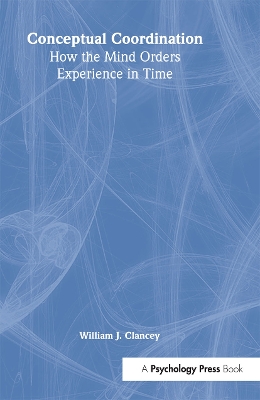
Conceptual Coordination: How the Mind Orders Experience in Time
(0)
Cliccando su “Conferma” dichiari che il contenuto da te inserito è conforme alle Condizioni Generali d’Uso del Sito ed alle Linee Guida sui Contenuti Vietati. Puoi rileggere e modificare e successivamente confermare il tuo contenuto. Tra poche ore lo troverai online (in caso contrario verifica la conformità del contenuto alle policy del Sito).
Grazie per la tua recensione!
Tra poche ore la vedrai online (in caso contrario verifica la conformità del testo alle nostre linee guida). Dopo la pubblicazione per te +4 punti 

242,70 €
+2430
punti 
Venditore: IBS
Articolo acquistabile con Carta del Docente

Articolo acquistabile con Carta Cultura Giovani e Carta del Merito

Articolo acquistabile con Carta della Cultura

Paga con Klarna in 3 rate senza interessi per ordini superiori a 39 €

Dati e Statistiche
 Salvato in 0 liste dei desideri
Salvato in 0 liste dei desideri
Conceptual Coordination: How the Mind Orders Experience in Time
Disponibilità in 2 settimane
242,70 €
242,70 €
Disponibilità in 2 settimane
Altre offerte vendute e spedite dai nostri venditori

Libri in Inglese
Conceptual Coordination: How the Mind Orders Experience in Time
Altri venditori
Prezzo e spese di spedizione
Nuovo
Disponibilità in 2 settimane

Venduto e spedito da
IBS
Spedizione Gratis
242,70 €
Altri venditori
Prezzo e spese di spedizione
Nuovo
Disponibilità in 2 settimane
Venduto e spedito da
IBS
Spedizione Gratis
242,70 €
Altri venditori
Prezzo e spese di spedizione

Tutti i formati ed edizioni

This book bridges the gap between models of human behavior that are based on cognitive task analysis and those based on neural networks. The author argues that these approaches are incomplete and not properly related to each other. His synthesis reconciles the very different conceptualizations of human memory assumed by these two approaches by assuming that 'what the brain remembers' is not a collection of symbols or neurons or even networks of either of these, but rather how to coordinate behavior in time, relating different modalities of conception and movement. A second premise is that behavior sequences are categorized, with perceptual categorizations (sounds, images) comprising the first order of categorization and conceptual categorizations of perceptions and actions in time comprising the second order. The conceptual categorizations are themselves sequenced and categorized, corresponding to the familiar classification hierarchies in cognitive models. Inspired by Bartlett's work, the author seeks to develop a theory of "process memory"--memory for experience in time. Following the methodology of situated cognition, he finds clues in the particulars of human activity, such as typing errors, how a computer interface is used, how a child learns to play in a swimming pool, odd limitations in language comprehension, and so on. Throughout, he examines existing (and often famous) cognitive and neural models with respect to these phenomena. In each case, he attempts to show that the experienced behavior can be understood as sequences of categories being reactivated, substituted, and composed. Ultimately, this analysis is shown to be the link that may lead to improvement of both symbolic and neurally based models of memory and behavior, with concomitant implications for cognitive psychology, artificial intelligence, and cognitive science as a whole.
Leggi di più
Leggi di meno
Autore:
Editore:
Anno:
1999
Rilegatura:
Hardback
Pagine:
252 p.
Testo in English
Dimensioni:
229 x 152 mm
Peso:
861 gr.
EAN:
9780805831436

L'articolo è stato aggiunto al carrello
Informazioni e Contatti sulla Sicurezza dei Prodotti
Le schede prodotto sono aggiornate in conformità al Regolamento UE 988/2023. Laddove ci fossero taluni dati non disponibili per ragioni indipendenti da IBS, vi informiamo che stiamo compiendo ogni ragionevole sforzo per inserirli. Vi invitiamo a controllare periodicamente il sito www.ibs.it per eventuali novità e aggiornamenti.
Per le vendite di prodotti da terze parti, ciascun venditore si assume la piena e diretta responsabilità per la commercializzazione del prodotto e per la sua conformità al Regolamento UE 988/2023, nonché alle normative nazionali ed europee vigenti.
Per informazioni sulla sicurezza dei prodotti, contattare productsafetyibs@feltrinelli.it
L’articolo è stato aggiunto alla lista dei desideri
