

L’articolo è stato aggiunto alla lista dei desideri








LIBRO INGLESE
 E-mail
 Facebook
 LinkedIn
 Twitter
 WhatsApp
Cyberspace Mimic Defense: Generalized Robust Control and Endogenous Security
(0)
Cliccando su “Conferma” dichiari che il contenuto da te inserito è conforme alle Condizioni Generali d’Uso del Sito ed alle Linee Guida sui Contenuti Vietati. Puoi rileggere e modificare e successivamente confermare il tuo contenuto. Tra poche ore lo troverai online (in caso contrario verifica la conformità del contenuto alle policy del Sito).
Grazie per la tua recensione!
Tra poche ore la vedrai online (in caso contrario verifica la conformità del testo alle nostre linee guida). Dopo la pubblicazione per te +4 punti 
266,70 €
+2670
punti 
Venditore: IBS
Articolo acquistabile con Carta del Docente

Articolo acquistabile con Carta Cultura Giovani e Carta del Merito

Articolo acquistabile con Carta della Cultura

Paga con Klarna in 3 rate senza interessi per ordini superiori a 39 €

Dati e Statistiche
 Salvato in 0 liste dei desideri
Salvato in 0 liste dei desideri
Cyberspace Mimic Defense: Generalized Robust Control and Endogenous Security
Disponibilità in 2 settimane
266,70 €
266,70 €
Disponibilità in 2 settimane
Altre offerte vendute e spedite dai nostri venditori
Libri in Inglese
Cyberspace Mimic Defense: Generalized Robust Control and Endogenous Security
Altri venditori
Prezzo e spese di spedizione
LIBRO INGLESE
Disponibilità in 2 settimane

Venduto e spedito da
IBS
Spedizione Gratis
266,70 €
Altri venditori
Prezzo e spese di spedizione
LIBRO INGLESE
Disponibilità in 2 settimane
Venduto e spedito da
IBS
Spedizione Gratis
266,70 €
Altri venditori
Prezzo e spese di spedizione

Tutti i formati ed edizioni
Promo attive (0)
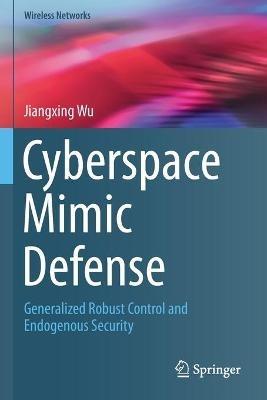
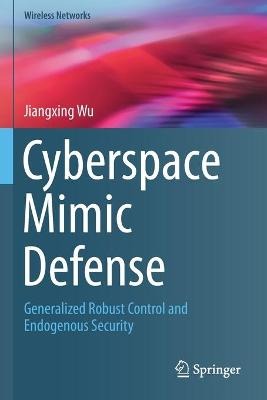
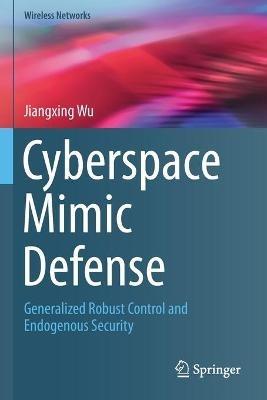
This book discusses uncertain threats, which are caused by unknown attacks based on unknown vulnerabilities or backdoors in the information system or control devices and software/hardware. Generalized robustness control architecture and the mimic defense mechanisms are presented in this book, which could change “the easy-to-attack and difficult-to-defend game” in cyberspace. The endogenous uncertain effects from the targets of the software/hardware based on this architecture can produce magic “mimic defense fog”, and suppress in a normalized mode random disturbances caused by physical or logic elements, as well as effects of non-probability disturbances brought by uncertain security threats. Although progress has been made in the current security defense theories in cyberspace and various types of security technologies have come into being, the effectiveness of such theories and technologies often depends on the scale of the prior knowledge of the attackers, on the part of the defender and on the acquired real-timing and accuracy regarding the attackers’ behavior features and other information. Hence, there lacks an efficient active defense means to deal with uncertain security threats from the unknown. Even if the bottom-line defense technologies such as encrypted verification are adopted, the security of hardware/software products cannot be quantitatively designed, verified or measured. Due to the “loose coupling” relationship and border defense modes between the defender and the protected target, there exist insurmountable theoretical and technological challenges in the protection of the defender and the target against the utilization of internal vulnerabilities or backdoors, as well as in dealing with attack scenarios based on backdoor-activated collaboration from both inside and outside, no matter how augmented or accumulated protective measures are adopted. Therefore, it is urgent to jump out of the stereotyped thinking based onconventional defense theories and technologies, find new theories and methods to effectively reduce the utilization of vulnerabilities and backdoors of the targets without relying on the priori knowledge and feature information, and to develop new technological means to offset uncertain threats based on unknown vulnerabilities and backdoors from an innovative perspective. This book provides a solution both in theory and engineering implementation to the difficult problem of how to avoid the uncontrollability of product security caused by globalized marketing, COTS and non-trustworthy software/hardware sources. It has been proved that this revolutionary enabling technology has endowed software/hardware products in IT/ICT/CPS with endogenous security functions and has overturned the attack theories and methods based on hardware/software design defects or resident malicious codes. This book is designed for educators, theoretical and technological researchers in cyber security and autonomous control and for business technicians who are engaged in the research on developing a new generation of software/hardware products by using endogenous security enabling technologies and for other product users. Postgraduates in IT/ICT/CPS/ICS will discover that (as long as the law of “structure determines the nature and architecture determines the security is properly used), the problem of software/hardware design defects or malicious code embedding will become the swelling of Achilles in the process of informationization and will no longer haunt Pandora’s box in cyberspace. Security and opening-up, advanced progressiveness and controllability seem to be contradictory, but there can be theoretically and technologically unified solutions to the problem.
Leggi di più
Leggi di meno
Autore:
Editore:
Collana:
Wireless Networks
Anno:
2021
Rilegatura:
Paperback / softback
Pagine:
735 p.
Testo in English
Dimensioni:
235 x 155 mm
EAN:
9783030298463

L'articolo è stato aggiunto al carrello
Informazioni e Contatti sulla Sicurezza dei Prodotti
Le schede prodotto sono aggiornate in conformità al Regolamento UE 988/2023. Laddove ci fossero taluni dati non disponibili per ragioni indipendenti da IBS, vi informiamo che stiamo compiendo ogni ragionevole sforzo per inserirli. Vi invitiamo a controllare periodicamente il sito www.ibs.it per eventuali novità e aggiornamenti.
Per le vendite di prodotti da terze parti, ciascun venditore si assume la piena e diretta responsabilità per la commercializzazione del prodotto e per la sua conformità al Regolamento UE 988/2023, nonché alle normative nazionali ed europee vigenti.
Per informazioni sulla sicurezza dei prodotti, contattare productsafetyibs@feltrinelli.it
L’articolo è stato aggiunto alla lista dei desideri
