

L’articolo è stato aggiunto alla lista dei desideri










LIBRO INGLESE
 E-mail
 Facebook
 LinkedIn
 Twitter
 WhatsApp
Design of Electronic Devices Using Redox-Active Organic Molecules and Their Porous Coordination Networks
(0)
Cliccando su “Conferma” dichiari che il contenuto da te inserito è conforme alle Condizioni Generali d’Uso del Sito ed alle Linee Guida sui Contenuti Vietati. Puoi rileggere e modificare e successivamente confermare il tuo contenuto. Tra poche ore lo troverai online (in caso contrario verifica la conformità del contenuto alle policy del Sito).
Grazie per la tua recensione!
Tra poche ore la vedrai online (in caso contrario verifica la conformità del testo alle nostre linee guida). Dopo la pubblicazione per te +4 punti 
250,20 €
+2500
punti 
Venditore: IBS
Articolo acquistabile con Carta del Docente

Articolo acquistabile con Carta Cultura Giovani e Carta del Merito

Paga con Klarna in 3 rate senza interessi per ordini superiori a 39 €

Dati e Statistiche
 Salvato in 0 liste dei desideri
Salvato in 0 liste dei desideri
Design of Electronic Devices Using Redox-Active Organic Molecules and Their Porous Coordination Networks
Disponibilità in 2 settimane
250,20 €
250,20 €
Disponibilità in 2 settimane
Altre offerte vendute e spedite dai nostri venditori
Libri in Inglese
Design of Electronic Devices Using Redox-Active Organic Molecules and Their Porous Coordination Networks
Altri venditori
Prezzo e spese di spedizione

Nuovo
 disponibilità in 2 settimane
 Venduto e spedito da
IBS
Venduto e spedito da
IBS
disponibilità in 2 settimane
Spedizione Gratis
250,20 €
Altri venditori
Prezzo e spese di spedizione
Nuovo
disponibilità in 2 settimane
Venduto e spedito da
IBS
disponibilità in 2 settimane
Spedizione Gratis
250,20 €
Altri venditori
Prezzo e spese di spedizione

Tutti i formati ed edizioni

Promo attive (0)
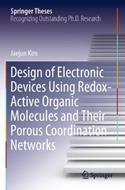
This book addresses the development of electronic devices using redox-active organic molecules and their porous coordination networks (PCNs), and highlights the importance of the molecular arrangement. Redox-active organic molecules hold considerable promise as flexible electronic elements, because their electronic state can easily be controlled using external energy. Although various kinds of redox-active organic molecules have been synthesized, attempts to apply them to electronic devices have been limited, owing to the lack of proper structural design. Moreover, ligand-based redox-active PCNs remain largely unexplored because of the limited availability of redox-active ligands. In addition to developing new redox-active organic molecules, in order to design electronic devices based on these molecules/PCNs, it is essential to understand the connections between their molecular arrangement, electrical properties, and redox activity. In this thesis, the redox-active organic molecule 2,5,8-tri(4-pyridyl)1,3-diazaphenalene (TPDAP), which features a large pi plane and multi-intermolecular interactivity, is used to develop a resistive switching memory device. In addition, its PCNs are synthesized to fabricate chemiresistive sensors, and the electrical properties are modulated using post-synthetic modification. Each mechanism is systematically investigated by means of structural determination and well-defined control experiments. Subsequently, the book proposes general guidelines for designing electronic devices using redox-active organic molecules. The book will appeal to a broad range of readers, from basic scientists to materials engineers, as well as general, non-expert readers.
Leggi di più
Leggi di meno
Autore:
Editore:
Collana:
Springer Theses
Anno:
2022
Rilegatura:
Paperback / softback
Pagine:
76 p.
Testo in English
Dimensioni:
235 x 155 mm
EAN:
9789811639098
L'articolo è stato aggiunto al carrello
Informazioni e Contatti sulla Sicurezza dei Prodotti
Le schede prodotto sono aggiornate in conformità al Regolamento UE 988/2023. Laddove ci fossero taluni dati non disponibili per ragioni indipendenti da IBS, vi informiamo che stiamo compiendo ogni ragionevole sforzo per inserirli. Vi invitiamo a controllare periodicamente il sito www.ibs.it per eventuali novità e aggiornamenti.
Per le vendite di prodotti da terze parti, ciascun venditore si assume la piena e diretta responsabilità per la commercializzazione del prodotto e per la sua conformità al Regolamento UE 988/2023, nonché alle normative nazionali ed europee vigenti.
Per informazioni sulla sicurezza dei prodotti, contattare productsafetyibs@feltrinelli.it
L’articolo è stato aggiunto alla lista dei desideri
