

L’articolo è stato aggiunto alla lista dei desideri


LIBRO INGLESE
 E-mail
 Facebook
 LinkedIn
 Twitter
 WhatsApp
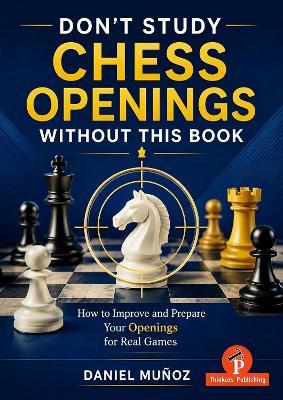
Don't Study Chess Openings Without This Book: How To Improve and Prepare Your Openings for Real Games
(0)
Cliccando su “Conferma” dichiari che il contenuto da te inserito è conforme alle Condizioni Generali d’Uso del Sito ed alle Linee Guida sui Contenuti Vietati. Puoi rileggere e modificare e successivamente confermare il tuo contenuto. Tra poche ore lo troverai online (in caso contrario verifica la conformità del contenuto alle policy del Sito).
Grazie per la tua recensione!
Tra poche ore la vedrai online (in caso contrario verifica la conformità del testo alle nostre linee guida). Dopo la pubblicazione per te +4 punti 
33,92 €
35,70 €
-5%
Risparmia 1,78€!

Venditore: IBS
Articolo acquistabile con Carta del Docente

Articolo acquistabile con Carta Cultura Giovani e Carta del Merito

Articolo acquistabile con Carta della Cultura

Dati e Statistiche
 Salvato in 0 liste dei desideri
Don't Study Chess Openings Without This Book: How To Improve and Prepare Your Openings for Real Games
Disponibilità in 3 settimane
33,92 €
-5%
35,70 €
33,92 €
35,70 €
-5%
Disponibilità in 3 settimane
Altre offerte vendute e spedite dai nostri venditori
Libri in Inglese
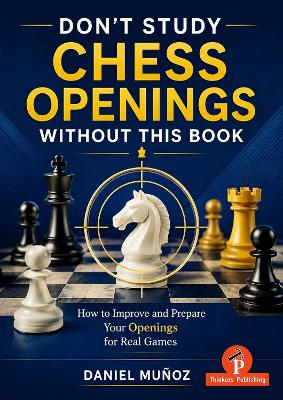
Don't Study Chess Openings Without This Book: How To Improve and Prepare Your Openings for Real Games
Altri venditori
Prezzo e spese di spedizione
LIBRO INGLESE
Disponibilità in 3 settimane

Venduto e spedito da
IBS
Spedizione Gratis
-5%
35,70 €
33,92 €
Altri venditori
Prezzo e spese di spedizione
LIBRO INGLESE
Disponibilità in 3 settimane
Venduto e spedito da
IBS
Spedizione Gratis
-5%
35,70 €
33,92 €
Altri venditori
Prezzo e spese di spedizione

Tutti i formati ed edizioni

Promo attive (0)
The book you hold in your hands is essential reading for every ambitious chess player. An effective approach to opening improvement should focus on understanding the logic behind each move, the relationship between moves, and the ability to adapt to different setups without becoming trapped in a theoretical straitjacket. There is little value in memorizing twenty moves of theory if, once your preparation ends, you are left without a clear plan. Real improvement comes from recognizing strategic patterns, mastering typical pawn structures, and understanding the middlegame positions that arise from your chosen openings. This means studying model games, analyzing key transitions from opening to middlegame, and developing training habits that prioritize understanding over the mere accumulation of variations. Only through such an approach can you build a reliable opening repertoire—one founded not on the fragile thread of memory, but on the enduring strength of genuine chess understanding. Yet, when working on our openings, how often do we stop to consider the sustainability of our progress? How frequently do we think about the transfer of knowledge between different phases of study, the practical integration of computer-assisted analysis, or the simple reality that chess learning remains a fundamentally human process, regardless of how many databases, engines, and training modules continue to emerge? This book seeks to answer those questions. Its goal is not merely to help you learn openings, but to help you understand them, retain them, and apply them successfully in practical play. An effective approach to opening improvement should focus on understanding the logic behind each move, the relationship between moves, and the ability to adapt to different setups without becoming trapped in a theoretical straitjacket. There is little value in memorizing twenty moves of theory if, once your preparation ends, you are left without a clear plan. Real improvement comes from recognizing strategic patterns, mastering typical pawn structures, and understanding the middlegame positions that arise from your chosen openings. This means studying model games, analyzing key transitions from opening to middlegame, and developing training habits that prioritize understanding over the mere accumulation of variations. Only through such an approach can you build a reliable opening repertoire—one founded not on the fragile thread of memory, but on the enduring strength of genuine chess understanding. Yet, when working on our openings, how often do we stop to consider the sustainability of our progress? How frequently do we think about the transfer of knowledge between different phases of study, the practical integration of computer-assisted analysis, or the simple reality that chess learning remains a fundamentally human process, regardless of how many databases, engines, and training modules continue to emerge? This book seeks to answer those questions. Its goal is not merely to help you learn openings, but to help you understand them, retain them, and apply them successfully in practical play.
Leggi di più
Leggi di meno
Testo in English
Dimensioni:
234 x 170 mm
EAN:
9789493435254

L'articolo è stato aggiunto al carrello
Informazioni e Contatti sulla Sicurezza dei Prodotti
Le schede prodotto sono aggiornate in conformità al Regolamento UE 988/2023. Laddove ci fossero taluni dati non disponibili per ragioni indipendenti da IBS, vi informiamo che stiamo compiendo ogni ragionevole sforzo per inserirli. Vi invitiamo a controllare periodicamente il sito www.ibs.it per eventuali novità e aggiornamenti.
Per le vendite di prodotti da terze parti, ciascun venditore si assume la piena e diretta responsabilità per la commercializzazione del prodotto e per la sua conformità al Regolamento UE 988/2023, nonché alle normative nazionali ed europee vigenti.
Per informazioni sulla sicurezza dei prodotti, contattare productsafetyibs@feltrinelli.it
L’articolo è stato aggiunto alla lista dei desideri
