

L’articolo è stato aggiunto alla lista dei desideri






LIBRO INGLESE
 E-mail
 Facebook
 LinkedIn
 Twitter
 WhatsApp
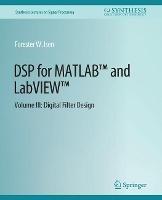
DSP for MATLAB™ and LabVIEW™ III: Digital Filter Design
(0)
Cliccando su “Conferma” dichiari che il contenuto da te inserito è conforme alle Condizioni Generali d’Uso del Sito ed alle Linee Guida sui Contenuti Vietati. Puoi rileggere e modificare e successivamente confermare il tuo contenuto. Tra poche ore lo troverai online (in caso contrario verifica la conformità del contenuto alle policy del Sito).
Grazie per la tua recensione!
Tra poche ore la vedrai online (in caso contrario verifica la conformità del testo alle nostre linee guida). Dopo la pubblicazione per te +4 punti 
68,60 €

Venditore: IBS
Articolo acquistabile con Carta del Docente

Articolo acquistabile con Carta Cultura Giovani e Carta del Merito

Articolo acquistabile con Carta della Cultura

Paga con Klarna in 3 rate senza interessi per ordini superiori a 39 €

Dati e Statistiche
 Salvato in 0 liste dei desideri
Salvato in 0 liste dei desideri
DSP for MATLAB™ and LabVIEW™ III: Digital Filter Design
Disponibilità in 2 settimane
68,60 €
68,60 €
Disponibilità in 2 settimane
Altre offerte vendute e spedite dai nostri venditori
Libri in Inglese
DSP for MATLAB™ and LabVIEW™ III: Digital Filter Design
Altri venditori
Prezzo e spese di spedizione
LIBRO INGLESE
Disponibilità in 2 settimane

Venduto e spedito da
IBS
Spedizione Gratis
68,60 €
Altri venditori
Prezzo e spese di spedizione
LIBRO INGLESE
Disponibilità in 2 settimane
Venduto e spedito da
IBS
Spedizione Gratis
68,60 €
Altri venditori
Prezzo e spese di spedizione

Tutti i formati ed edizioni
Promo attive (0)
This book is Volume III of the series DSP for MATLAB™ and LabVIEW™. Volume III covers digital filter design, including the specific topics of FIR design via windowed-ideal-lowpass filter, FIR highpass, bandpass, and bandstop filter design from windowed-ideal lowpass filters, FIR design using the transition-band-optimized Frequency Sampling technique (implemented by Inverse-DFT or Cosine/Sine Summation Formulas), design of equiripple FIRs of all standard types including Hilbert Transformers and Differentiators via the Remez Exchange Algorithm, design of Butterworth, Chebyshev (Types I and II), and Elliptic analog prototype lowpass filters, conversion of analog lowpass prototype filters to highpass, bandpass, and bandstop filters, and conversion of analog filters to digital filters using the Impulse Invariance and Bilinear Transform techniques. Certain filter topologies specific to FIRs are also discussed, as are two simple FIR types, the Comb and Moving Average filters. The entire series consists of four volumes that collectively cover basic digital signal processing in a practical and accessible manner, but which nonetheless include all essential foundation mathematics. As the series title implies, the scripts (of which there are more than 200) described in the text and supplied in code form here will run on both MATLAB™ and LabVIEW™. The text for all volumes contains many examples, and many useful computational scripts, augmented by demonstration scripts and LabVIEW™ Virtual Instruments (VIs) that can be run to illustrate various signal processing concepts graphically on the user's computer screen. Volume I consists of four chapters that collectively set forth a brief overview of the field of digital signal processing, useful signals and concepts (including convolution, recursion, difference equations, LTI systems, etc), conversion from the continuous to discrete domain and back (i.e., analog-to-digital and digital-to-analog conversion), aliasing, the Nyquist rate, normalized frequency, sample rate conversion and Mu-law compression, and signal processing principles including correlation, the correlation sequence, the Real DFT, correlation by convolution, matched filtering, simple FIR filters, and simple IIR filters. Chapter four of Volume I, in particular, provides an intuitive or ""first principle"" understanding of how digital filtering and frequency transforms work. Volume II provides detailed coverage of discrete frequency transforms, including a brief overview of common frequency transforms, both discrete and continuous, followed by detailed treatments of the Discrete Time Fourier Transform (DTFT), the z-Transform (including definition and properties, the inverse z-transform, frequency response via z-transform, and alternate filter realization topologies including Direct Form, Direct Form Transposed, Cascade Form, Parallel Form, and Lattice Form), and the Discrete Fourier Transform (DFT) (including Discrete Fourier Series, the DFT-IDFT pair, DFT of common signals, bin width, sampling duration, and sample rate, the FFT, the Goertzel Algorithm, Linear, Periodic, and Circular convolution, DFT Leakage, and computation of the Inverse DFT). Volume IV, the culmination of the series, is an introductory treatment of LMS Adaptive Filtering and applications, and covers cost functions, performance surfaces, coefficient perturbation to estimate the gradient, the LMS algorithm, response of the LMS algorithm to narrow-band signals, and various topologies such as ANC (Active Noise Cancelling) or system modeling, Periodic Signal Removal/Prediction/Adaptive Line Enhancement (ALE), Interference Cancellation, Echo Cancellation (with single- and dual-H topologies), and Inverse Filtering/Deconvolution/Equalization. Table of Contents: Principles
Leggi di più
Leggi di meno
Autore:
Editore:
Collana:
Synthesis Lectures on Signal Processing
Anno:
2008
Rilegatura:
Paperback / softback
Pagine:
220 p.
Testo in English
Dimensioni:
235 x 191 mm
EAN:
9783031014024

L'articolo è stato aggiunto al carrello
Informazioni e Contatti sulla Sicurezza dei Prodotti
Le schede prodotto sono aggiornate in conformità al Regolamento UE 988/2023. Laddove ci fossero taluni dati non disponibili per ragioni indipendenti da IBS, vi informiamo che stiamo compiendo ogni ragionevole sforzo per inserirli. Vi invitiamo a controllare periodicamente il sito www.ibs.it per eventuali novità e aggiornamenti.
Per le vendite di prodotti da terze parti, ciascun venditore si assume la piena e diretta responsabilità per la commercializzazione del prodotto e per la sua conformità al Regolamento UE 988/2023, nonché alle normative nazionali ed europee vigenti.
Per informazioni sulla sicurezza dei prodotti, contattare productsafetyibs@feltrinelli.it
L’articolo è stato aggiunto alla lista dei desideri
