

L’articolo è stato aggiunto alla lista dei desideri








LIBRO INGLESE
 E-mail
 Facebook
 LinkedIn
 Twitter
 WhatsApp
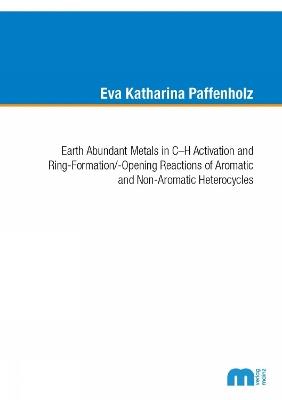
Earth Abundant Metals in C-H Activation and Ring-Formation/-Opening Reactions of Aromatic and Non-Aromatic Heterocycles
(0)
Cliccando su “Conferma” dichiari che il contenuto da te inserito è conforme alle Condizioni Generali d’Uso del Sito ed alle Linee Guida sui Contenuti Vietati. Puoi rileggere e modificare e successivamente confermare il tuo contenuto. Tra poche ore lo troverai online (in caso contrario verifica la conformità del contenuto alle policy del Sito).
Grazie per la tua recensione!
Tra poche ore la vedrai online (in caso contrario verifica la conformità del testo alle nostre linee guida). Dopo la pubblicazione per te +4 punti 
52,24 €

-5%
54,99 €
+520
punti

Venditore: IBS
Articolo acquistabile con Carta del Docente

Articolo acquistabile con Carta Cultura Giovani e Carta del Merito

Paga con Klarna in 3 rate senza interessi per ordini superiori a 39 €

Dati e Statistiche
 Salvato in 0 liste dei desideri
Salvato in 0 liste dei desideri
Earth Abundant Metals in C-H Activation and Ring-Formation/-Opening Reactions of Aromatic and Non-Aromatic Heterocycles
Disponibilità in 5 gg lavorativi
52,24 €
-5%
54,99 €
52,24 €
54,99 €
-5%
Disponibilità in 5 gg lavorativi
Altre offerte vendute e spedite dai nostri venditori

Libri in Inglese
Earth Abundant Metals in C-H Activation and Ring-Formation/-Opening Reactions of Aromatic and Non-Aromatic Heterocycles
Altri venditori
Prezzo e spese di spedizione
Nuovo
 disponibilità in 5 gg lavorativi
 Venduto e spedito da
IBS
Venduto e spedito da
IBS
disponibilità in 5 gg lavorativi
Spedizione Gratis
-5%
54,99 €
52,24 €
Altri venditori
Prezzo e spese di spedizione
Nuovo
disponibilità in 5 gg lavorativi
Venduto e spedito da
IBS
disponibilità in 5 gg lavorativi
Spedizione Gratis
-5%
54,99 €
52,24 €
Altri venditori
Prezzo e spese di spedizione

Tutti i formati ed edizioni
Promo attive (1)
In the last decades, C–H activation became an increasingly powerful tool for C–C bond formation. It provided a valid alternative to conventional cross coupling reactions with maximised atom- and step-economy for synthetic reactions. Even though a lot of great advances have been made, some challenges in C–H activations remain. C–H bonds are highly stable (110 kcal/mol), often harsh reaction conditions are needed to break the bond and form a new C–C compound. Furthermore, regioselectivity has been proven to be a difficult issue since a number of C–H bonds are present in organic molecules. Also, chemoselectivity still remains a difficulty to overcome in C–H activation reactions. Many groups focus their research on developing mild reaction conditions that proceed at “ambient temperature, neutral conditions and in absence of strong oxidants or reductants”.[1b] By choosing milder reaction conditions also problems of selectivity can be managed. In general, the catalytic cycle of C–H activation reactions follows four reaction steps: first is the C–H activation itself, where a substrate binds to the metal that catalyses the reaction process (I). Next is the functionalisation of the organometal intermediate with an appropriate reaction partner (II). By releasing the product (III) and regeneration of the catalyst, e.g. with an oxidant (IV), the catalytic cycle is closed.
Leggi di più
Leggi di meno
Autore:
Editore:
Anno:
2020
Rilegatura:
Paperback / softback
Pagine:
186 p.
Testo in English
Dimensioni:
210 x 148 mm
Peso:
258 gr.
EAN:
9783958863699
L'articolo è stato aggiunto al carrello
Informazioni e Contatti sulla Sicurezza dei Prodotti
Le schede prodotto sono aggiornate in conformità al Regolamento UE 988/2023. Laddove ci fossero taluni dati non disponibili per ragioni indipendenti da IBS, vi informiamo che stiamo compiendo ogni ragionevole sforzo per inserirli. Vi invitiamo a controllare periodicamente il sito www.ibs.it per eventuali novità e aggiornamenti.
Per le vendite di prodotti da terze parti, ciascun venditore si assume la piena e diretta responsabilità per la commercializzazione del prodotto e per la sua conformità al Regolamento UE 988/2023, nonché alle normative nazionali ed europee vigenti.
Per informazioni sulla sicurezza dei prodotti, contattare productsafetyibs@feltrinelli.it
L’articolo è stato aggiunto alla lista dei desideri
