

L’articolo è stato aggiunto alla lista dei desideri









LIBRO INGLESE
 E-mail
 Facebook
 LinkedIn
 Twitter
 WhatsApp
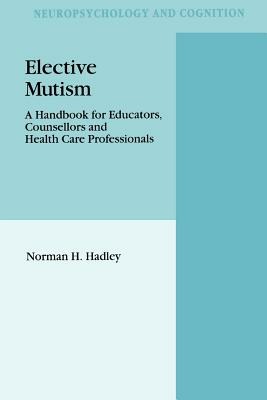
Elective Mutism: A Handbook for Educators, Counsellors and Health Care Professionals
(0)
Cliccando su “Conferma” dichiari che il contenuto da te inserito è conforme alle Condizioni Generali d’Uso del Sito ed alle Linee Guida sui Contenuti Vietati. Puoi rileggere e modificare e successivamente confermare il tuo contenuto. Tra poche ore lo troverai online (in caso contrario verifica la conformità del contenuto alle policy del Sito).
Grazie per la tua recensione!
Tra poche ore la vedrai online (in caso contrario verifica la conformità del testo alle nostre linee guida). Dopo la pubblicazione per te +4 punti 
68,30 €
+680
punti 
Venditore: IBS
Articolo acquistabile con Carta del Docente

Articolo acquistabile con Carta Cultura Giovani e Carta del Merito

Articolo acquistabile con Carta della Cultura

Paga con Klarna in 3 rate senza interessi per ordini superiori a 39 €

Dati e Statistiche
 Salvato in 0 liste dei desideri
Salvato in 0 liste dei desideri
Elective Mutism: A Handbook for Educators, Counsellors and Health Care Professionals
Disponibilità in 2 settimane
68,30 €
68,30 €
Disponibilità in 2 settimane
Altre offerte vendute e spedite dai nostri venditori

Libri in Inglese
Elective Mutism: A Handbook for Educators, Counsellors and Health Care Professionals
Altri venditori
Prezzo e spese di spedizione
Nuovo
Disponibilità in 2 settimane

Venduto e spedito da
IBS
Spedizione Gratis
68,30 €
Altri venditori
Prezzo e spese di spedizione
Nuovo
Disponibilità in 2 settimane
Venduto e spedito da
IBS
Spedizione Gratis
68,30 €
Altri venditori
Prezzo e spese di spedizione

Tutti i formati ed edizioni
Promo attive (0)
Undeniably, language is at the core of human existence. Merleau-Ponty (1945) posited that thought and language are one - cognition being language; language, cognition. Although such a categorical stance can be challenged from a number of theoretical perspectives as dogmatic and nonveridical, the critical role of language in humanness is irrefutable. It is what defines and distinguishes creatures at the apex of the phylogenetic scale. The fact that cognition predates verbal fluency and can take various nonverbal forms does not diminish the pivotal role of language - it is a functional requisite, an imperative. More than a mere vehicle to express thought, it transforms, modifies and shapes much of cognition. It cannot be trivialized. On many grounds man is capably rivalled by lower forms of existence - the gazelle is more graceful; the lion is stronger; the cheetah is fleeter. It is through his use of symbols that man usurps the ascendant position. Cassirer in Essay on Man (1946) described man as animal symbolicum, the animal that creates symbols and a symbolic world. Through language, humans transcend time and are able to describe events temporally removed - to reflect on the past, to conjecture the future. With words man can paint pictures, muse and dream, embrace and console, persuade and corrupt, educate and be educated. Language is a preferred performatory domain, nowhere more than in Western Civilization.
Leggi di più
Leggi di meno
Autore:
Editore:
Collana:
Neuropsychology and Cognition
Anno:
2010
Rilegatura:
Paperback / softback
Pagine:
244 p.
Testo in English
Dimensioni:
235 x 155 mm
EAN:
9789048143061

L'articolo è stato aggiunto al carrello
Informazioni e Contatti sulla Sicurezza dei Prodotti
Le schede prodotto sono aggiornate in conformità al Regolamento UE 988/2023. Laddove ci fossero taluni dati non disponibili per ragioni indipendenti da IBS, vi informiamo che stiamo compiendo ogni ragionevole sforzo per inserirli. Vi invitiamo a controllare periodicamente il sito www.ibs.it per eventuali novità e aggiornamenti.
Per le vendite di prodotti da terze parti, ciascun venditore si assume la piena e diretta responsabilità per la commercializzazione del prodotto e per la sua conformità al Regolamento UE 988/2023, nonché alle normative nazionali ed europee vigenti.
Per informazioni sulla sicurezza dei prodotti, contattare productsafetyibs@feltrinelli.it
L’articolo è stato aggiunto alla lista dei desideri
