

L’articolo è stato aggiunto alla lista dei desideri








LIBRO INGLESE
 E-mail
 Facebook
 LinkedIn
 Twitter
 WhatsApp
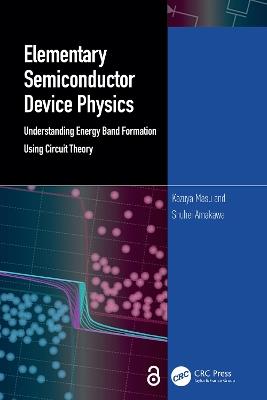
Elementary Semiconductor Device Physics: Understanding Energy Band Formation Using Circuit Theory
(0)
Cliccando su “Conferma” dichiari che il contenuto da te inserito è conforme alle Condizioni Generali d’Uso del Sito ed alle Linee Guida sui Contenuti Vietati. Puoi rileggere e modificare e successivamente confermare il tuo contenuto. Tra poche ore lo troverai online (in caso contrario verifica la conformità del contenuto alle policy del Sito).
Grazie per la tua recensione!
Tra poche ore la vedrai online (in caso contrario verifica la conformità del testo alle nostre linee guida). Dopo la pubblicazione per te +4 punti 
153,40 €
+1530
punti 
Venditore: IBS
Articolo acquistabile con Carta del Docente

Articolo acquistabile con Carta Cultura Giovani e Carta del Merito

Paga con Klarna in 3 rate senza interessi per ordini superiori a 39 €

Dati e Statistiche
 Salvato in 0 liste dei desideri
Salvato in 0 liste dei desideri
Elementary Semiconductor Device Physics: Understanding Energy Band Formation Using Circuit Theory
Disponibilità in 2 settimane
153,40 €
153,40 €
Disponibilità in 2 settimane
Altre offerte vendute e spedite dai nostri venditori
Libri in Inglese
Elementary Semiconductor Device Physics: Understanding Energy Band Formation Using Circuit Theory
Altri venditori
Prezzo e spese di spedizione
Nuovo
 disponibilità in 2 settimane
 Venduto e spedito da
IBS
Venduto e spedito da
IBS
disponibilità in 2 settimane
Spedizione Gratis
153,40 €
Altri venditori
Prezzo e spese di spedizione
Nuovo
disponibilità in 2 settimane
Venduto e spedito da
IBS
disponibilità in 2 settimane
Spedizione Gratis
153,40 €
Altri venditori
Prezzo e spese di spedizione

Tutti i formati ed edizioni
Promo attive (0)
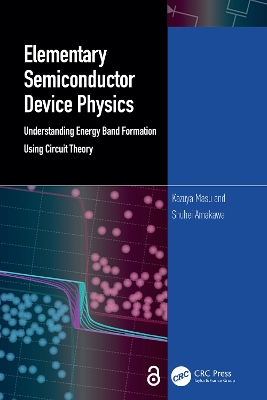
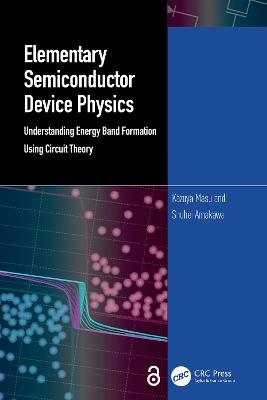
This book by two leading experts on integrated circuit design adopts an untraditional approach to introducing semiconductor devices to beginners. The authors use circuit theory to provide a digestible explanation of energy band theory and understanding of energy band diagrams. After briefly summarizing the basics of semiconductors, the authors describe semiconductor devices from a circuit theoretic point of view, making the book especially suitable for circuit design students and engineers. Further to the emphasis on the circuit perspective, the book then uses circuit theory to introduce readers to the famously indigestible “energy bands” of crystalline solids. Additionally, the book explains how to read physics from “energy band diagrams” of semiconductor devices in great detail. The key to appreciating the real power of energy band diagrams is shown to lie in the understanding of the concept of the “quasi-Fermi levels,” introduced in 1949 by William Shockley but remaining elusive to date and therefore often omitted from energy band diagrams. To rectify this, some of the energy band diagrams presented in this book, complete with quasi-Fermi levels, were drawn using a device simulator (a.k.a. technology computer-aided design; TCAD), offering quantitative information about device physics. The book could, therefore, also serve as a hands-on course text in TCAD-drawn band diagram reading. Because no prior exposure to quantum mechanics is required and the book does not attempt to teach it, this book is ideal for students in various disciplines who may or may not be specializing in semiconductor devices. The numerous practical examples of reading TCAD-based energy-band diagrams are also invaluable to practicing semiconductor device engineers.
Leggi di più
Leggi di meno
Autore:
Editore:
Anno:
2024
Rilegatura:
Hardback
Pagine:
330 p.
Testo in English
Dimensioni:
234 x 156 mm
Peso:
830 gr.
EAN:
9781032574479
L'articolo è stato aggiunto al carrello
Informazioni e Contatti sulla Sicurezza dei Prodotti
Le schede prodotto sono aggiornate in conformità al Regolamento UE 988/2023. Laddove ci fossero taluni dati non disponibili per ragioni indipendenti da IBS, vi informiamo che stiamo compiendo ogni ragionevole sforzo per inserirli. Vi invitiamo a controllare periodicamente il sito www.ibs.it per eventuali novità e aggiornamenti.
Per le vendite di prodotti da terze parti, ciascun venditore si assume la piena e diretta responsabilità per la commercializzazione del prodotto e per la sua conformità al Regolamento UE 988/2023, nonché alle normative nazionali ed europee vigenti.
Per informazioni sulla sicurezza dei prodotti, contattare productsafetyibs@feltrinelli.it
L’articolo è stato aggiunto alla lista dei desideri
