

L’articolo è stato aggiunto alla lista dei desideri








LIBRO INGLESE
 E-mail
 Facebook
 LinkedIn
 Twitter
 WhatsApp
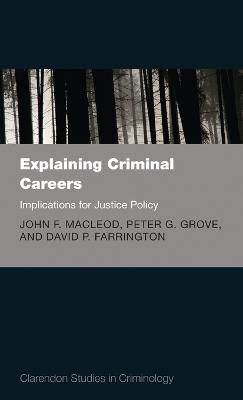
Explaining Criminal Careers: Implications for Justice Policy
(0)
Cliccando su “Conferma” dichiari che il contenuto da te inserito è conforme alle Condizioni Generali d’Uso del Sito ed alle Linee Guida sui Contenuti Vietati. Puoi rileggere e modificare e successivamente confermare il tuo contenuto. Tra poche ore lo troverai online (in caso contrario verifica la conformità del contenuto alle policy del Sito).
Grazie per la tua recensione!
Tra poche ore la vedrai online (in caso contrario verifica la conformità del testo alle nostre linee guida). Dopo la pubblicazione per te +4 punti 
154,10 €
+1540
punti 
Venditore: IBS
Articolo acquistabile con Carta del Docente

Articolo acquistabile con Carta Cultura Giovani e Carta del Merito

Articolo acquistabile con Carta della Cultura

Paga con Klarna in 3 rate senza interessi per ordini superiori a 39 €

Dati e Statistiche
 Salvato in 0 liste dei desideri
Salvato in 0 liste dei desideri
Explaining Criminal Careers: Implications for Justice Policy
Disponibilità in 2 settimane
154,10 €
154,10 €
Disponibilità in 2 settimane
Altre offerte vendute e spedite dai nostri venditori

Libri in Inglese
Explaining Criminal Careers: Implications for Justice Policy
Altri venditori
Prezzo e spese di spedizione
LIBRO INGLESE
Disponibilità in 2 settimane

Venduto e spedito da
IBS
Spedizione Gratis
154,10 €
Altri venditori
Prezzo e spese di spedizione
LIBRO INGLESE
Disponibilità in 2 settimane
Venduto e spedito da
IBS
Spedizione Gratis
154,10 €
Altri venditori
Prezzo e spese di spedizione

Tutti i formati ed edizioni
Promo attive (0)
This is an open access title available under the terms of a CC BY-NC-ND 3.0 International licence. It is free to read at Oxford Scholarship Online and offered as a free PDF download from OUP and selected open access locations. Explaining Criminal Careers presents a simple but influential theory of crime, conviction and reconviction. The assumptions of the theory are derived directly from a detailed analysis of cohort samples extracted from the Home Office Offenders Index - a unique database which contains records of all criminal (standard list) convictions in England and Wales since 1963. In particular, the theory explains the well-known Age/Crime curve. Based on the idea that there are only three types of offenders, who commit crimes at either high or low (constant) rates and have either a high or low (constant) risk of reoffending, this simple theory makes exact quantitative predictions about criminal careers and age-crime curves. Purely from the birth-rate over the second part of the 20th century, the theory accurately predicts (to within 2%) the prison population contingent on a given sentencing policy. The theory also suggests that increasing the probability of conviction after each offence is the most effective way of reducing crime, although there is a role for treatment programmes for some offenders. The authors indicate that crime is influenced by the operation of the Criminal Justice System and that offenders do not 'grow out' of crime as commonly supposed; they are persuaded to stop or decide to stop after (repeated) convictions, with a certain fraction of offenders desisting after each conviction. Simply imprisoning offenders will not reduce crime either by individual deterrence or by incapacitation. With comprehensive explanations of the formulae used and complete mathematical appendices allowing for individual interpretations and further development of the theory, Explaining Criminal Careers represents an innovative and meticulous investigation into criminal activity and the influences behind it. With clear policy implications and a wealth of original and significant discussions, this book marks a ground-breaking chapter in the criminological debate surrounding criminal careers.
Leggi di più
Leggi di meno
Editore:
Collana:
Clarendon Studies in Criminology
Anno:
2012
Rilegatura:
Hardback
Pagine:
274 p.
Testo in English
Dimensioni:
219 x 154 mm
Peso:
460 gr.
EAN:
9780199697243

L'articolo è stato aggiunto al carrello
Informazioni e Contatti sulla Sicurezza dei Prodotti
Le schede prodotto sono aggiornate in conformità al Regolamento UE 988/2023. Laddove ci fossero taluni dati non disponibili per ragioni indipendenti da IBS, vi informiamo che stiamo compiendo ogni ragionevole sforzo per inserirli. Vi invitiamo a controllare periodicamente il sito www.ibs.it per eventuali novità e aggiornamenti.
Per le vendite di prodotti da terze parti, ciascun venditore si assume la piena e diretta responsabilità per la commercializzazione del prodotto e per la sua conformità al Regolamento UE 988/2023, nonché alle normative nazionali ed europee vigenti.
Per informazioni sulla sicurezza dei prodotti, contattare productsafetyibs@feltrinelli.it
L’articolo è stato aggiunto alla lista dei desideri
