

L’articolo è stato aggiunto alla lista dei desideri










EBOOK IN LINGUA STRANIERA
 E-mail
 Facebook
 LinkedIn
 Twitter
 WhatsApp
The Extraterrestrial Recognition Guide
(0)
Cliccando su “Conferma” dichiari che il contenuto da te inserito è conforme alle Condizioni Generali d’Uso del Sito ed alle Linee Guida sui Contenuti Vietati. Puoi rileggere e modificare e successivamente confermare il tuo contenuto. Tra poche ore lo troverai online (in caso contrario verifica la conformità del contenuto alle policy del Sito).
Grazie per la tua recensione!
Tra poche ore la vedrai online (in caso contrario verifica la conformità del testo alle nostre linee guida). Dopo la pubblicazione per te +4 punti 
8,99 €
+90
punti 
Venditore: IBS

Acquista online
Scaricabile subito
Articolo acquistabile con Carta del Docente

Articolo acquistabile con Carta Cultura Giovani e Carta del Merito

Articolo acquistabile con Carta della Cultura

Abbonati a Kobo plus per avere accesso illimitato a questo contenuto

Dati e Statistiche
 Salvato in 0 liste dei desideri
Salvato in 0 liste dei desideri
The Extraterrestrial Recognition Guide
Scaricabile subito
8,99 €
8,99 €
Scaricabile subito
Altre offerte vendute e spedite dai nostri venditori

Ebook in lingua straniera
The Extraterrestrial Recognition Guide
Altri venditori
Prezzo e spese di spedizione
EBOOK INGLESE
EPUB2 con DRMFREE
Scaricabile subito

Venduto e spedito da
IBS
Spedizione Gratis
8,99 €
Altri venditori
Prezzo e spese di spedizione
EBOOK INGLESE
EPUB2 con DRMFREE
Scaricabile subito
Venduto e spedito da
IBS
Spedizione Gratis
8,99 €
Altri venditori
Prezzo e spese di spedizione

Tutti i formati ed edizioni

Promo attive (0)
The Extraterrestrial Recognition Guide
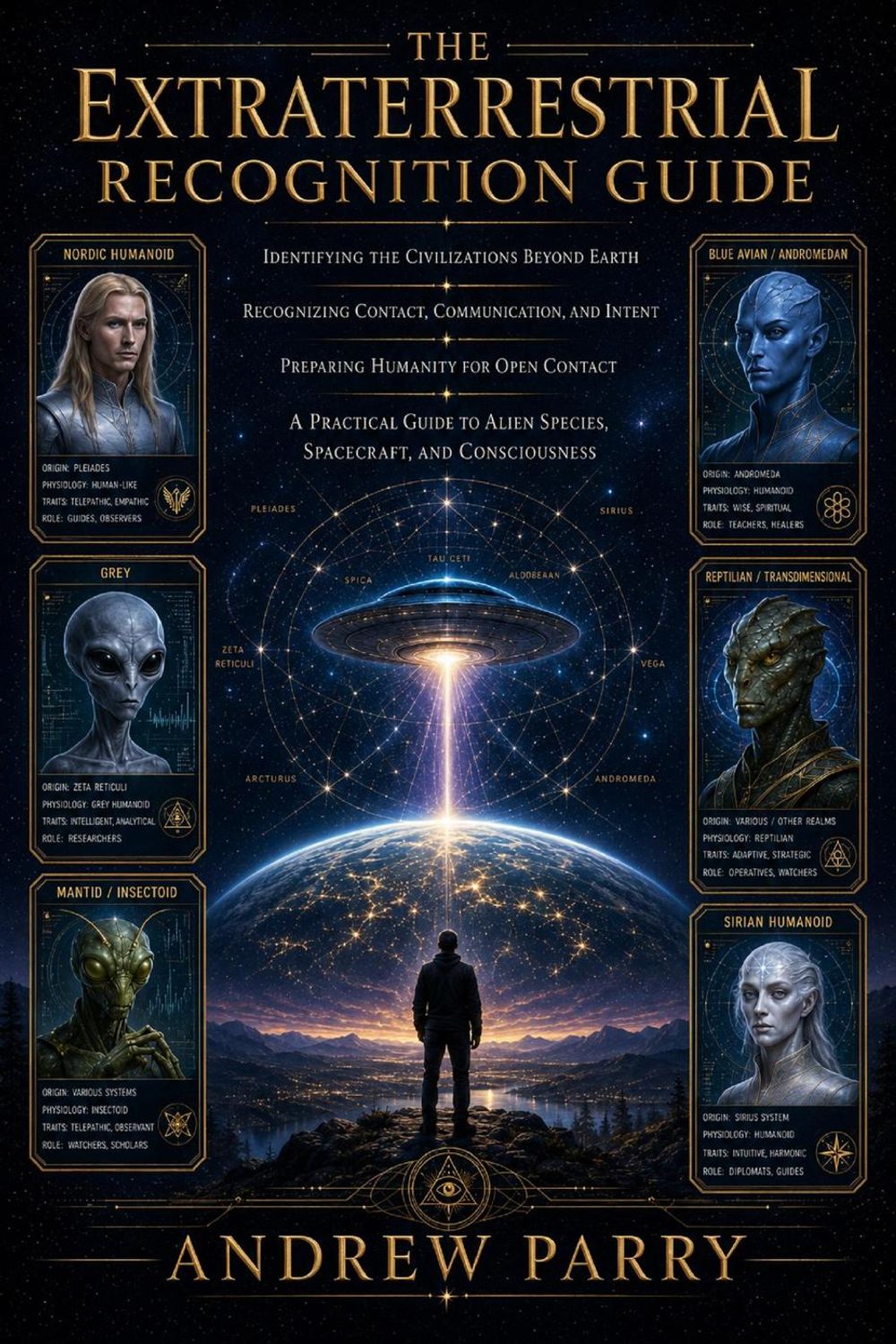
What happens when the lights in the sky are no longer distant mysteries, but the arrival of beings humanity must learn to recognize, understand, and live beside? The Extraterrestrial Recognition Guide is a comprehensive exploration of the civilizations most frequently described in modern contact testimony, spiritual traditions, experiencer accounts, UFO research, mythology, and speculative science. Moving beyond simple lists of alien species, this book examines how different non-human beings may look, communicate, think, behave, organize society, and approach humanity. It asks not only who they may be, but how we can distinguish authentic contact from misinterpretation, projection, fear, deception, and cultural expectation. Within these pages, readers encounter the reported Arcturians, Andromedans, Nordic Whites, Pleiadians, Sirians, Lyrans, Yahyel, Sassani, Zeta Reticulans, Ebens, Tall Whites, Nommo, Blue Avians, Mantids, Reptilians, and many other alleged extraterrestrial civilizations. Each profile explores appearance, psychology, cultural traits, communication methods, reported technologies, possible motives, and the role each group is said to play in humanity's future. Yet the guide never assumes that every claim has been scientifically verified. It clearly separates established knowledge, witness testimony, contact lore, spiritual interpretation, and informed speculation. This is also a guide to discernment. Extraordinary experiences can arise through many pathways, including unusual aerial phenomena, vivid dreams, sleep paralysis, altered states, telepathic impressions, psychological projection, memory reconstruction, and genuine unexplained events. Readers are shown how to document encounters carefully, distinguish observation from interpretation, evaluate evidence, protect psychological well-being, and recognize warning signs of manipulation. A beautiful visitor is not automatically benevolent, and an unfamiliar or frightening form is not automatically hostile. Character must be judged through conduct, consent, honesty, consistency, and respect for autonomy. The book then looks beyond recognition toward the practical realities of Open Contact. How should humanity prepare for its first public meetings with extraterrestrials? Who has the authority to speak for Earth? What laws, medical precautions, diplomatic protocols, and ethical safeguards will be required? How might humans and multiple alien species share schools, hospitals, neighborhoods, laboratories, workplaces, and cultural institutions? What rights should belong to artificial intelligences, hybrids, collective minds, or beings whose consciousness does not reside within one biological body? At its heart, The Extraterrestrial Recognition Guide is a book about humanity's readiness to enter a larger community of civilizations. It explores how contact could transform science, spirituality, medicine, education, politics, identity, consciousness, and our relationship with Earth itself. It warns against worship, fear, secrecy, species prejudice, and the careless pursuit of advanced technology. It also offers a hopeful vision of cooperation, cultural exchange, planetary restoration, expanded knowledge, and a future in which humanity becomes a responsible galactic citizen. This guide does not ask readers to believe every story, reject every mystery, or wait passively for beings from the stars to solve humanity's problems. It asks us to become more observant, more discerning, more ethical, and more capable of meeting radical difference without surrendering reason or compassion. Recognition is only the beginning. The true question is whether humanity is ready for the relationship that follows.
Leggi di più
Leggi di meno
Autore:
Anno edizione:
2026
Editore:
Formato:
Lingua:
Inglese
Compatibilità:
Tutti i dispositivi (eccetto Kindle) Scopri di più
Layout:
Reflowable
EAN:
9798235267510
L'articolo è stato aggiunto al carrello
Formato:
Gli eBook venduti da IBS.it sono in formato ePub e possono essere protetti da Adobe DRM. In caso di download di un file protetto da DRM si otterrà un file in formato .acs, (Adobe Content Server Message), che dovrà essere aperto tramite Adobe Digital Editions e autorizzato tramite un account Adobe, prima di poter essere letto su pc o trasferito su dispositivi compatibili.
Cloud:
Gli eBook venduti da IBS.it sono sincronizzati automaticamente su tutti i client di lettura Kobo successivamente all’acquisto. Grazie al Cloud Kobo i progressi di lettura, le note, le evidenziazioni vengono salvati e sincronizzati automaticamente su tutti i dispositivi e le APP di lettura Kobo utilizzati per la lettura.
Clicca qui per sapere come scaricare gli ebook utilizzando un pc con sistema operativo Windows
L’articolo è stato aggiunto alla lista dei desideri
