

L’articolo è stato aggiunto alla lista dei desideri









LIBRO INGLESE
 E-mail
 Facebook
 LinkedIn
 Twitter
 WhatsApp
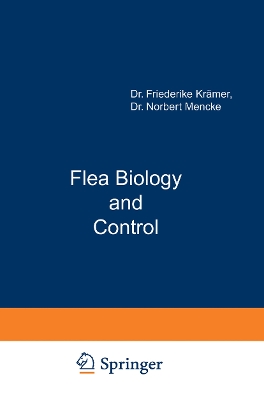
Flea Biology and Control: The Biology of the Cat Flea Control and Prevention with Imidacloprid in Small Animals
(0)
Cliccando su “Conferma” dichiari che il contenuto da te inserito è conforme alle Condizioni Generali d’Uso del Sito ed alle Linee Guida sui Contenuti Vietati. Puoi rileggere e modificare e successivamente confermare il tuo contenuto. Tra poche ore lo troverai online (in caso contrario verifica la conformità del contenuto alle policy del Sito).
Grazie per la tua recensione!
Tra poche ore la vedrai online (in caso contrario verifica la conformità del testo alle nostre linee guida). Dopo la pubblicazione per te +4 punti 
67,70 €
+680
punti 
Venditore: IBS
Articolo acquistabile con Carta del Docente

Articolo acquistabile con Carta Cultura Giovani e Carta del Merito

Paga con Klarna in 3 rate senza interessi per ordini superiori a 39 €

Dati e Statistiche
 Salvato in 0 liste dei desideri
Salvato in 0 liste dei desideri
Flea Biology and Control: The Biology of the Cat Flea Control and Prevention with Imidacloprid in Small Animals
Disponibilità in 2 settimane
67,70 €
67,70 €
Disponibilità in 2 settimane
Altre offerte vendute e spedite dai nostri venditori

Libri in Inglese
Flea Biology and Control: The Biology of the Cat Flea Control and Prevention with Imidacloprid in Small Animals
Altri venditori
Prezzo e spese di spedizione
Nuovo
 disponibilità in 2 settimane
 Venduto e spedito da
IBS
Venduto e spedito da
IBS
disponibilità in 2 settimane
Spedizione Gratis
67,70 €
Altri venditori
Prezzo e spese di spedizione
Nuovo
disponibilità in 2 settimane
Venduto e spedito da
IBS
disponibilità in 2 settimane
Spedizione Gratis
67,70 €
Altri venditori
Prezzo e spese di spedizione

Tutti i formati ed edizioni

Promo attive (0)
1 Fleas are wingless insects with a laterally compressed body of about 1.5-4 mm length. Like all insects they possess six legs and three body segments. Taxonomically they belong to the order Siphonaptera (Eckert et al. 2000) (Table 1). This family contains several species and subspecies. Fleas represent one of the most important ectoparasites (Mehl- horn 2000; Mehlhorn et al. 2001b). At the moment there are more than 2000 described species and subspecies throughout the world (Borror et al. 1981). These species belong to the families Pulicidae, including Pulex spp., Ctenocephalides spp., Spilopsyllus spp. and Archaeopsyllus spp., or the familia Ceratophyllidae with the genuses Ceratophyllus or Nosopsyllus to mention only some of the most important veterinary and human representatives. Fleas have a history of about 60 million years and were already found on prehistoric mammals. While becoming parasitic the original exterior of the two-wing insects, also designated as the order Diptera, has changed by losing the wings in the adults, whereas the larval form still has similarity with the larva of the order Diptera (Strenger 1973). About 95% of the -2000 different flea species parasitize on mammals, 5% live on birds. Table 1. Taxonomy of fleas Systematic Taxonomy Phylum Arthropoda Tracheata (=Antennata) Subphylum Classis Insecta (Hexapoda) Ordo Siphonapterida Familia Pulicidae Familia CeratophyUidae Genus Ctenocephalides. Genus Ceratophyllus. Nosopsyllus Pulex.
Leggi di più
Leggi di meno
Autore:
Anno:
2014
Rilegatura:
Paperback / softback
Pagine:
192 p.
Testo in English
Dimensioni:
235 x 155 mm
EAN:
9783642626043
L'articolo è stato aggiunto al carrello
Informazioni e Contatti sulla Sicurezza dei Prodotti
Le schede prodotto sono aggiornate in conformità al Regolamento UE 988/2023. Laddove ci fossero taluni dati non disponibili per ragioni indipendenti da IBS, vi informiamo che stiamo compiendo ogni ragionevole sforzo per inserirli. Vi invitiamo a controllare periodicamente il sito www.ibs.it per eventuali novità e aggiornamenti.
Per le vendite di prodotti da terze parti, ciascun venditore si assume la piena e diretta responsabilità per la commercializzazione del prodotto e per la sua conformità al Regolamento UE 988/2023, nonché alle normative nazionali ed europee vigenti.
Per informazioni sulla sicurezza dei prodotti, contattare productsafetyibs@feltrinelli.it
L’articolo è stato aggiunto alla lista dei desideri
