

L’articolo è stato aggiunto alla lista dei desideri








LIBRO INGLESE
 E-mail
 Facebook
 LinkedIn
 Twitter
 WhatsApp
Forensic Archaeology: The Application of Comparative Excavation Methods and Recording Systems
(0)
Cliccando su “Conferma” dichiari che il contenuto da te inserito è conforme alle Condizioni Generali d’Uso del Sito ed alle Linee Guida sui Contenuti Vietati. Puoi rileggere e modificare e successivamente confermare il tuo contenuto. Tra poche ore lo troverai online (in caso contrario verifica la conformità del contenuto alle policy del Sito).
Grazie per la tua recensione!
Tra poche ore la vedrai online (in caso contrario verifica la conformità del testo alle nostre linee guida). Dopo la pubblicazione per te +4 punti 
82,77 €
+830
punti 
Prezzo minimo ultimi 30 giorni: 45,12 €
Venditore: IBS
Articolo acquistabile con Carta del Docente

Articolo acquistabile con Carta Cultura Giovani e Carta del Merito

Articolo acquistabile con Carta della Cultura

Paga con Klarna in 3 rate senza interessi per ordini superiori a 39 €

Dati e Statistiche
 Salvato in 0 liste dei desideri
Salvato in 0 liste dei desideri
Forensic Archaeology: The Application of Comparative Excavation Methods and Recording Systems
Attualmente non disponibile
82,77 €
82,77 €
Attualmente non disponibile
Altre offerte vendute e spedite dai nostri venditori
Libri in Inglese
Forensic Archaeology: The Application of Comparative Excavation Methods and Recording Systems
Altri venditori
Prezzo e spese di spedizione
LIBRO INGLESE
Attualmente non disponibile

Venduto e spedito da
IBS
Spedizione Gratis
82,77 €
Altri venditori
Prezzo e spese di spedizione
LIBRO INGLESE
Attualmente non disponibile
Venduto e spedito da
IBS
Spedizione Gratis
82,77 €
Altri venditori
Prezzo e spese di spedizione

Tutti i formati ed edizioni
Promo attive (0)
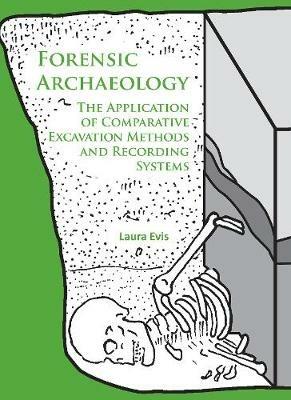
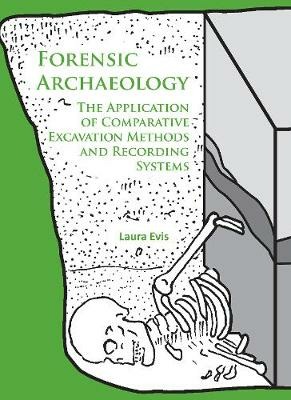
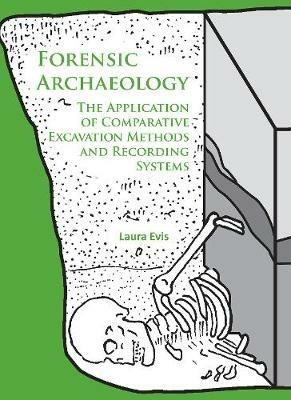
Archaeological excavation has been widely used in the recovery of human remains and other evidence in the service of legal cases for many years. However, established approaches will in future be subject to closer scrutiny following the announcement by the Law Commission in 2011 that expert evidence will in future be subject to a new reliability-based admissibility test in criminal proceedings. This book evaluates current archaeological excavation methods and recording systems – focusing on those used in the United Kingdom, Ireland, Australasia, and North America – in relation to their use in providing forensic evidence, and their ability to satisfy the admissibility tests introduced by the Law Commission, and other internationally recognised bodies. In order to achieve this aim, two analyses were undertaken. First, attention was directed to understanding the origins, development, underpinning philosophies, and current use of archaeological excavation methods and recording systems in the regions selected for study. A total of 153 archaeological manuals/guidelines were examined from archaeological organisations operating in the United Kingdom, Ireland, Northern Ireland, Scotland, the United States, Canada, Australia, and New Zealand. This research indicated that the Stratigraphic Excavation method and Single Context Recording system, the Demirant Excavation method and Standard Context Recording system, the Quadrant Excavation method and Standard Context Recording system, and the Arbitrary Level Excavation method and Unit Level Recording system were the approaches most often used to excavate and record graves. Second, the four defined methodological approaches were assessed experimentally, using a grave simulation of known properties to test the excavation, recording, and interpretation of material evidence, the definition of stratigraphic contexts, and understanding of stratigraphic relationships. The grave simulation also provided opportunities to measure archaeologists’ narratives of the grave formation process against the known properties of the grave simulation, and to assess whether archaeological experience had any impact on evidence recovery rates. Fifty repeat excavations were conducted. The results obtained from this experimental study show that the Quadrant Excavation method and Standard Context Recording system was the most consistent, efficient, and reliable archaeological approach to use to excavate and record clandestine burials and to formulate interpretation-based narratives of a grave’s formation sequence. In terms of the impact that archaeological experience had on evidence recovery rates, archaeological experience was found to have little bearing upon the recovery of evidence from the grave simulation. It is suggested that forensic archaeologists use the Quadrant Excavation method and Standard Context Recording system to excavate and record clandestine burials. If this approach is unable to be used, the Demirant Excavation method and Standard Context Recording system, or the Stratigraphic Excavation method and Single Context Recording system should be used. Both of these aforementioned techniques proved to be productive in terms of material evidence recovery and the identification and definition of stratigraphic contexts. The Arbitrary Level Excavation method and Unit Level Recording system should not be used, as this method proved to have an extremely poor evidence recovery rate and destroyed the deposition sequence present within the simulated grave.
Leggi di più
Leggi di meno
Testo in English
Dimensioni:
276 x 203 mm
Peso:
1350 gr.
EAN:
9781784914844

L'articolo è stato aggiunto al carrello
Informazioni e Contatti sulla Sicurezza dei Prodotti
Le schede prodotto sono aggiornate in conformità al Regolamento UE 988/2023. Laddove ci fossero taluni dati non disponibili per ragioni indipendenti da IBS, vi informiamo che stiamo compiendo ogni ragionevole sforzo per inserirli. Vi invitiamo a controllare periodicamente il sito www.ibs.it per eventuali novità e aggiornamenti.
Per le vendite di prodotti da terze parti, ciascun venditore si assume la piena e diretta responsabilità per la commercializzazione del prodotto e per la sua conformità al Regolamento UE 988/2023, nonché alle normative nazionali ed europee vigenti.
Per informazioni sulla sicurezza dei prodotti, contattare productsafetyibs@feltrinelli.it
L’articolo è stato aggiunto alla lista dei desideri
