

L’articolo è stato aggiunto alla lista dei desideri







LIBRO INGLESE
 E-mail
 Facebook
 LinkedIn
 Twitter
 WhatsApp
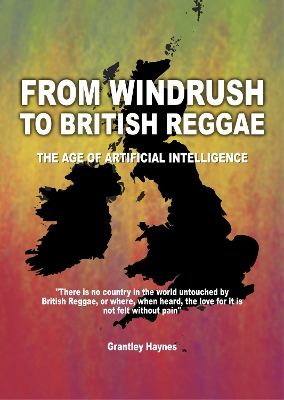
From Windrush To British Reggae The Age of Artificial Intelligence: "there is no country in the world untouched by British Reggae, or where, when heard, the love for it is not felt without pain"
(0)
Cliccando su “Conferma” dichiari che il contenuto da te inserito è conforme alle Condizioni Generali d’Uso del Sito ed alle Linee Guida sui Contenuti Vietati. Puoi rileggere e modificare e successivamente confermare il tuo contenuto. Tra poche ore lo troverai online (in caso contrario verifica la conformità del contenuto alle policy del Sito).
Grazie per la tua recensione!
Tra poche ore la vedrai online (in caso contrario verifica la conformità del testo alle nostre linee guida). Dopo la pubblicazione per te +4 punti 
15,47 €
16,28 €
-5%
Risparmia 0,81€!

Venditore: IBS
Articolo acquistabile con Carta del Docente

Articolo acquistabile con Carta Cultura Giovani e Carta del Merito

Articolo acquistabile con Carta della Cultura

Dati e Statistiche
 Salvato in 0 liste dei desideri
Salvato in 0 liste dei desideri
From Windrush To British Reggae The Age of Artificial Intelligence: "there is no country in the world untouched by British Reggae, or where, when heard, the love for it is not felt without pain"
Disponibilità in 3 settimane
15,47 €
-5%
16,28 €
15,47 €
16,28 €
-5%
Disponibilità in 3 settimane
Altre offerte vendute e spedite dai nostri venditori
Libri in Inglese
From Windrush To British Reggae The Age of Artificial Intelligence: "there is no country in the world untouched by British Reggae, or where, when heard, the love for it is not felt without pain"
Altri venditori
Prezzo e spese di spedizione
LIBRO INGLESE
Disponibilità in 3 settimane

Venduto e spedito da
IBS
Spedizione Gratis
-5%
16,28 €
15,47 €
Altri venditori
Prezzo e spese di spedizione
LIBRO INGLESE
Disponibilità in 3 settimane
Venduto e spedito da
IBS
Spedizione Gratis
-5%
16,28 €
15,47 €
Altri venditori
Prezzo e spese di spedizione

Tutti i formati ed edizioni

Promo attive (0)
British reggae is more than music. It is history, identity, resistance, and innovation. Born from the migration of Caribbean communities to the United Kingdom, it carries the legacy of the Windrush generation while shaping global culture in ways that remain under-recognised. This book is both a reflection and a call to action. It explores how a grassroots cultural movement became a global sound, yet still struggles to build the systems required for long-term sustainability. At its core, this work asks a critical question: How can a genre loved worldwide fail to sustain its creators economically? The bass arrives first. It rolls through the air, low and heavy, before anything else can be heard, before the melody, before the voice, before the words take shape. In a crowded hall in Birmingham, or on a dimly lit street corner in South London, the sound is unmistakable. It vibrates through walls, through bodies, through generations. For those who know it, it is more than music. It is memory. Reggae was born thousands of miles away, under the Caribbean sun of Jamaica, where rhythm and resistance became inseparable. But like the people who carried it, reggae did not stay in one place. It travelled across the Atlantic, into the heart of the United Kingdom, transforming as it moved, reshaped by new realities, new struggles, and new identities. In Britain, reggae found a different kind of voice. It echoed through the lives of Caribbean migrants who arrived in the post-war years, bringing with them not just records and rhythms, but entire worlds of meaning. In cities like London, Birmingham, and Bristol, reggae became a language for survival. It spoke of displacement and belonging, of injustice and pride. It was played in basements and community halls, blasted from hand-built sound systems, and passed from one generation to the next like a living archive. Over time, this sound, once rooted in the streets of Kingston, became something distinctly British. Bands like Grammy-nominated UB40, Grammy-winning Steel Pulse, Musical Youth, Aswad, Black Slate, Smiley Culture, Maxi Priest, Tippa Irie, and Pato Banton gave voice to a generation navigating identity in a changing society, carrying British reggae into the mainstream and sparking debates about authenticity, ownership, and cultural expression. But British reggae has not stopped at the borders of the UK. It moved outward again, influencing punk, hip-hop, and electronic music, shaping global culture in both visible and unseen ways. Its rhythms can be traced in unexpected places, its messages echoing in movements for justice and unity across continents. It is a story of movement of people, of sound, of ideas. It is about how reggae became a bridge between Jamaica and Britain and, from that bridge, reached the world. It is about the past that shaped it, the present that sustains it, and the future that continues to redefine it. Above all, it is about a rhythm that refused to stand still. This book charts Haynes's journey documenting "From Windrush to British Reggae - The Age of Artificial Intelligence". It examines British reggae: its origins, its global influence today, and its potential future. More than a conference record, it is a timely, insightful, and strategic exploration of one of the UK's most influential yet under-recognised cultural movements. For anyone invested in music, culture, education, or social impact, this book offers both inspiration and a clear roadmap for action. At its core, it captures British reggae as a living legacy of the Windrush generation, one that has shaped not only music but also identity, resistance, and community cohesion across the UK. Grounded in a national conference held in Wolverhampton, UK, it provides authentic, real-world insights from artists, industry professionals, and audiences shaping today's culture. What makes this book essential reading is its unique combination of cultural storytelling and strategic foresight. It does not simply celebrate the past: it critically examines the challenges facing British reggae today, from underfunding and lack of institutional recognition to issues of ownership, representation, and mental health. These are not abstract concerns but lived realities affecting the sustainability of the genre and its communities. Importantly, the book not only identifies problems but also offers tangible solutions. Through qualitative research methods - including workshops, interviews, and thematic analysis. It highlights clear opportunities for growth. These include leveraging digital innovation, strengthening global collaborations, developing talent pipelines for youth and women, and embedding reggae within educational and cultural frameworks. A standout feature is the introduction of the 7 Driver Framework: a powerful, practical model designed to support policymakers, funders, educators, and industry leaders in building a sustainable future for British reggae. This framework transforms insight into action, making the book not just informative but highly usable.
Leggi di più
Leggi di meno
Testo in English
EAN:
9781068683558

L'articolo è stato aggiunto al carrello
Informazioni e Contatti sulla Sicurezza dei Prodotti
Le schede prodotto sono aggiornate in conformità al Regolamento UE 988/2023. Laddove ci fossero taluni dati non disponibili per ragioni indipendenti da IBS, vi informiamo che stiamo compiendo ogni ragionevole sforzo per inserirli. Vi invitiamo a controllare periodicamente il sito www.ibs.it per eventuali novità e aggiornamenti.
Per le vendite di prodotti da terze parti, ciascun venditore si assume la piena e diretta responsabilità per la commercializzazione del prodotto e per la sua conformità al Regolamento UE 988/2023, nonché alle normative nazionali ed europee vigenti.
Per informazioni sulla sicurezza dei prodotti, contattare productsafetyibs@feltrinelli.it
L’articolo è stato aggiunto alla lista dei desideri
