

L’articolo è stato aggiunto alla lista dei desideri


EBOOK IN LINGUA STRANIERA
 E-mail
 Facebook
 LinkedIn
 Twitter
 WhatsApp
The Gothic Orphanage
(0)
Cliccando su “Conferma” dichiari che il contenuto da te inserito è conforme alle Condizioni Generali d’Uso del Sito ed alle Linee Guida sui Contenuti Vietati. Puoi rileggere e modificare e successivamente confermare il tuo contenuto. Tra poche ore lo troverai online (in caso contrario verifica la conformità del contenuto alle policy del Sito).
Grazie per la tua recensione!
Tra poche ore la vedrai online (in caso contrario verifica la conformità del testo alle nostre linee guida). Dopo la pubblicazione per te +4 punti 
2,99 €

Venditore: IBS

Acquista online
Scaricabile subito
Articolo acquistabile con Carta del Docente

Articolo acquistabile con Carta Cultura Giovani e Carta del Merito

Articolo acquistabile con Carta della Cultura

Abbonati a Kobo plus per avere accesso illimitato a questo contenuto

Dati e Statistiche
 Salvato in 0 liste dei desideri
The Gothic Orphanage
Scaricabile subito
2,99 €
2,99 €
Scaricabile subito
Altre offerte vendute e spedite dai nostri venditori

Ebook in lingua straniera
The Gothic Orphanage
Altri venditori
Prezzo e spese di spedizione
EBOOK INGLESE
EPUB2 con DRMFREE
Scaricabile subito

Venduto e spedito da
IBS
Spedizione Gratis
2,99 €
Altri venditori
Prezzo e spese di spedizione
EBOOK INGLESE
EPUB2 con DRMFREE
Scaricabile subito
Venduto e spedito da
IBS
Spedizione Gratis
2,99 €
Altri venditori
Prezzo e spese di spedizione

Tutti i formati ed edizioni

Promo attive (0)
The Gothic Orphanage
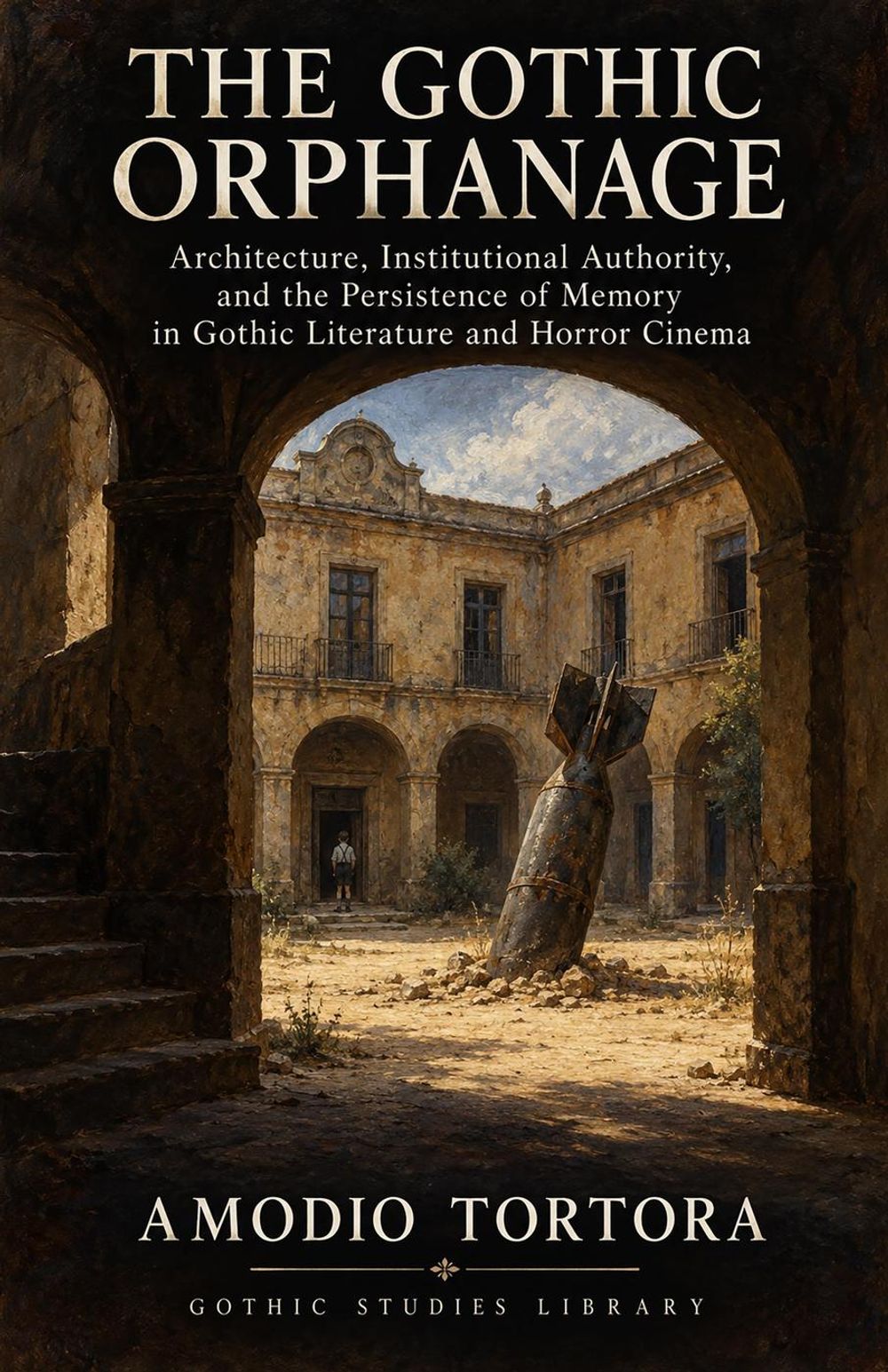
Unpublished work - First edition: Year 2026. What makes an orphanage a place of terror? In The Gothic Orphanage, Amodio Tortora examines how an institution associated with shelter and benevolence becomes a setting for Gothic uncertainty. This study explores the tensions between protection and restriction, charitable purpose and unaccountable authority, present use and the persistence of an unresolved past. The orphanage emerges as a structure that shapes movement, controls access, and determines what can be seen, heard, remembered, or understood. At the centre of the analysis are El espinazo del diablo, Saint Ange, and El orfanato. Their buildings represent different institutional stages: wartime operation, contraction and impending closure, and attempted renewal. Rather than treating them as interchangeable sinister establishments, Tortora traces the specific relations between their architecture, routines, and competing claims to legitimacy. The unexploded bomb and subterranean cistern of El espinazo del diablo, the excessive and neglected interiors of Saint Ange, and the overlapping domestic and institutional spaces of El orfanato reveal different ways in which a building can exceed the explanations attached to it. Corridors, staircases, courtyards, locked doors, and service areas form a Gothic machine: an arrangement that turns exploration into an encounter with incomplete knowledge. Visible order does not guarantee transparency, and familiarity does not ensure understanding. The study asks how benevolent authority can make restrictions appear reasonable while insulating them from scrutiny. Religion, ritual, bureaucracy, and custom are examined as possible grounds of legitimacy whose adequacy must remain open to investigation. Responsibility may be dispersed across roles and routines, allowing a secret to survive without any participant possessing the whole history. The building also becomes an unstable archive. Altered walls, sealed openings, abandoned objects, patterns of wear, and missing records preserve fragments that official accounts cannot accommodate. These traces demand interpretation without providing a complete truth. Haunting unsettles the assumption that renovation, closure, or a new purpose can bring the past to an end. Abandonment likewise fails to abolish every restriction: institutional habits and material barriers may continue to organise conduct after the administration that created them has disappeared. Sound, geography, and economic relationships extend this inquiry. Echoes, impacts, unseen sources, and silence create an acoustic space beyond the visible frame. Roads, gates, and surrounding landscapes complicate the complex relationship between arrival, escape, and safety. Property, maintenance, labour, and the pursuit of wealth expose the material conditions supporting institutional appearance, while distinguishing private appropriation from the institution's declared mission. Comparisons with Walpole, Radcliffe, Poe, Hawthorne, Stoker, and Shirley Jackson place the orphanage within a changing field of castles, convents, haunted houses, and specialised institutions. Across these settings, Tortora identifies transformations in the relationship between space, power, and knowledge. He resists equating every restriction with oppression or every trace of decay with deliberate concealment. The Gothic force of the orphanage lies in the gap between a credible promise and an incomplete material account. To enter its rooms is to confront a question that no declaration of good intentions can settle: what does this place permit, preserve, and leave unresolved?
Leggi di più
Leggi di meno
Autore:
Anno edizione:
2026
Editore:
Formato:
Lingua:
Inglese
Compatibilità:
Tutti i dispositivi (eccetto Kindle) Scopri di più
Layout:
Reflowable
EAN:
9798237309584
L'articolo è stato aggiunto al carrello
Formato:
Gli eBook venduti da IBS.it sono in formato ePub e possono essere protetti da Adobe DRM. In caso di download di un file protetto da DRM si otterrà un file in formato .acs, (Adobe Content Server Message), che dovrà essere aperto tramite Adobe Digital Editions e autorizzato tramite un account Adobe, prima di poter essere letto su pc o trasferito su dispositivi compatibili.
Cloud:
Gli eBook venduti da IBS.it sono sincronizzati automaticamente su tutti i client di lettura Kobo successivamente all’acquisto. Grazie al Cloud Kobo i progressi di lettura, le note, le evidenziazioni vengono salvati e sincronizzati automaticamente su tutti i dispositivi e le APP di lettura Kobo utilizzati per la lettura.
Clicca qui per sapere come scaricare gli ebook utilizzando un pc con sistema operativo Windows
L’articolo è stato aggiunto alla lista dei desideri
