

L’articolo è stato aggiunto alla lista dei desideri








LIBRO INGLESE
 E-mail
 Facebook
 LinkedIn
 Twitter
 WhatsApp
Innate Tolerance in the CNS: Translational Neuroprotection by Pre- and Post-Conditioning
(0)
Cliccando su “Conferma” dichiari che il contenuto da te inserito è conforme alle Condizioni Generali d’Uso del Sito ed alle Linee Guida sui Contenuti Vietati. Puoi rileggere e modificare e successivamente confermare il tuo contenuto. Tra poche ore lo troverai online (in caso contrario verifica la conformità del contenuto alle policy del Sito).
Grazie per la tua recensione!
Tra poche ore la vedrai online (in caso contrario verifica la conformità del testo alle nostre linee guida). Dopo la pubblicazione per te +4 punti 
268,80 €
+2690
punti 
Venditore: IBS
Articolo acquistabile con Carta del Docente

Articolo acquistabile con Carta Cultura Giovani e Carta del Merito

Articolo acquistabile con Carta della Cultura

Paga con Klarna in 3 rate senza interessi per ordini superiori a 39 €

Dati e Statistiche
 Salvato in 0 liste dei desideri
Salvato in 0 liste dei desideri
Innate Tolerance in the CNS: Translational Neuroprotection by Pre- and Post-Conditioning
Disponibilità in 2 settimane
268,80 €
268,80 €
Disponibilità in 2 settimane
Altre offerte vendute e spedite dai nostri venditori

Libri in Inglese
Innate Tolerance in the CNS: Translational Neuroprotection by Pre- and Post-Conditioning
Altri venditori
Prezzo e spese di spedizione
Nuovo
Disponibilità in 2 settimane

Venduto e spedito da
IBS
Spedizione Gratis
268,80 €
Altri venditori
Prezzo e spese di spedizione
Nuovo
Disponibilità in 2 settimane
Venduto e spedito da
IBS
Spedizione Gratis
268,80 €
Altri venditori
Prezzo e spese di spedizione

Tutti i formati ed edizioni
Promo attive (0)
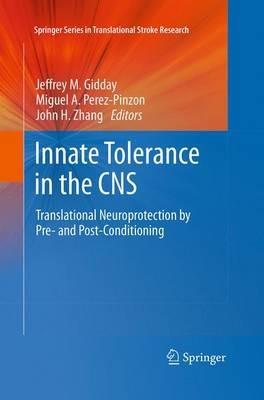
Cerebral preconditioning is a phenomenon wherein a mild insult or stress induces cellular and tissue adaptation or tolerance to a later, severe injury, therefore reflecting the efficacy of endogenous mechanisms of cerebrovascular protection. Initially identified for rapid cardiac protection, preconditioning has expanded to all aspects of CNS protection from ischemia, trauma and potentially neurodegeneration. Many different stimuli or stressors have been identified as preconditioning agents, suggesting a downstream convergence of mechanisms and underscoring the potential for translational application of preconditioning in the clinic. Moreover, the fundamental mechanisms responsible for preconditioning-induced tolerance will help in the design novel pharmacological approaches for neuroprotection. While stroke and many other brain injuries are not predictable, in some populations (e.g., metabolic syndrome, patients undergoing carotid endarterectomy, aneurysm clipping, or with recent TIAs) the risk for stroke is identifiable and significant, and preconditioning may represent a useful strategy for neuroprotection. For unpredictable injuries, post-conditioning the brain – or inducing endogenous protective mechanisms after the initial injury – can also abrogate the extent of injury. Finally, remote pre- and post-conditioning methods have been developed in animals, and are now being tested in clinical trials, wherein a brief, noninjurious stress to a noncerebral tissue (i.e., skeletal muscle) can provide protection to the CNS and thereby allows clinicians the opportunity to circumvent concerns regarding the direct preconditioning of neurological tissues.
Leggi di più
Leggi di meno
Curatore:
Editore:
Collana:
Springer Series in Translational Stroke Research
Anno:
2016
Rilegatura:
Paperback / softback
Pagine:
699 p.
Testo in English
Dimensioni:
235 x 155 mm
EAN:
9781493941773

L'articolo è stato aggiunto al carrello
Informazioni e Contatti sulla Sicurezza dei Prodotti
Le schede prodotto sono aggiornate in conformità al Regolamento UE 988/2023. Laddove ci fossero taluni dati non disponibili per ragioni indipendenti da IBS, vi informiamo che stiamo compiendo ogni ragionevole sforzo per inserirli. Vi invitiamo a controllare periodicamente il sito www.ibs.it per eventuali novità e aggiornamenti.
Per le vendite di prodotti da terze parti, ciascun venditore si assume la piena e diretta responsabilità per la commercializzazione del prodotto e per la sua conformità al Regolamento UE 988/2023, nonché alle normative nazionali ed europee vigenti.
Per informazioni sulla sicurezza dei prodotti, contattare productsafetyibs@feltrinelli.it
L’articolo è stato aggiunto alla lista dei desideri
