

L’articolo è stato aggiunto alla lista dei desideri









LIBRO INGLESE
 E-mail
 Facebook
 LinkedIn
 Twitter
 WhatsApp
Karyotypes of Parasitic Hymenoptera
(0)
Cliccando su “Conferma” dichiari che il contenuto da te inserito è conforme alle Condizioni Generali d’Uso del Sito ed alle Linee Guida sui Contenuti Vietati. Puoi rileggere e modificare e successivamente confermare il tuo contenuto. Tra poche ore lo troverai online (in caso contrario verifica la conformità del contenuto alle policy del Sito).
Grazie per la tua recensione!
Tra poche ore la vedrai online (in caso contrario verifica la conformità del testo alle nostre linee guida). Dopo la pubblicazione per te +4 punti 
212,50 €
+2130
punti 

Venditore: IBS
Articolo acquistabile con Carta del Docente

Articolo acquistabile con Carta Cultura Giovani e Carta del Merito

Paga con Klarna in 3 rate senza interessi per ordini superiori a 39 €

Dati e Statistiche
 Salvato in 0 liste dei desideri
Salvato in 0 liste dei desideri
Karyotypes of Parasitic Hymenoptera
Disponibilità in 2 settimane
212,50 €
212,50 €
Disponibilità in 2 settimane
Altre offerte vendute e spedite dai nostri venditori
Libri in Inglese
Karyotypes of Parasitic Hymenoptera
Altri venditori
Prezzo e spese di spedizione
Nuovo
 disponibilità in 2 settimane
 Venduto e spedito da
IBS
Venduto e spedito da
IBS
disponibilità in 2 settimane
Spedizione Gratis
212,50 €
Altri venditori
Prezzo e spese di spedizione
Nuovo
disponibilità in 2 settimane
Venduto e spedito da
IBS
disponibilità in 2 settimane
Spedizione Gratis
212,50 €
Altri venditori
Prezzo e spese di spedizione

Tutti i formati ed edizioni
Promo attive (1)
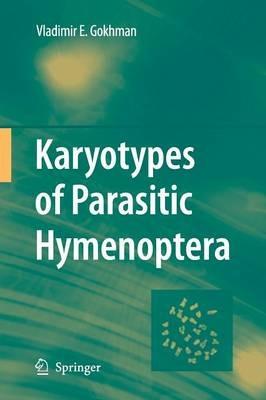
Not so long ago, karyology was considered a vanguard biological discipline, which could solve nearly all problems of systematics and phylogenetics. We liked to believe in the bright future, in a magician who will appear like a Jack-in-the-box and reveal the truth to us. However, excessive hopes related to the chromosomal study came true only in part. In the meantime, new candidates claimed the place of the magician, i. e. phenetics succeeded by cladistics and now by molecular methods in systematics and phylogeny. Nevertheless, it becomes progressively more ob- ous nowadays that cladistics is just a bright envelope for the fairly primitive and theoretically vulnerable approach that deprives living organisms and their groups of the traces of integrity and reduces them to the plain sum of characters. Modern molecular techniques look more perceptive and may yield more reliable results, although the details are sometimes embarrassing, and comparison with the fossil record does not necessarily reveal their superiority over cladistics. These methods are accessible by research teams with massive funding and good equipment and this strongly decreases the range and diversity of the material studied. However, classi?cations are often created by individual systematists with the restricted access to molecular methods. In this context, karyological techniques are in the preferable position, although they certainly do not provide direct and immaculate markers of taxonomic and p- logenetic relationships: chromosomal study is a morphological method with all its advantages and drawbacks.
Leggi di più
Leggi di meno
Autore:
Editore:
Anno:
2016
Rilegatura:
Paperback / softback
Pagine:
183 p.
Testo in English
Dimensioni:
235 x 155 mm
EAN:
9789402404906
L'articolo è stato aggiunto al carrello
Informazioni e Contatti sulla Sicurezza dei Prodotti
Le schede prodotto sono aggiornate in conformità al Regolamento UE 988/2023. Laddove ci fossero taluni dati non disponibili per ragioni indipendenti da IBS, vi informiamo che stiamo compiendo ogni ragionevole sforzo per inserirli. Vi invitiamo a controllare periodicamente il sito www.ibs.it per eventuali novità e aggiornamenti.
Per le vendite di prodotti da terze parti, ciascun venditore si assume la piena e diretta responsabilità per la commercializzazione del prodotto e per la sua conformità al Regolamento UE 988/2023, nonché alle normative nazionali ed europee vigenti.
Per informazioni sulla sicurezza dei prodotti, contattare productsafetyibs@feltrinelli.it
L’articolo è stato aggiunto alla lista dei desideri
