

L’articolo è stato aggiunto alla lista dei desideri









LIBRO INGLESE
 E-mail
 Facebook
 LinkedIn
 Twitter
 WhatsApp
Municipal Wastewater Management in Developing Countries
(0)
Cliccando su “Conferma” dichiari che il contenuto da te inserito è conforme alle Condizioni Generali d’Uso del Sito ed alle Linee Guida sui Contenuti Vietati. Puoi rileggere e modificare e successivamente confermare il tuo contenuto. Tra poche ore lo troverai online (in caso contrario verifica la conformità del contenuto alle policy del Sito).
Grazie per la tua recensione!
Tra poche ore la vedrai online (in caso contrario verifica la conformità del testo alle nostre linee guida). Dopo la pubblicazione per te +4 punti 
172,19 €

-5%
181,25 €
+1720
punti
Venditore: IBS
Articolo acquistabile con Carta del Docente

Articolo acquistabile con Carta Cultura Giovani e Carta del Merito

Articolo acquistabile con Carta della Cultura

Paga con Klarna in 3 rate senza interessi per ordini superiori a 39 €

Dati e Statistiche
 Salvato in 0 liste dei desideri
Salvato in 0 liste dei desideri
Municipal Wastewater Management in Developing Countries
Disponibile in 5 gg lavorativi
172,19 €
-5%
181,25 €
172,19 €
181,25 €
-5%
Disponibile in 5 gg lavorativi
Altre offerte vendute e spedite dai nostri venditori

Libri in Inglese
Municipal Wastewater Management in Developing Countries
Altri venditori
Prezzo e spese di spedizione
LIBRO INGLESE
Disponibile in 5 gg lavorativi

Venduto e spedito da
IBS
Spedizione Gratis
-5%
181,25 €
172,19 €
Altri venditori
Prezzo e spese di spedizione
LIBRO INGLESE
Disponibile in 5 gg lavorativi
Venduto e spedito da
IBS
Spedizione Gratis
-5%
181,25 €
172,19 €
Altri venditori
Prezzo e spese di spedizione

Tutti i formati ed edizioni
Promo attive (0)
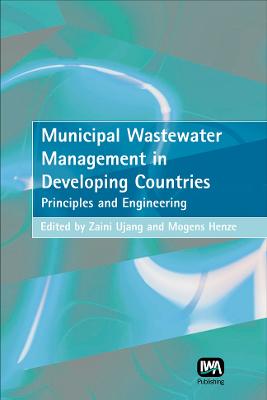
Municipal Wastewater Management in Developing Countries discusses various approaches to municipal wastewater management in order to protect both public health and the environment, with the major focus being on waterborne diseases. Developing countries can be divided into two main categories, i.e. countries in transition with higher growth rates where industrialisation and urbanisation are taking place rapidly, and countries with slower growth rates. It is important, therefore, that approaches should be tailor-made and site-specific. In general, the major trends of water pollution control have significantly contributed to the development of ?conventional sanitation? approaches in terms of legal and financial frameworks, as well as technological enhancement. Despite advances in the science, engineering and legal frameworks, 95 per cent of the wastewater in the world is released into the environment without treatment. Only five per cent of global wastewater is properly treated using the ?standard? sanitation facilities, mainly in developed countries. As a result, the majority of the world?s population is still exposed to waterborne diseases, and the quality of water resources has been rapidly degraded, particularly in poor developing countries. The challenge now is to provide the world?s population, especially the poor, with adequate water and sanitation facilities. Despite billions of dollars of investment spent every year, billions of poor people are still suffering and dying because of poor sanitation. At the beginning of this century, about 1.1 billion people lived without access to clean water (compared to about the same number in 1990), 2.4 billion without appropriate sanitation (compared to 2.3 billion in 1990) and four billion without sound wastewater disposal. The future scenario, that water resources will be further depleted by a growing world population, will be coupled with environmental degradation due to poor pollution control, particularly in most of the developing countries. In order to address the issue of water and wastewater management in developing countries it is necessary to take into consideration the segments of the society itself, particularly the types of housing areas. The segments will indicate the level of socio-economic, mentality and knowledge, which is important for any planned changes in their life style and social engineering. It is also important to segregate the funding framework of any proposed projects. High-income urban communities, for instance, are generally willing to pay for sewerage services and higher water supply tariffs, therefore a designated system can be accordingly provided. Over the past 10 years, serious criticism has been given to the ?conventional sanitation? approach, consequently many definitions, concepts and characteristics have been proposed on ?sustainable sanitation?. Sustainable sanitation is a relevant concept in order to achieve the Millennium Development Goals by 2015 of providing water supply and adequate sanitation for developing countries. Sustainable sanitation is flexible in approach any community ? poor or rich, urban or rural, water-rich or water-poor country ? and requires lower investment costs compared to conventional sanitation approaches. It is also important to note that the framework of sustainable sanitation is much easier to adopt in developing countries where water supply and sanitation infrastructures are still in the developing stages. In some developing countries, no public facilities are available therefore it is an ideal condition to start a new infrastructure with a new framework. This comprehensive reference, prepared by leading international authorities, will provide an invaluable reference for all those concerned with the management of sanitation services in developing countries worldwide.
Leggi di più
Leggi di meno
Pagine:
365 p.
Testo in English
Dimensioni:
234 x 156 mm
EAN:
9781843390305

L'articolo è stato aggiunto al carrello
Informazioni e Contatti sulla Sicurezza dei Prodotti
Le schede prodotto sono aggiornate in conformità al Regolamento UE 988/2023. Laddove ci fossero taluni dati non disponibili per ragioni indipendenti da IBS, vi informiamo che stiamo compiendo ogni ragionevole sforzo per inserirli. Vi invitiamo a controllare periodicamente il sito www.ibs.it per eventuali novità e aggiornamenti.
Per le vendite di prodotti da terze parti, ciascun venditore si assume la piena e diretta responsabilità per la commercializzazione del prodotto e per la sua conformità al Regolamento UE 988/2023, nonché alle normative nazionali ed europee vigenti.
Per informazioni sulla sicurezza dei prodotti, contattare productsafetyibs@feltrinelli.it
L’articolo è stato aggiunto alla lista dei desideri
