

L’articolo è stato aggiunto alla lista dei desideri








LIBRO INGLESE
 E-mail
 Facebook
 LinkedIn
 Twitter
 WhatsApp
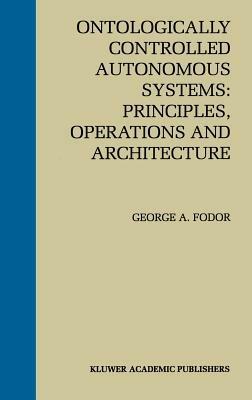
Ontologically Controlled Autonomous Systems: Principles, Operations, and Architecture: Principles, Operations, and Architecture
(0)
Cliccando su “Conferma” dichiari che il contenuto da te inserito è conforme alle Condizioni Generali d’Uso del Sito ed alle Linee Guida sui Contenuti Vietati. Puoi rileggere e modificare e successivamente confermare il tuo contenuto. Tra poche ore lo troverai online (in caso contrario verifica la conformità del contenuto alle policy del Sito).
Grazie per la tua recensione!
Tra poche ore la vedrai online (in caso contrario verifica la conformità del testo alle nostre linee guida). Dopo la pubblicazione per te +4 punti 
269,90 €
+2700
punti 
Venditore: IBS
Articolo acquistabile con Carta del Docente

Articolo acquistabile con Carta Cultura Giovani e Carta del Merito

Articolo acquistabile con Carta della Cultura

Paga con Klarna in 3 rate senza interessi per ordini superiori a 39 €

Dati e Statistiche
 Salvato in 0 liste dei desideri
Salvato in 0 liste dei desideri
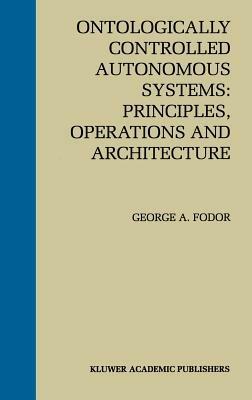
Ontologically Controlled Autonomous Systems: Principles, Operations, and Architecture: Principles, Operations, and Architecture
Disponibilità in 2 settimane
269,90 €
269,90 €
Disponibilità in 2 settimane
Altre offerte vendute e spedite dai nostri venditori
Libri in Inglese
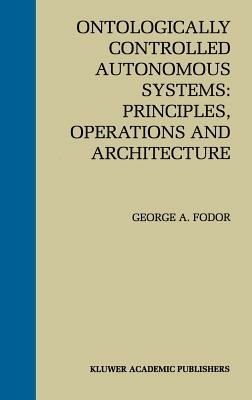
Ontologically Controlled Autonomous Systems: Principles, Operations, and Architecture: Principles, Operations, and Architecture
Altri venditori
Prezzo e spese di spedizione
LIBRO INGLESE
Disponibilità in 2 settimane

Venduto e spedito da
IBS
Spedizione Gratis
269,90 €
Altri venditori
Prezzo e spese di spedizione
LIBRO INGLESE
Disponibilità in 2 settimane
Venduto e spedito da
IBS
Spedizione Gratis
269,90 €
Altri venditori
Prezzo e spese di spedizione

Tutti i formati ed edizioni
Promo attive (0)
Kevin M. Passino When confronted with a control problem for complicated physical process, a control engineer usually follows a predetermined design procedure. This procedure often begins with the engineer seeking to understand the process and the primary control objectives. A simple example ofa control problem is an automobile "cruise control" that provides the automobile with the capability of regulating its own speed at a driver-specified set-point (e. g. , 55 mph). One solution to the automotive cruise control problem involves adding an electronic controller that can sense the speed of the vehicle via the speedometer and actuate the throttle position so as to regulate the vehicle speed at the driver-specified value. Such speed regulation must be accurate even if there are road grade changes, head-winds, or variations in the number of passengers in the automobile. After gaining an intuitive understanding of the plant's dynamics and establishing the design objectives, the control engineer typically solves the cruise control problem by using an established design procedure. In particular, this control engineering design methodology involves: 1. Modeling/understanding the plant, 2. Construction of a controller to meet specifications (such as stability, rise-time, overshoot, and steady state error), 3. Analysis to make sure that the system will meet the performance objectives (e. g. , we might use mathematical, simulation-based, or experimental analysis), and 4. Iterating on the design until it is possible to "commission" the control system.
Leggi di più
Leggi di meno
Testo in English
Dimensioni:
235 x 155 mm
EAN:
9780792380351

L'articolo è stato aggiunto al carrello
Informazioni e Contatti sulla Sicurezza dei Prodotti
Le schede prodotto sono aggiornate in conformità al Regolamento UE 988/2023. Laddove ci fossero taluni dati non disponibili per ragioni indipendenti da IBS, vi informiamo che stiamo compiendo ogni ragionevole sforzo per inserirli. Vi invitiamo a controllare periodicamente il sito www.ibs.it per eventuali novità e aggiornamenti.
Per le vendite di prodotti da terze parti, ciascun venditore si assume la piena e diretta responsabilità per la commercializzazione del prodotto e per la sua conformità al Regolamento UE 988/2023, nonché alle normative nazionali ed europee vigenti.
Per informazioni sulla sicurezza dei prodotti, contattare productsafetyibs@feltrinelli.it
L’articolo è stato aggiunto alla lista dei desideri
