

L’articolo è stato aggiunto alla lista dei desideri









LIBRO INGLESE
 E-mail
 Facebook
 LinkedIn
 Twitter
 WhatsApp
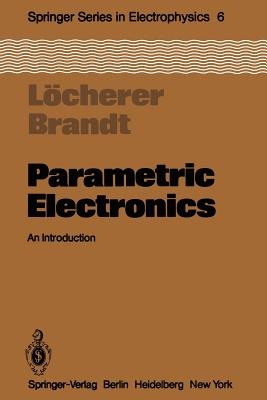
Parametric Electronics: An Introduction
(0)
Cliccando su “Conferma” dichiari che il contenuto da te inserito è conforme alle Condizioni Generali d’Uso del Sito ed alle Linee Guida sui Contenuti Vietati. Puoi rileggere e modificare e successivamente confermare il tuo contenuto. Tra poche ore lo troverai online (in caso contrario verifica la conformità del contenuto alle policy del Sito).
Grazie per la tua recensione!
Tra poche ore la vedrai online (in caso contrario verifica la conformità del testo alle nostre linee guida). Dopo la pubblicazione per te +4 punti 
136,30 €
+1360
punti 
Venditore: IBS
Articolo acquistabile con Carta del Docente

Articolo acquistabile con Carta Cultura Giovani e Carta del Merito

Articolo acquistabile con Carta della Cultura

Paga con Klarna in 3 rate senza interessi per ordini superiori a 39 €

Dati e Statistiche
 Salvato in 0 liste dei desideri
Salvato in 0 liste dei desideri
Parametric Electronics: An Introduction
Disponibilità in 2 settimane
136,30 €
136,30 €
Disponibilità in 2 settimane
Altre offerte vendute e spedite dai nostri venditori

Libri in Inglese
Parametric Electronics: An Introduction
Altri venditori
Prezzo e spese di spedizione
LIBRO INGLESE
Disponibilità in 2 settimane

Venduto e spedito da
IBS
Spedizione Gratis
136,30 €
Altri venditori
Prezzo e spese di spedizione
LIBRO INGLESE
Disponibilità in 2 settimane
Venduto e spedito da
IBS
Spedizione Gratis
136,30 €
Altri venditori
Prezzo e spese di spedizione

Tutti i formati ed edizioni

Promo attive (0)
In this chapter, first the parametric principle is illustrated by two simple examples, one mechanical and one electrical. Then the realization of time varying reactances is explained, followed by a short history of "parametric electronics". This survey demonstrates the importance of parametric circuits in the field of low-noise microwave electronics as well as explains the organization of this book. 1.1 The Parametric Principle An oscillating system comprising a single or several time-varying energy storing elements is called a parametric system; usually the variations are harmonic functions of time. Everybody knows one example of a mechanical parametric system from his childhood, namely, a swing. Therefore, we will start with this example though as it turns out, a swing is a rather compli cated parametric system. Fortunately, the electrical parametric systems, which form the object of this book, are simpler. Figure 1.1 shows such a swing. If it is removed from its equilibrium position and the child stands on it in a fixed attitude, the swing oscillates with a certain amplitude, the magnitude of which decreases with time due to the mechanical friction of the system. To increase the amplitude of oscil lation, the child changes positions during swinging: it crouches and straightens in a certain way twice during one cycle of the swing.
Leggi di più
Leggi di meno
Autore:
Collana:
Springer Series in Electronics and Photonics
Anno:
2011
Rilegatura:
Paperback / softback
Pagine:
330 p.
Testo in English
Dimensioni:
229 x 152 mm
EAN:
9783642679391

L'articolo è stato aggiunto al carrello
Informazioni e Contatti sulla Sicurezza dei Prodotti
Le schede prodotto sono aggiornate in conformità al Regolamento UE 988/2023. Laddove ci fossero taluni dati non disponibili per ragioni indipendenti da IBS, vi informiamo che stiamo compiendo ogni ragionevole sforzo per inserirli. Vi invitiamo a controllare periodicamente il sito www.ibs.it per eventuali novità e aggiornamenti.
Per le vendite di prodotti da terze parti, ciascun venditore si assume la piena e diretta responsabilità per la commercializzazione del prodotto e per la sua conformità al Regolamento UE 988/2023, nonché alle normative nazionali ed europee vigenti.
Per informazioni sulla sicurezza dei prodotti, contattare productsafetyibs@feltrinelli.it
L’articolo è stato aggiunto alla lista dei desideri
