

L’articolo è stato aggiunto alla lista dei desideri









EBOOK IN LINGUA STRANIERA
 E-mail
 Facebook
 LinkedIn
 Twitter
 WhatsApp
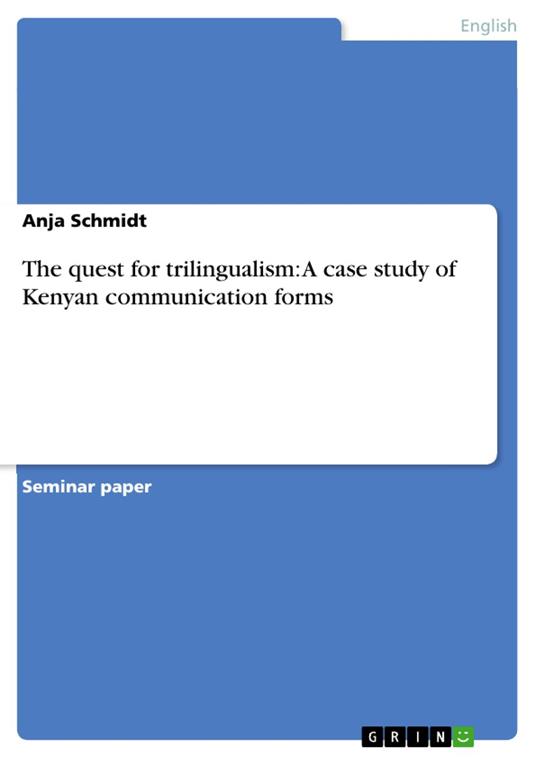
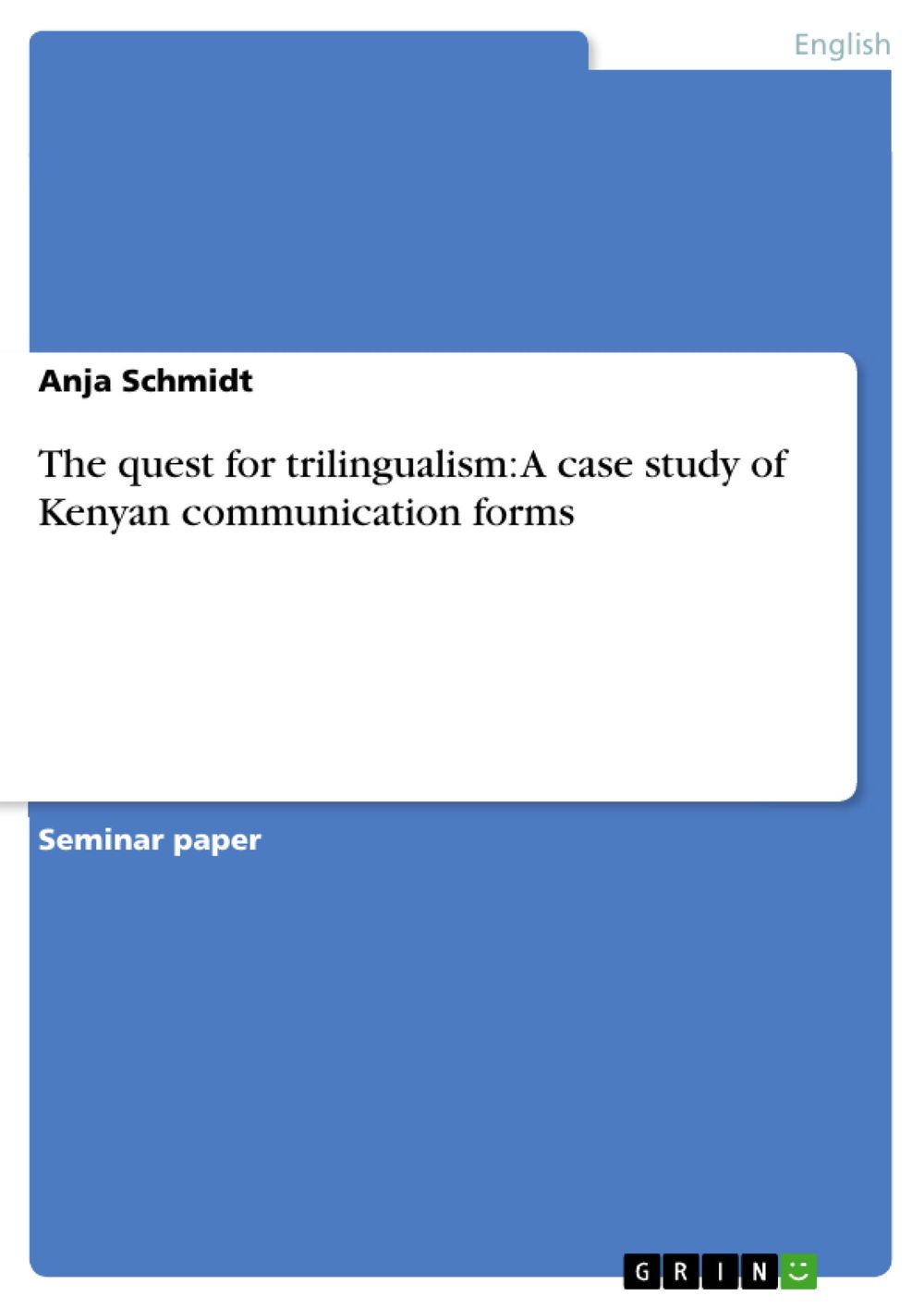
The quest for trilingualism: A case study of Kenyan communication forms
(0)
Cliccando su “Conferma” dichiari che il contenuto da te inserito è conforme alle Condizioni Generali d’Uso del Sito ed alle Linee Guida sui Contenuti Vietati. Puoi rileggere e modificare e successivamente confermare il tuo contenuto. Tra poche ore lo troverai online (in caso contrario verifica la conformità del contenuto alle policy del Sito).
Grazie per la tua recensione!
Tra poche ore la vedrai online (in caso contrario verifica la conformità del testo alle nostre linee guida). Dopo la pubblicazione per te +4 punti 
15,99 €
+160
punti 
Venditore: IBS

Acquista online
Scaricabile subito
Articolo acquistabile con Carta del Docente

Articolo acquistabile con Carta Cultura Giovani e Carta del Merito

Articolo acquistabile con Carta della Cultura

Dati e Statistiche
 Salvato in 0 liste dei desideri
Salvato in 0 liste dei desideri
The quest for trilingualism: A case study of Kenyan communication forms
Scaricabile subito
15,99 €
15,99 €
Scaricabile subito
Altre offerte vendute e spedite dai nostri venditori
Ebook in lingua straniera
The quest for trilingualism: A case study of Kenyan communication forms
Altri venditori
Prezzo e spese di spedizione
EBOOK INGLESE
EPUB2 con Adobe DRM
Scaricabile subito

Venduto e spedito da
IBS
Spedizione Gratis
15,99 €
Altri venditori
Prezzo e spese di spedizione
EBOOK INGLESE
EPUB2 con Adobe DRM
Scaricabile subito
Venduto e spedito da
IBS
Spedizione Gratis
15,99 €
Altri venditori
Prezzo e spese di spedizione

Tutti i formati ed edizioni

Promo attive (0)
The quest for trilingualism: A case study of Kenyan communication forms
Seminar paper from the year 2003 in the subject English Language and Literature Studies - Linguistics, grade: 1,0 (A), University of Hamburg (IAA), language: English, abstract: When considering the linguistic situation in Kenya, it becomes quite obvious that it is anything but homogenous. Not only the large variety of different ethnic groups, but also British colonial influences have left their marks on this diverse region. With English as the official language and Kiswahili as the national language, it seems that the language situation in Kenya should be clear cut and well defined. Yet, the search for a national identity, feelings of inferiority towards the “colonial” language English and the strive for a better political and economic life in Kenya confront the population with many challenges and problems. Kenyan society is shaped by 40 to 60 African ethnic languages, such as Maasai or Dholuo. The main means of communication among these different ethnic groups has become Kiswahili. But Kiswahili itself has seven dialects and several sub-dialects. In addition, several European languages were left behind by the colonial era and Arabic and Asian merchants have brought their languages with them too. Thus, the language situation in Kenya is extremely complex and considered to be a 3 + 1 language country. That means that most Kenyan citizens speak three languages (plus or minus one): the mother tongue (in most cases an African ethnic language), Kiswahili – the national language and most often also lingua franca, and English – the official language and therefore used for all educational and governmental purposes. But the competence and use of these communication systems varies largely. Like citizens of other imposed multilingual environment situations, Kenyans have developed their very own way to communicate with each other. But language is not only a pure means of communication – it carries different identities depending on social context. It serves to distinguish oneself from others as well as to express one’s membership to a certain group and thus influencing one’s understanding of culture. However, my aim in this paper is to analyse the current trilingualism in Kenya and explain the different levels of competence. I will put the main emphasis on English and Kiswahili, as they receive official recognition by the Kenyan government. When considering the interaction of the official languages and those inferior to them, I will also refer to some new language forms that might influence the Kenyan society considerably in the future.
Leggi di più
Leggi di meno
Autore:
Anno edizione:
2003
Editore:
Formato:
Lingua:
Inglese
Compatibilità:
Tutti i dispositivi (eccetto Kindle) Scopri di più
Layout:
Reflowable
EAN:
9783638219198

L'articolo è stato aggiunto al carrello
Formato:
Gli eBook venduti da IBS.it sono in formato ePub e possono essere protetti da Adobe DRM. In caso di download di un file protetto da DRM si otterrà un file in formato .acs, (Adobe Content Server Message), che dovrà essere aperto tramite Adobe Digital Editions e autorizzato tramite un account Adobe, prima di poter essere letto su pc o trasferito su dispositivi compatibili.
Cloud:
Gli eBook venduti da IBS.it sono sincronizzati automaticamente su tutti i client di lettura Kobo successivamente all’acquisto. Grazie al Cloud Kobo i progressi di lettura, le note, le evidenziazioni vengono salvati e sincronizzati automaticamente su tutti i dispositivi e le APP di lettura Kobo utilizzati per la lettura.
Clicca qui per sapere come scaricare gli ebook utilizzando un pc con sistema operativo Windows
L’articolo è stato aggiunto alla lista dei desideri
